There are few adventures in the world that match the raw magnificence of trekking to Everest Base Camp. Standing at the foot of the world's highest mountain, surrounded by glaciers, prayer flags, and peaks that pierce the clouds, is an experience that stays with a traveler for a lifetime. But what if you could make this journey even more extraordinary? The Everest Base Camp Trek with Helicopter Return allows you to do exactly that — trek through the legendary Khumbu valley at your own pace, reach the iconic base camp, and then fly back in a helicopter over some of the most breathtaking scenery on the planet.
| Trip Name | Everest Base Camp Trek with Helicopter Return |
|---|---|
| Duration | 10 Days |
| Trip Grade | Moderate to Challenging |
| Max Elevation | 5,545m (Kala Patthar) |
| Everest Base Camp Elevation | 5,364m |
| Start Point | Kathmandu |
| Trek Start | Lukla (2,860m) |
| End Point | Kathmandu (Helicopter Return) |
| Accommodation | Teahouses during trek + Hotel in Kathmandu |
| Meals | Breakfast, Lunch & Dinner during trek |
| Best Time | Spring (Mar–May) & Autumn (Sept–Nov) |
| Group Size | 1–12 People |
| Helicopter Type | Shared or Private Charter |
| Transportation | Flight to Lukla + Helicopter Return |
| Permit Required | Sagarmatha National Park & Khumbu Permit |
| Trek Style | Tea House Trek |
| Total Walking Days | 7–8 Days |
| Descent | Fly Back by Helicopter |
| Operated By | Everest Helicopter Service |
The Everest Base Camp Helicopter Return option has rapidly become one of the most sought-after adventure packages in Nepal. It combines the authenticity of trekking through Sherpa villages, rhododendron forests, and high-altitude trails with the luxury and thrill of a scenic helicopter flight. The EBC Trek with Helicopter Return is not just a shortcut — it is an upgrade. It saves three to four days of descent, spares your knees the punishing downhill walk, and rewards you with aerial views of Ama Dablam, Lhotse, Nuptse, and of course, Everest itself.
Whether you are planning your Everest Base Camp Trek and Fly Back by Helicopter as a bucket list achievement or a honeymoon adventure, Everest Helicopter Service is Nepal's trusted expert operator for this premium experience. With years of experience, licensed pilots, and a deep knowledge of the Khumbu region, we are here to make your Himalayan dream both safe and unforgettable.
The traditional Everest Base Camp trek is a 14 to 16-day round trip on foot. It is magnificent, but it demands time — something many modern travelers simply do not have in abundance. The Everest Base Camp Heli Return Trek solves this problem elegantly.
First and most practically, it saves three to four trekking days. The descent from Everest Base Camp back to Lukla is long, repetitive, and physically taxing. Once you have reached your goal, the downhill walk can feel anticlimactic compared to the emotional high of standing at base camp. The Everest Base Camp Trek Fly Out option removes that fatigue entirely. After your summit moment at base camp or Kala Patthar, a helicopter arrives to lift you away, and within an hour you are back in Kathmandu.
Second, it eliminates descent fatigue. Downhill trekking puts enormous strain on the knees, ankles, and lower back. Many trekkers report that the return leg of the EBC trek is harder psychologically than the ascent, simply because the excitement has peaked. Flying out keeps your energy and spirits high throughout the entire journey.
Third, the helicopter flight itself is a world-class experience. Gliding over the Khumbu Glacier, past the sheer faces of the Himalayan giants, and circling above Namche Bazaar before descending toward Kathmandu is something most people never get to see. It is a Luxury Everest Base Camp Trek experience in the truest sense.
Finally, it is perfect for limited-time travelers. If you can spare ten to twelve days but not sixteen, the Short Everest Base Camp Trek with Helicopter Return opens the door to this adventure without compromising the quality of what you experience. Busy professionals, executives, and international visitors from the USA, UK, Australia, and Europe frequently choose this format for exactly this reason.
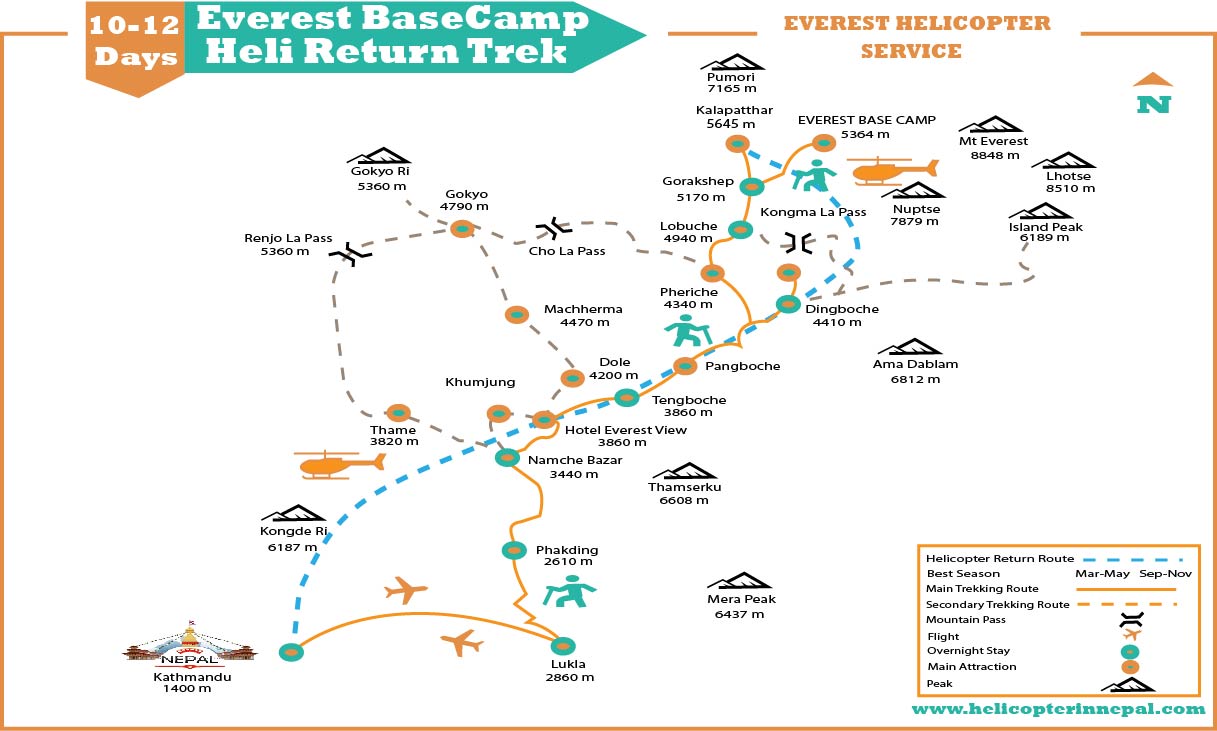
The following itinerary for the Everest Base Camp Trek 10 Days Helicopter Return gives you the full trekking experience while incorporating the helicopter flyout on the return journey. This is the most popular format offered by Everest Helicopter Service for the Kathmandu to Everest Base Camp helicopter return trek.
| Day | Route | Altitude | Walking Time |
|---|---|---|---|
| 1 | Arrive Kathmandu | 1,400 m | — |
| 2 | Lukla to Phakding | 2,610 m | 3–4 hours |
| 3 | Phakding to Namche Bazaar | 3,440 m | 5–6 hours |
| 4 | Acclimatization in Namche | 3,440 m | 2–3 hours |
| 5 | Namche to Tengboche | 3,870 m | 5–6 hours |
| 6 | Tengboche to Dingboche | 4,410 m | 5–6 hours |
| 7 | Dingboche to Lobuche | 4,940 m | 5–6 hours |
| 8 | Lobuche to EBC & Kala Patthar | 5,545 m | 8–10 hours |
| 9 | Helicopter Return to Kathmandu | — | 45–60 min flight |
| 10–12 | Buffer Days & Departure | 1,400 m | — |
Day 1: Arrival in Kathmandu (1,400m)
Airport pickup and trek briefing.
Day 2: Fly to Lukla (2,860m) – Trek to Phakding (2,610m)
Scenic mountain flight and easy trek.
Day 3: Trek to Namche Bazaar (3,440m)
Enter Sagarmatha National Park.
Day 4: Acclimatization Day in Namche
Hike to Everest View Hotel.
Day 5: Trek to Tengboche (3,860m)
Visit famous Tengboche Monastery.
Day 6: Trek to Dingboche (4,410m)
Gradual ascent with stunning Himalayan views.
Day 7: Trek to Lobuche (4,910m)
High alpine terrain.
Day 8: Everest Base Camp (5,364m) – Overnight at Gorakshep
Reach Everest Base Camp and celebrate your achievement.
Day 9: Kala Patthar (5,545m) Sunrise – Helicopter Return to Kathmandu
Early morning hike for panoramic Everest views.
Everest Base Camp Helicopter Return flight back to Kathmandu.
Day 10: Departure
Transfer to airport.
 -
- Hotel in Kathmandu
 Your journey begins the moment you land at Tribhuvan International Airport in Kathmandu. A representative from Everest Helicopter Service will meet you at the arrival hall and transfer you to your hotel in the heart of the city.
The rest of the day is yours to settle in, freshen up, and shake off any jet lag. In the evening, your lead guide will sit down with you for a full pre-trek briefing. This covers the day-by-day itinerary, what to expect at altitude, gear requirements, safety guidelines, and permit documentation. It is also a good opportunity to ask any questions you have been carrying with you.
Kathmandu itself is worth exploring if you arrive early enough. The narrow alleyways of Thamel, the golden temples of Durbar Square, and the aroma of street food drifting through the evening air give you an immediate sense of where you are. This is not just a transit stop — it is the beginning of the experience.
Accommodation: Hotel in Kathmandu Meals: Dinner Activity level: Easy
 MEALS
MEALS Dinner 3 to 4 Hours Teahouse in Phakding
 You wake before dawn for an early transfer to the domestic terminal. The flight to Lukla is short — roughly 35 minutes — but it is one of the most thrilling approaches in aviation. Tenzing-Hillary Airport sits on a steep hillside with a runway that ends at a cliff edge. Pilots who fly this route are among the most skilled in the world.
You land in Lukla to the sound of yak bells and the sight of trekkers adjusting their packs. This small mountain town is the gateway to the Khumbu, and the energy here is electric. After a quick breakfast and a final pack check, your trek begins.
The trail descends gradually through terraced farmland and pine forest, following the Dudh Koshi River downstream. You cross your first suspension bridge of many — these iconic hanging bridges swaying above turquoise glacial rivers become a recurring feature of the entire journey. Prayer flags flutter overhead, mani stones line the trail, and the sounds of the river fill the valley.
After about three to four hours of easy walking, you arrive in Phakding, a quiet riverside village with welcoming teahouses. It is a gentle introduction to life on the trail — perfect for warming up your legs and lungs.
Walking time: 3 to 4 hours Distance: Approximately 8 kilometers Accommodation: Teahouse in Phakding Meals: Breakfast, Lunch, Dinner Activity level: Easy to Moderate
MEALS Breakfast + Lunch + Dinner 5 to 6 Hours Teahouse in Namche Bazaar Today is one of the most dramatic walking days of the entire trek. The trail follows the river through deep gorges, crossing a series of high suspension bridges that grow increasingly impressive as the valley narrows. The bridge at Hillary Suspension Bridge, swinging more than 100 meters above the river, is a moment that makes many trekkers pause and take a breath — literally and figuratively.
Just before the final climb to Namche, on a clear morning, you catch your very first glimpse of Everest. It appears between two ridgelines — distant, white, and almost impossibly tall. Many trekkers stop here for ten minutes or more, unable to quite process what they are looking at.
Then comes the climb. The last two hours into Namche Bazaar are steep and relentless, gaining roughly 600 meters of elevation. Your legs will feel it. Your lungs will feel it more. But the moment you crest the hill and the town comes into view — a horseshoe-shaped amphitheater of colorful buildings clinging to the mountainside — every step feels worth it.
Namche Bazaar is extraordinary. For a mountain town above 3,400 meters, it has bakeries serving cinnamon rolls and fresh coffee, gear shops stocked with everything from down jackets to satellite chargers, restaurants with rooftop Everest views, and a Saturday market where Tibetan traders and local Sherpas exchange goods. It is the beating heart of the Khumbu, and you will grow fond of it quickly.
Walking time: 5 to 6 hours Distance: Approximately 11 kilometers Accommodation: Teahouse in Namche Bazaar Meals: Breakfast, Lunch, Dinner Activity level: Moderate to Challenging
MEALS Breakfast + Lunch + Dinner - Teahouse in Namche Bazaar Rest day does not mean do-nothing day. Acclimatization is one of the most critical elements of any high-altitude trek, and skipping it is one of the leading causes of altitude sickness and failed expeditions.
The golden rule at altitude is simple: climb high, sleep low. This morning, you hike up to the Everest View Hotel at around 3,880 meters — one of the highest hotels in the world — or continue to the Syangboche ridge above town. The panorama from here includes Everest, Lhotse, Nuptse, Ama Dablam, Thamserku, and Kangtega, all lined up in one sweeping view that feels almost too cinematic to be real.
After your high-altitude hike, you return to Namche for lunch and an afternoon rest. This is a good time to visit the Sherpa Culture Museum, browse the local market, or simply sit on a terrace with a pot of butter tea and watch the mountain light change across the afternoon.
Your body is working hard today even at rest — producing more red blood cells, adjusting its fluid balance, and adapting to the reduced oxygen. Give it the time it needs. Tomorrow the real altitude begins.
Altitude high point: 3,880 meters Accommodation: Teahouse in Namche Bazaar Meals: Breakfast, Lunch, Dinner Activity level: Light (short acclimatization hike)
MEALS Breakfast + Lunch + Dinner 5 to 6 Hours Teahouse in Tengboche Leaving Namche behind, the trail climbs to a high ridge that runs above the main Imja Khola valley. For the first hour or so, you walk with Everest, Lhotse, Ama Dablam, and Kantega in full view ahead of you. This ridge section is among the finest stretches of walking in the entire Himalayas — the path is wide, the light is golden in the morning, and the mountain panorama does not relent.
You descend to the riverside village of Phunki Tenga, where water-powered prayer wheels spin endlessly beside the river. Then comes a steady climb back up through ancient juniper and rhododendron forest. In spring, these forests bloom in shades of red and pink, and the combination of flowering trees against snow-capped peaks is something you will struggle to describe to people back home.
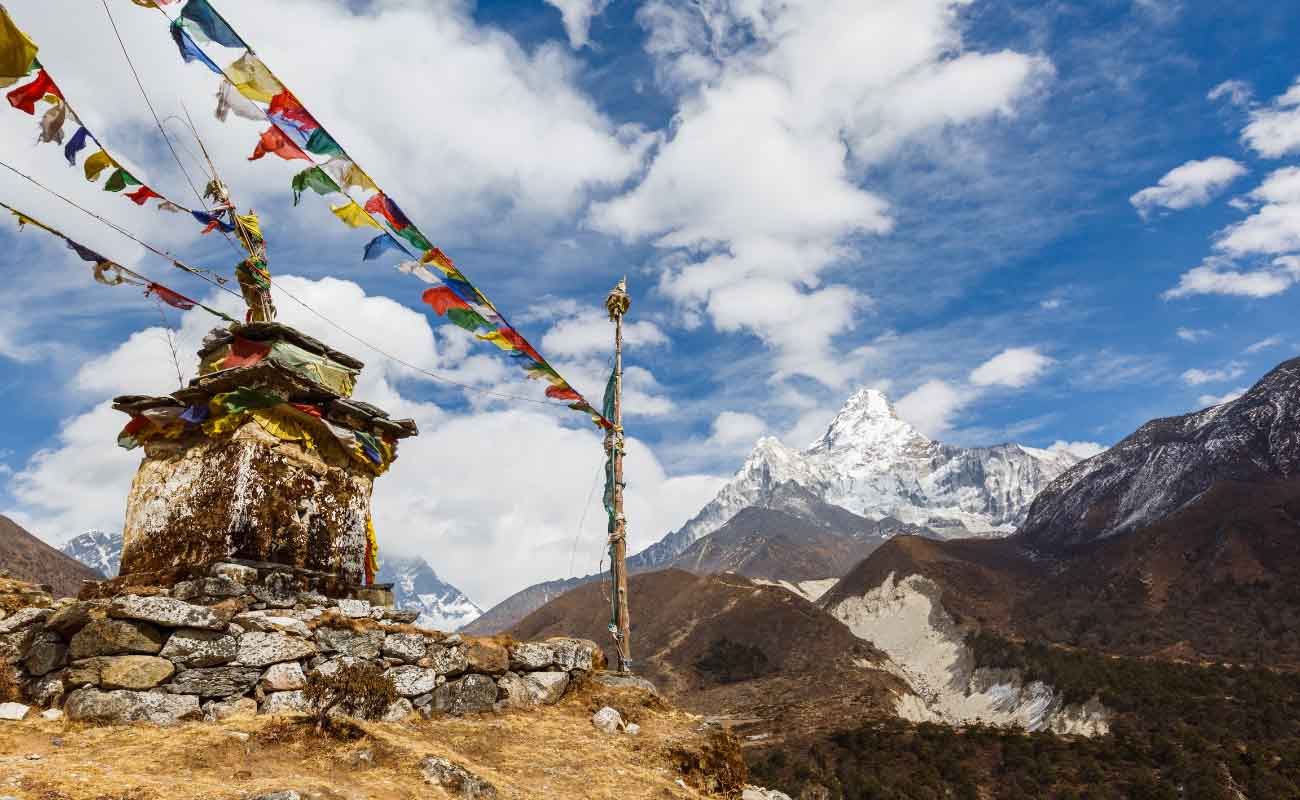
At the top of this climb sits Tengboche, and it stops you in your tracks. The famous Tengboche Monastery — the largest in the Khumbu — stands in the center of a wide open ridgeline meadow with Ama Dablam soaring directly behind it. This image has appeared in more Nepal travel photographs than perhaps any other. In person, it is even more powerful.
If the monastery is open, take time to go inside. The smell of butter lamps, the sound of monks chanting, and the centuries of prayer woven into the walls create an atmosphere unlike anything else on the route.
Walking time: 5 to 6 hours Distance: Approximately 10 kilometers Accommodation: Teahouse in Tengboche Meals: Breakfast, Lunch, Dinner Activity level: Moderate
MEALS Breakfast + Lunch + Dinner 5 to 6 Hours Teahouse in Dingboche Today you leave the tree line behind for good. The trail descends from Tengboche to the river crossing at Deboche and then climbs steadily into higher terrain. The vegetation thins, the air becomes noticeably colder, and the landscape transforms from forested ridges into a wide, open, rock-strewn valley.
You pass through Pangboche, one of the highest permanently inhabited villages in the Khumbu, with its ancient monastery and stone houses that look like they have grown directly from the earth. The trail continues through yak pastures and across stone bridges as you gain altitude steadily.
Dingboche sits in a wide, flat valley at 4,410 meters, surrounded by the enormous walls of Lhotse, Island Peak, and the Amphu Lapcha ridge. Stone-walled potato fields checker the valley floor. The air here is genuinely thin — about 43 percent of the oxygen available at sea level — and most trekkers notice that even small inclines require deliberate, measured breathing.
Evenings in Dingboche are cold. The teahouse dining rooms fill with trekkers huddled around yak-dung stoves, comparing notes on the day and fueling up on dal bhat and warm drinks. The nights are silent except for the occasional distant sound of ice shifting on the glacier. Sleep comes easily at altitude — exhaustion is a reliable companion by this point.
Walking time: 5 to 6 hours Distance: Approximately 11 kilometers Accommodation: Teahouse in Dingboche Meals: Breakfast, Lunch, Dinner Activity level: Moderate
MEALS Breakfast + Lunch + Dinner 5 to 6 Hours Teahouse in Lobuche The trail out of Dingboche climbs to a ridge above the valley before contouring around the base of the Khumbu glacier moraine. The scale of everything around you has grown enormous. The peaks are no longer distant — they fill the sky, pressing in on all sides with a weight that feels almost gravitational.
At Thukla, you reach a cluster of teahouses at the foot of a steep lateral moraine. This climb is short but physically hard at altitude. At the top, you enter a plateau of memorial chortens — stone cairns and plaques dedicated to climbers who have died on Everest and the surrounding peaks. Some plaques carry photographs. Others carry only names and dates. Walking through this place in silence is unavoidable, and it puts the human dimensions of these mountains into sharp and humbling perspective.
The trail flattens as you walk along the glacier moraine into Lobuche. At just under 5,000 meters, this is one of the highest teahouse stops on the route. The accommodation is basic — expect cold rooms, limited electricity, and shared facilities — but the community of trekkers gathered here each evening shares something real. You are all close now. Tomorrow is the big day.
Spend the evening eating well, hydrating thoroughly, and going to bed early. The alarm will be set before dawn.
Walking time: 5 to 6 hours Distance: Approximately 8 kilometers Accommodation: Teahouse in Lobuche Meals: Breakfast, Lunch, Dinner Activity level: Challenging
MEALS Breakfast + Lunch + Dinner 8 to 10 Hours Teahouse in Gorakshep This is the day everything has been building toward.
You leave Lobuche in the dark or at first light, following the moraine trail to Gorak Shep, the last collection of teahouses before base camp. After dropping your heavy bags and eating a hot breakfast, you push on toward Everest Base Camp.
The trail crosses the Khumbu Glacier — a vast, shifting landscape of ice towers, crevasses, and rubble that takes about an hour to navigate. Nothing about this terrain is straightforward. The ice is blue-grey and ancient, groaning quietly as it moves. Cairns mark the route through the maze.
And then you are there.
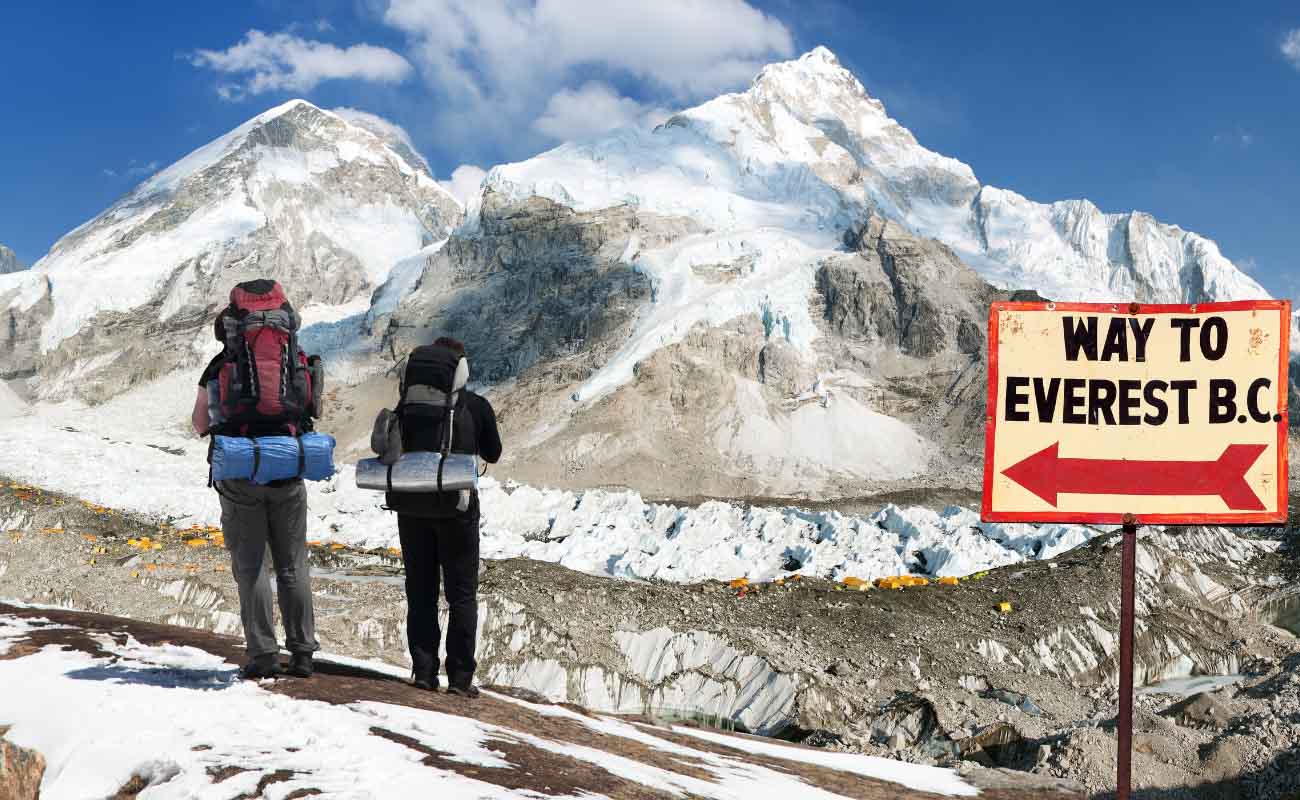
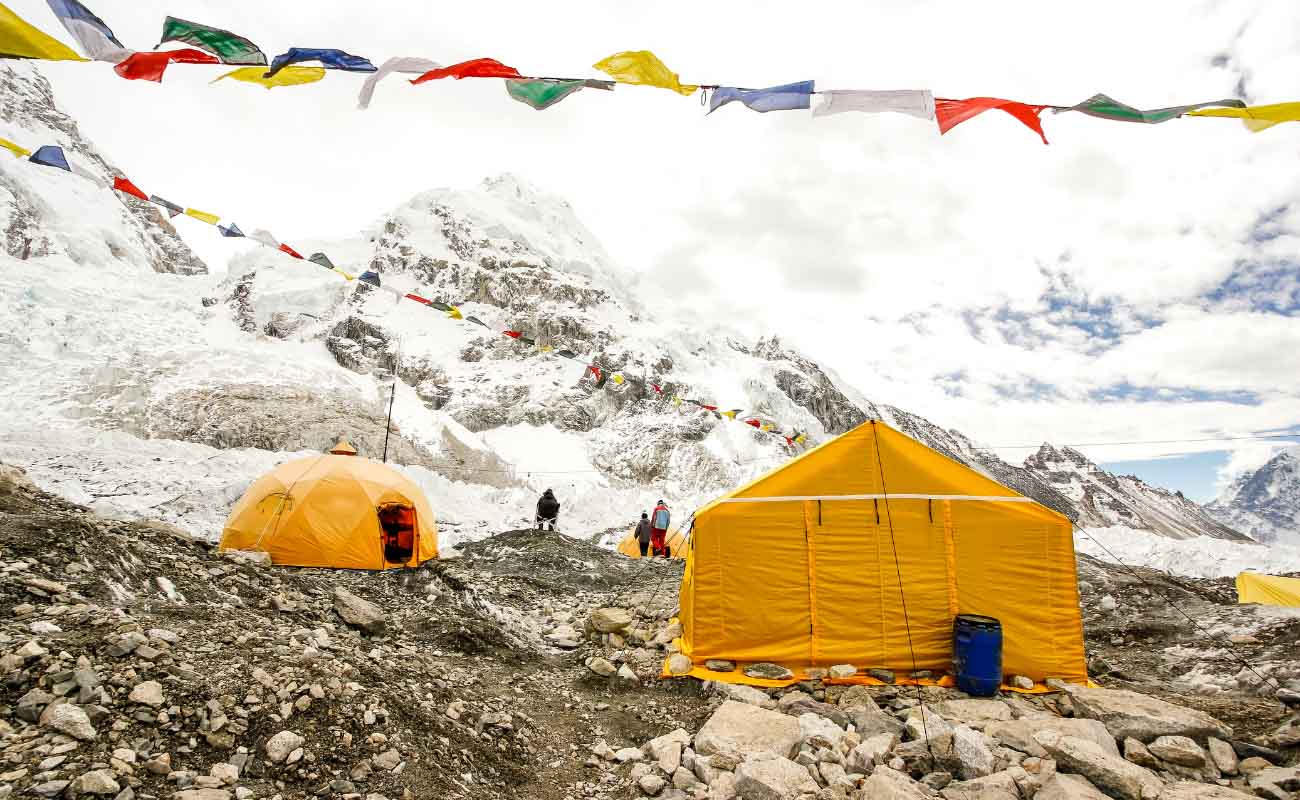
Everest Base Camp at 5,364 meters is not what most people expect. There is no formal viewpoint, no grand summit vista, no single obvious spot to stand and declare arrival. Instead, it is a wide rocky moraine surrounded by the towering Khumbu Icefall, which rises in a chaotic tumble of seracs and ice blocks directly above. During the climbing season, the area is filled with expedition tents in a city of color. In all seasons, the scale of the Icefall above you is staggering.
You have made it.
After photographs, quiet moments, and whatever personal rituals feel right, you make your way back to Gorak Shep. In the afternoon, you tackle Kala Patthar — a 5,545 meter peak just above the village that offers the most celebrated panoramic view of Mount Everest anywhere accessible without technical climbing. The summit shows you the full South Face and Southeast Ridge — the routes that Hillary and Tenzing, and thousands of climbers since, have followed toward the top of the world.
The sunset from Kala Patthar, when the light turns the snow pink and gold and the shadows stretch across the glacier below, is one of the most beautiful things you will ever see.
Walking time: 8 to 10 hours total Highest point: 5,545 meters (Kala Patthar) Accommodation: Teahouse in Gorakshep Meals: Breakfast, Lunch, Dinner Activity level: Very Challenging
MEALS Breakfast + Lunch + Dinner 45 to 60 minutes Hotel in Kathmandu This morning feels different. You wake knowing that your feet will not be carrying you back down the way you came. Instead, something extraordinary is waiting.
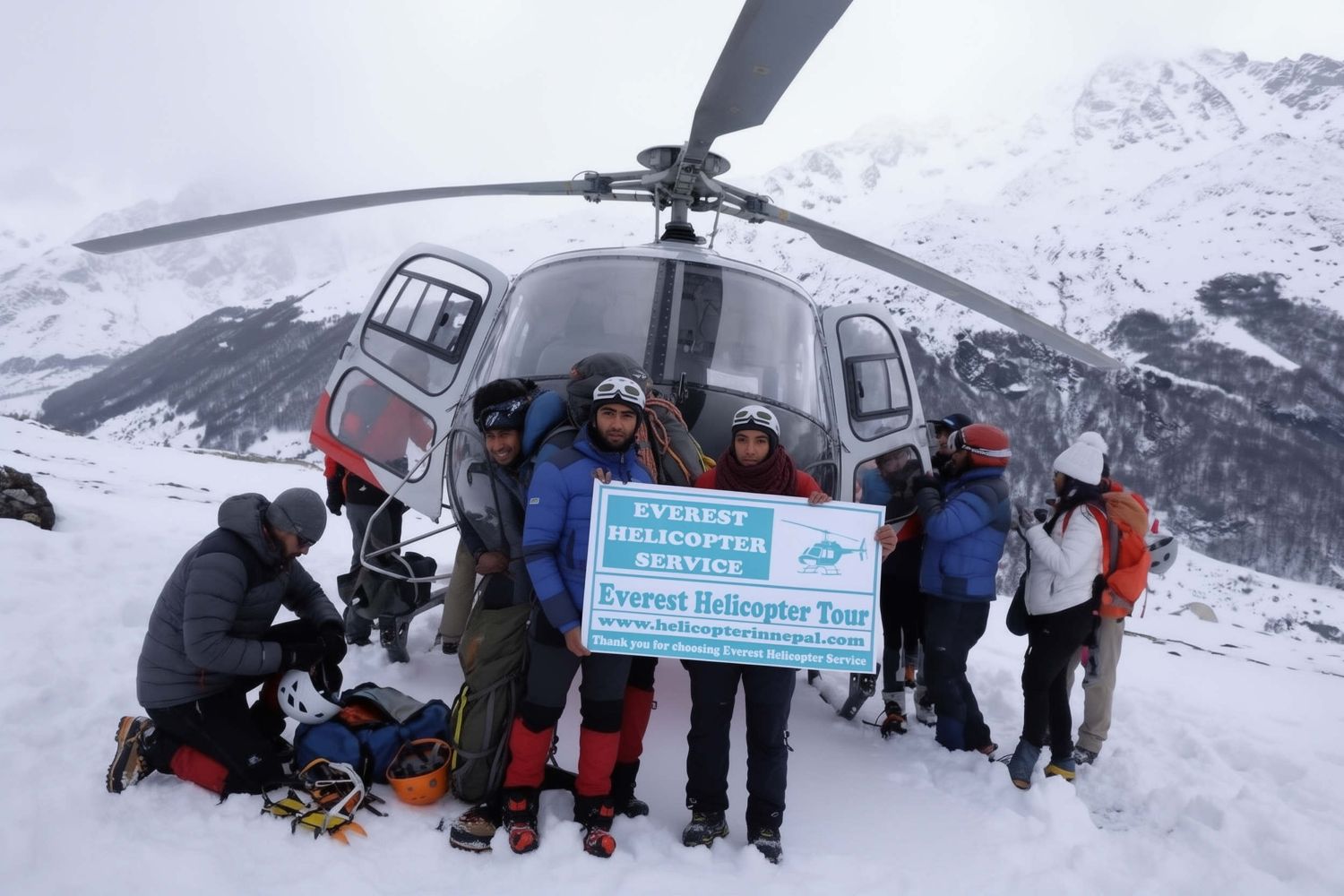
After an early breakfast, your guide receives weather confirmation from the Everest Helicopter Service operations team in Kathmandu. The helicopter is cleared, the landing zone is prepared, and within a short time you hear the distant thrum of rotors growing closer through the mountain air.
The helicopter lands on a flat area near Gorak Shep. You load your bags — kept under 10 kilograms per person for the flight — and climb aboard. The door closes. The rotors increase in pitch. And then you lift off the ground at nearly 5,400 meters and begin to rise above the Khumbu.
What happens in the next 45 to 60 minutes is difficult to put into words.
You fly alongside the moraine you trekked the past several days, looking down at the trail from above. You see the glacier in full from the air — its extraordinary width and movement visible in a way impossible from the ground. Ama Dablam, Lhotse, Nuptse, and Everest itself appear at eye level or above, impossibly close. The pilot may circle or hover briefly at certain viewpoints, giving you time to absorb what you are seeing.
As the helicopter descends toward lower altitude, the landscape shifts from rock and ice to green valleys, river systems, and eventually the hills surrounding the Kathmandu Valley. The transition from high Himalayan wilderness to the sprawling capital happens in less than an hour, and the contrast is almost disorienting.
You touch down in Kathmandu.
Your hotel room, a hot shower, clean clothes, and your first proper meal in over a week are all waiting. The mountains are still there — you can see them on clear evenings from the rooftops of Thamel — but you are back in the warmth, carrying something in you that did not exist twelve days ago.
Flight time: Approximately 45 to 60 minutes Accommodation: Hotel in Kathmandu Meals: Breakfast, Dinner Activity level: Easy
MEALS Breakfast + Dinner - - It's time to say good bye to Nepal and people, you depart for your international flight home.
MEALS BreakfastUnderstanding the Everest Base Camp Helicopter Return Cost is important for planning your trip. The total investment covers two distinct components: the trekking portion and the helicopter flight itself.
For the Everest Base Camp Trek Helicopter Return Cost in 2026/27, the group joining package starts from approximately USD 1,800 to USD 2,200 per person. This includes the helicopter return flight from Gorak Shep or Kala Patthar to Kathmandu, shared among a group of five to six passengers. The Everest Base Camp Helicopter Return Group Joining option is the most affordable way to experience the fly-out.
| Package Type | Group Size | Duration | Price Per Person (USD) | Helicopter Type | Best For |
|---|---|---|---|---|---|
| Group Joining Everest Base Camp Helicopter Return Package | 4–5 People | 12 Days | $2,950 – $3,500 | Shared Helicopter | Budget & small groups |
| Standard Everest Base Camp Trek with Helicopter Return | 2–4 People | 12 Days | $3,600 – $4,200 | Shared/Private | Most Popular Option |
| Private Everest Base Camp Helicopter Return | 1–2 People | 10–12 Days | $4,500 – $6,500 | Private Charter | Couples / Luxury Travelers |
| Luxury Everest Base Camp Trek with Helicopter | 2–4 People | 12 Days | $5,500 – $8,500 | Premium Helicopter | 5-Star Lodge Experience |
The Private Everest Base Camp Helicopter Return option costs between USD 4,500 and USD 6,000 per charter (for a full helicopter), which can be shared among your private group or used exclusively. This is the preferred choice for families, couples, and corporate groups wanting a dedicated, flexible experience.
It is worth noting that the Everest Base Camp Heli Return Price varies by season, group size, and level of accommodation (standard versus luxury lodges). Everest Helicopter Service offers customized pricing and can build a package specifically tailored to your timeline, group, and comfort preferences.
Many travelers ask whether the helicopter return version is worth it compared to the traditional round-trip trek. The honest answer is: it depends entirely on what you value most.
| Feature | Everest Base Camp Trek with Helicopter Return | Regular Everest Base Camp Trek |
|---|---|---|
| Duration | 10–12 Days | 14–16 Days |
| Descent Days | Fly Back by Helicopter | 3–4 Days Walking Down |
| Physical Strain | Moderate | High |
| Scenic Experience | Aerial view of Everest & Himalayas | Ground-level views only |
| Cost | Higher (Helicopter Included) | Lower |
| Best For | Time-limited & luxury travelers | Budget trekkers |
| Worth It? | Yes – Premium Experience | Yes – Traditional Trek |
For time-conscious, comfort-oriented, or physically mindful travelers, the EBC Trek with Helicopter Return is not just worth it — it is the smarter choice.
Choosing the right season matters greatly for both trekking conditions and helicopter flight safety. Weather in the Himalayan region can change rapidly, and helicopter operations are weather-dependent.
| Season | Months | Weather | Visibility | Recommendation |
|---|---|---|---|---|
| Spring | March–May | Stable & Mild | Excellent | Best Time |
| Summer | June–Aug | Rainy | Limited | Not Recommended |
| Autumn | Sept–Nov | Clear & Stable | Excellent | Best Time |
| Winter | Dec–Feb | Cold but Clear | Good | Possible with preparation |
Spring, from March through May, is the most popular season. Skies are generally clear in the mornings, temperatures are rising, rhododendrons are in bloom, and the mountain views are exceptional. This is also the Everest expedition season, so base camp buzzes with international mountaineering teams. The best time for Everest Base Camp Helicopter Return is widely considered to be late March through early May.
Autumn, from September through November, is equally excellent. Post-monsoon skies offer crystal clarity, the air is fresh and stable, and the trails are at their most vibrant. October is widely considered the finest month for Himalayan trekking overall, combining ideal temperatures with remarkable visibility.
Winter, from December through February, is possible but more challenging. Temperatures drop sharply at altitude, and some teahouses reduce services. However, winter offers solitude on the trails and often perfectly clear skies. Helicopter operations in winter require careful planning around weather windows.
The monsoon season, from June through August, is not recommended for the helicopter return option as heavy rainfall and cloud cover regularly ground flights and obscure visibility.
The Everest Base Camp Trek with Helicopter Return has a broad and growing appeal across different traveler types.
Finally, it is excellent for repeat trekkers who have done the traditional route before and want to experience the same journey in a new and elevated way.
When it comes to booking your Everest Base Camp Helicopter Return 2026, the operator you choose matters as much as the experience itself. Helicopters in mountain environments operate under uniquely demanding conditions, and safety, experience, and local knowledge are everything.
Everest Helicopter Service brings years of dedicated experience in Himalayan helicopter operations. Our pilots are fully licensed and trained specifically for high-altitude flying in the Khumbu region. Our safety record speaks for itself, and our team of local guides and logistics coordinators know the terrain in every season.
We offer the best price guarantee on group joining and private charter packages, with full transparency on what is included. We build custom itineraries for solo travelers, couples, families, and corporate groups. We partner with the finest teahouse lodges on the route and can arrange luxury upgrades at Namche Bazaar and Tengboche for those who want extra comfort along the way.
From the moment you contact us to the moment your helicopter touches down in Kathmandu, every detail is managed by a team that genuinely loves these mountains.
Reserve Your Everest Base Camp Helicopter Return Today. Contact Everest Helicopter Service for 2026/27 availability, custom quotes, and personalized itinerary planning.
The Himalayas do not wait. Everest Base Camp has been the dream of adventurers for generations, and the Everest Base Camp Trek with Helicopter Return is how modern travelers are living that dream on their own terms — fully, boldly, and beautifully.
Whether you are driven by the challenge of altitude, the poetry of the landscape, the thrill of the flight, or simply the desire to stand where so few humans ever stand, this journey has something that no other adventure on earth can match.
The Everest Base Camp Helicopter Return Cost is an investment not just in a trip, but in a memory that will define the rest of your life. The Everest Base Camp Trek with Helicopter Return Package from Everest Helicopter Service is designed to deliver that memory safely, comfortably, and without compromise.
Contact us today for 2026/27 bookings. Let us build your perfect Himalayan journey — one that begins on the trail and ends in the sky.
Note: Group joining Date may vary on weather condition and number of people joined.
Kathmandu
Kathmandu
Kathmandu
Kathmandu
Kathmandu
Kathmandu
Kathmandu
Kathmandu
Kathmandu
Kathmandu
Kathmandu
Kathmandu
Kathmandu
Kathmandu
Kathmandu
Kathmandu
Kathmandu
Kathmandu
Kathmandu
Kathmandu
Kathmandu
Kathmandu
Kathmandu
Kathmandu
Kathmandu
Kathmandu
Kathmandu
Kathmandu
Kathmandu
Kathmandu
Kathmandu
Kathmandu
Kathmandu
Kathmandu
Kathmandu
Kathmandu
Kathmandu
Kathmandu
Kathmandu
Kathmandu
Kathmandu
Kathmandu
Kathmandu
Kathmandu
Kathmandu
Kathmandu
Kathmandu
Kathmandu
Kathmandu
Kathmandu
Kathmandu
Kathmandu
Kathmandu
Kathmandu
Kathmandu
Kathmandu
Kathmandu
Kathmandu
Kathmandu
Kathmandu
The total cost depends on the type of package you choose. For a group joining package, prices typically start from USD 1,800 to USD 2,700 per person. This includes the helicopter return flight shared among five to six passengers, teahouse accommodation, all meals on the trek, a licensed guide, a porter, domestic flights, and all permits. For a private helicopter charter — where you book the entire helicopter exclusively for your group — costs range from USD 4,500 to USD 5,000 for the full charter. Everest Helicopter Service offers customized quotes based on your group size, season, and accommodation preferences, so it is always worth getting in touch for an exact figure.
The most popular format is a 10-day itinerary. This covers your arrival in Kathmandu, the flight to Lukla, the full trekking route through Namche Bazaar, Tengboche, Dingboche, and Lobuche to Everest Base Camp and Kala Patthar, the helicopter return flight to Kathmandu, and two to three buffer days at the end to account for any weather-related delays. A condensed 10-day version is available for experienced trekkers with limited time, though the 12-day format is recommended for safer acclimatization and a more comfortable overall pace.
For most travelers, the answer is a clear yes. The helicopter return saves three to four days of repetitive descent that many trekkers describe as the most tiring and anticlimactic part of the traditional route. It completely eliminates the knee and joint strain of walking downhill for two full days at altitude. It replaces the descent with a 45 to 60 minute scenic flight over the Khumbu Glacier and the highest peaks on earth — views that no amount of ground trekking can replicate. For anyone who values time, comfort, or simply wants to end the journey on the highest possible note, the helicopter return is not just worth it, it is the smarter and more memorable choice.
Yes. No technical climbing skills, ropes, or mountaineering experience are required. The trails are well-marked and supported throughout. The primary challenge is altitude rather than terrain, and the itinerary is structured with acclimatization days specifically to help your body adjust safely. If you can walk comfortably for five to seven hours on consecutive days and are willing to prepare with regular cardio exercise for two to three months before the trip, you are a strong candidate for this trek. The helicopter return version is actually more beginner-friendly than the traditional route because it removes the exhausting descent where tired trekkers are most at risk.
A standard package from Everest Helicopter Service includes airport transfers in Kathmandu, the domestic flight from Kathmandu to Lukla, all teahouse accommodation throughout the trek, three meals per day on the trail (breakfast, lunch, and dinner), an experienced licensed English-speaking trekking guide, one porter per two trekkers, the Sagarmatha National Park entry permit, the TIMS trekking card, and the helicopter return flight from the Gorak Shep landing zone back to Kathmandu. Premium packages can also include a pre-trek hotel night in Kathmandu and a farewell dinner. International flights, personal travel insurance, alcoholic beverages, hot showers, WiFi charges, and tips are not included.
Yes, when operated by an experienced and reputable company. Everest Helicopter Service uses modern aircraft certified for high-altitude mountain operations, and our pilots are specifically trained in Himalayan flying conditions — one of the most technically demanding environments in aviation. Flights are only conducted when weather conditions are confirmed as safe. No flight is ever pushed through marginal weather under any circumstances. All operations are regulated by the Civil Aviation Authority of Nepal. While mountain flying carries some inherent risk by its very nature, choosing an experienced operator with a strong safety record reduces that risk to an absolute minimum.
The two ideal windows are spring from March to May and autumn from September to November. October is widely regarded as the single best month — post-monsoon skies are crystal clear, temperatures on the trail are comfortable, and mountain visibility is at its peak. Late March through early May is equally excellent, with the added beauty of rhododendron forests blooming in red and pink at lower altitudes. Both seasons offer the most reliable conditions for helicopter operations. The monsoon season from June to August is not recommended as persistent cloud cover and rainfall frequently ground flights and make mountain views largely impossible.
Weather delays are a completely normal and expected part of operations in the Himalayan region. This is the exact reason your itinerary includes two to three buffer days built into the end of the trip. If the helicopter cannot fly on the scheduled day, your guide will keep you comfortable at the current teahouse while the Everest Helicopter Service operations team in Kathmandu monitors weather patterns and identifies the earliest available safe window. If weather prevents flying for an extended period beyond the buffer days, a trekking descent to Lukla remains available as a reliable backup option. The buffer days are specifically designed to ensure your international departure flight is never put at risk.
The most essential items are a quality down jacket rated to at least minus 15 degrees Celsius, thermal base layers for top and bottom, waterproof trekking trousers, a windproof and waterproof outer shell jacket, sturdy waterproof trekking boots that are properly broken in before the trip, warm wool or synthetic trekking socks (at least four to five pairs), a warm hat, gloves, UV-protection sunglasses, high SPF sunscreen, a sleeping bag rated to minus 10 degrees Celsius, a headlamp with spare batteries, trekking poles, a 25 to 35 liter daypack, a reusable water bottle with purification tablets, and any personal medications. Keep your main bag under 10 to 15 kilograms as your porter will carry it, and pack separately a small bag within the weight limit for the helicopter return flight.
Yes, and it is non-negotiable. Your insurance policy must specifically cover high-altitude trekking above 5,000 meters and helicopter evacuation in a mountain emergency. This is a hard requirement — Everest Helicopter Service will ask for proof of valid insurance before your trek departs. In the event of a serious altitude-related illness or injury requiring emergency helicopter evacuation, the cost without insurance can reach several thousand US dollars. Specialist travel insurance covering mountain trekking and rescue is widely available online and is relatively affordable. Make sure your policy also covers trip cancellation and medical treatment, not just evacuation.
 Maximum: 5 People/Helicopter
Best price guaranteed
Safe Tour Plan
Maximum: 5 People/Helicopter
Best price guaranteed
Safe Tour Plan
Response Time 0-2 Hours , Response Rate 100%
© 2026 All rights reserved. Everest Helicopter Service Pvt. Ltd.



Isabella MartinezSpainOn 2026, February
The Perfect Way To Experience Everest
Our 12-day Everest Base Camp Trek With Helicopter Return Was Truly The Adventure Of A Lifetime. The Trek Was Challenging But Incredibly Rewarding, And The Himalayan Views Were Breathtaking Every Single Day. The Helicopter Flight Back To Kathmandu Was The Highlight — Flying Over Everest And The Glaciers Felt Surreal. Sushil, The Owner Of Everest Helicopter Service, Organized Everything Flawlessly. Our Guide Was Knowledgeable, Patient, And Very Supportive Throughout The Journey. I Highly Recommend This Company For A Safe And Unforgettable Experience.
Olivia BennettAustriaOn 2026, February
Stunning Views And Exceptional Service
I Joined The 10-day EBC Trek With Helicopter Return, And It Exceeded All Expectations. The Trekking Experience Was Well-paced, And Our Guide Was Professional And Friendly, Always Checking On Our Comfort. The Helicopter Return Was Absolutely Spectacular — Seeing The Himalayas From Above Was Something I Will Never Forget. Sushil From Everest Helicopter Service Was Incredibly Helpful From The Beginning, Answering All My Questions And Ensuring Everything Ran Smoothly. It Was Worth Every Penny For The Scenery And The Premium Experience.
Liam O’ConnorAustraliaOn 2026, March
A Bucket List Dream Come True
This Trip Was Perfectly Organized By Everest Helicopter Service. We Trekked For 11 Days Through Beautiful Sherpa Villages And Enjoyed Incredible Mountain Views. Reaching Everest Base Camp Was Emotional, And The Sunrise From Kala Patthar Was Simply Magical. The Helicopter Flight Back Saved Time And Gave Us A Stunning Aerial View Of Everest And Surrounding Peaks.
Sushil Was Fantastic — Very Professional And Experienced. Our Guide Was Also Outstanding, Making Us Feel Safe And Motivated The Entire Trek.
Amelia ChenCanadaOn 2026, March
Luxury And Adventure Combined
The Everest Base Camp Trek With Helicopter Return Was The Perfect Combination Of Adventure And Comfort. The 10-day Trek Allowed Proper Acclimatization, And Our Guide Was Amazing — Knowledgeable About The Mountains And Local Culture. The Helicopter Flight Back To Kathmandu Was The Highlight Of The Trip.
The Panoramic Views Of Everest Were Simply Unforgettable. Sushil And His Team At Everest Helicopter Service Provided Excellent Service From Start To Finish. I Would Absolutely Book With Them Again.