
 Maximum: 5 People/Helicopter
Best price guaranteed
Safe Tour Plan
Maximum: 5 People/Helicopter
Best price guaranteed
Safe Tour Plan
Response Time 0-2 Hours , Response Rate 100%
There are journeys that change the scenery. And then there are journeys that change the person who makes them. The Kailash Mansarovar Yatra 2027 belongs entirely to the second category.
Mount Kailash — 6,638 metres of dark rock and perpetual ice rising from the remote Ngari plateau of western Tibet — is not simply the highest or the most remote or the most dramatically beautiful mountain in the world, though it is all of those things. It is the mountain that four of humanity's great spiritual traditions have independently identified, across thousands of years, as the most sacred place on earth. For Hindus, it is the abode of Lord Shiva, the dwelling place of the destroyer and transformer, the axis around which the cosmos revolves. For Tibetan Buddhists, it is Kang Rinpoche — the Precious Snow Mountain — at the centre of the mandala of existence, where the great teacher Milarepa is said to have achieved enlightenment. For Jains, it is Ashtapada, the mountain where Rishabhanatha, their first tirthankara, attained liberation from the cycle of birth and death. For Bon practitioners, it is the nine-storey Swastika Mountain, the seat from which the founder of the Bon tradition, Tonpa Shenrab, descended to earth.
No climber has ever stood on its summit. Not for lack of technical ability but because the entire world, looking at this mountain across all traditions and all centuries, has agreed without coordination that some places are too sacred for conquest.
The Kailash Mansarovar Yatra is the pilgrimage to this mountain and to Lake Mansarovar — the vast, sapphire-blue holy lake at 4,590 metres at its foot, considered the most sacred freshwater body on earth, from whose shores four of Asia's great rivers take their birth: the Brahmaputra, the Indus, the Sutlej, and the Karnali. To bathe in Mansarovar is to wash away the accumulated karma of 100 lifetimes. To walk the Kailash Kora — the 52-kilometre circumambulation of the mountain on foot, crossing Dolma La Pass at 5,630 metres — is to complete one of the most spiritually powerful acts available to a living human being.
In 2027, Everest Helicopter Service invites you to make this journey. With a decade of licensed Himalayan helicopter operations, a team of expert bilingual guides, established permit processing through authorised Tibet partners, and an uncompromising commitment to the safety and spiritual depth of every yatri in our care, Everest Helicopter Service is the name that hundreds of pilgrims from India, Nepal, the USA, the UK, and beyond have trusted with the most important journey of their lives.
2027 Kailash Mansarovar Yatra registrations are now open. Read this complete guide — it covers every package, every route, every cost, every detail of the itinerary, and every question you might have — and then reach out to the Everest Helicopter Service team to secure your place.
| Detail | Information |
|---|---|
| Trip name | Kailash Mansarovar Yatra 2027 — Tour Packages, Cost & Itinerary |
| Operated by | Everest Helicopter Service, Kathmandu, Nepal |
| Routes available | Helicopter route (Nepalgunj–Simikot–Hilsa) & Overland route (Kyirong border) |
| Helicopter route duration | 10 – 12 Days |
| Overland route duration | 14 – 16 Days |
| Start & end point | Kathmandu — Tribhuvan International Airport (TIA) |
| Maximum altitude | Dolma La Pass — 5,630 m (18,471 ft) |
| Kailash Kora distance | 52 km over 3 days on foot |
| Helicopter route cost | INR 3,00,000
Per person — fully inclusive |
| Overland route cost | USD 2,400 – 2,800
Per person — approx. INR 2,00,000–2,35,000 |
| Hotel standard (Nepal) | 4-star hotel — Kathmandu & Nepalgunj, twin sharing |
| Accommodation in Tibet | Clean guesthouses — Purang, Mansarovar, Darchen, Zuthulphuk, Taklakot |
| Meals | All vegetarian — North & South Indian, throughout the journey |
| Age eligibility | 18 – 69 years (set by Chinese permit regulations) |
| Passport validity required | Minimum 6 months from yatra start date |
| Medical fitness certificate | Required — from registered physician |
| Permits included | Tibet Travel Permit · Chinese Group Visa · Alien Travel Permit (Ngari) |
| Group discount | Available for 6+ pilgrims travelling together |
| Yatra season 2027 | May – October (peak: June – September) |
| Peak departure month | July — Guru Purnima full moon batch (fastest-filling) |
| Departure cities (India) | Delhi · Mumbai · Kolkata · Chennai · Bengaluru · Ahmedabad · Lucknow · Hyderabad |
| International departures | USA · UK · Canada · Australia · Southeast Asia (join in Kathmandu) |
Every year between May and October, pilgrims from across the world make the Kailash Mansarovar Yatra. But not every year is equal. The Hindu and Tibetan sacred calendars both recognise that certain years carry amplified spiritual potency for this pilgrimage, and 2027 falls in a position in the longer sacred cycle that makes it an especially auspicious time to undertake the Mount Kailash Parikrama 2027.
Pilgrimage scholars and astrologers who have studied the Kailash tradition note that the alignment of the 2027 Hindu Panchang with the specific phases of the Tibetan lunar calendar creates a pattern of sacred dates — particularly in the months of June and July — when the Kailash Mansarovar Full Moon Yatra 2027 carries extraordinary merit. The Guru Purnima full moon of July 2027 is considered by many in the tradition as the single most powerful date of the entire pilgrimage season — being at Mansarovar for this moonrise is an aspiration that returning yatris consistently name as one of their most profound spiritual experiences.
Beyond the calendar, 2027 carries momentum. Following the 2026 Year of the Horse — which drew unprecedented numbers of pilgrims and generated a multi-year wave of interest in the Kailash Mansarovar Pilgrimage 2027 — many devotees who could not obtain 2026 seats have already committed to 2027. This means the Kailash Mansarovar Yatra 2027 season is expected to be one of the most heavily booked in recent history. Everest Helicopter Service strongly advises early registration.
Everest Helicopter Service offers two primary route formats for the Kailash Mansarovar Yatra 2027, each designed for a different pilgrim profile, budget range, and time availability. Both routes include the full Kailash Kora — the sacred 52-kilometre circumambulation of Mount Kailash on foot — and the Lake Mansarovar holy darshan and ritual bath. The routes differ in how you travel between Kathmandu and the Tibet border.
The Kailash Mansarovar Yatra by Helicopter 2027 is the most sought-after and most efficiently structured pilgrimage format available. It is the package that Everest Helicopter Service is best known for and most highly recommended for pilgrims whose priorities are comfort, time efficiency, and reduced physical demand on the approach journey.
Route: Kathmandu — Nepalgunj by scheduled flight — Simikot by scheduled flight — Hilsa by chartered helicopter (25 minutes over the Karnali gorge) — Tibet border crossing — Purang — Lake Mansarovar — Darchen — Kailash Kora (3 days) — Taklakot — Hilsa — Simikot — Nepalgunj — Kathmandu.
Duration: 10 to 12 days from Kathmandu to Kathmandu.
The 25-minute helicopter flight from Simikot to Hilsa is the defining element of this package. It eliminates what would otherwise be two to three days of rough road or strenuous walking through the high Himalayan terrain of Humla district, compressing the approach into a single spectacular low-level flight over the Karnali River gorge. For pilgrims who are 60 years and older, for those with knee or joint concerns, and for those with limited leave from work, this helicopter segment is not a luxury — it is what makes the entire yatra realistically achievable.
Kailash Yatra helicopter package 2027 cost: INR 3,00,000 per person. This is a fully inclusive rate covering all scheduled domestic flights in Nepal, the chartered Simikot-Hilsa helicopter, all Tibet permits and Chinese Group Visa, 4-star hotel accommodation in Kathmandu and Nepalgunj, guesthouse accommodation throughout Tibet, all vegetarian meals, bilingual Nepali team leader, English-speaking Tibetan guide, professional cook, support crew, yaks for Kora luggage, supplemental oxygen, first-aid kit, airport transfers, and Everest Helicopter Service branded yatra kit.
Group discounts are available for groups of six or more pilgrims travelling together from India or internationally. Contact the Everest Helicopter Service reservations team for a group quote.
The Kailash Mansarovar Yatra overland 2027 via the Kyirong border route is the choice for pilgrims who want the deepest, most immersive Tibetan plateau experience — those who wish to spend more time in the extraordinary landscape of western Tibet, who have a longer leave window, and for whom the journey itself is as important as the arrival.
The Kyirong route Kailash 2027 enters Tibet from the Nepal side at the Kyirong (Rasuwagadhi) border crossing, north of Kathmandu — significantly more convenient than the former Kodari crossing and offering a more gradual altitude gain that benefits acclimatization. From Kyirong, the overland journey across the Tibetan plateau passes through Saga, Paryang, and Hor Chu before reaching Lake Mansarovar and Darchen — a drive of extraordinary visual drama that crosses high passes, follows ancient caravan routes, and offers an uninterrupted immersion in Tibetan high-altitude culture and landscape.
Duration: 14 to 16 days from Kathmandu to Kathmandu.
Kailash Mansarovar Yatra 2027 cost overland route: USD 2,400 to USD 2,800 per person (approximately INR 2,00,000 to INR 2,35,000 at current rates), inclusive of all land transport in Tibet, Chinese Group Visa, Tibet Travel Permit, Alien Travel Permit, accommodation throughout, all vegetarian meals, Tibetan guide, Nepali team leader, cook, support crew, and yaks for the Kailash Kora.
Not included: International flights to Kathmandu, Nepal domestic flights, personal travel insurance, and emergency evacuation coverage.
For pilgrims who wish to experience the Kailash Mansarovar Yatra 2027 in exclusive privacy and with enhanced comfort at every stage, Everest Helicopter Service offers the Luxury Kailash Yatra 2027 as a fully private departure package. This package is designed for corporate groups, high-net-worth families, and devotees who prefer a completely personalised spiritual experience without the constraints of a fixed-batch schedule.
The Luxury Kailash Yatra 2027 features private helicopter charter throughout, upgraded accommodation at every possible stage of the journey, a private Tibetan guide and Nepali team leader exclusively assigned to the group, a dedicated cook with expanded menu options, private vehicle throughout Tibet, priority Tibet permit processing, and complete flexibility on departure date within the May to October season.
Cost: Custom quote based on group size, departure date, and specific requirements. Contact Everest Helicopter Service for a personalised luxury package proposal.
The Budget Kailash Yatra 2027 offered by Everest Helicopter Service is the overland route designed to the most economical specification while maintaining the non-negotiable quality elements: Tibet permits processed correctly, a competent and licensed Tibetan guide, proper guesthouse accommodation, and adequate vegetarian meals.
This package is ideal for younger pilgrims, spiritually motivated travellers from India and internationally who are experienced trekkers, and those for whom the physical challenge of the overland approach is part of the intended experience rather than an obstacle. Budget Kailash Yatra 2027 starts from USD 2,400 per person from Kathmandu.
| Feature | Helicopter route | Overland Kyirong | Luxury private | Budget overland |
|---|---|---|---|---|
| Price per person | INR 3,00,000 | USD 2,400–2,800 | Custom quote | From USD 2,400 |
| Duration | 10–12 days | 14–16 days | 10–12 days | 14–16 days |
| Simikot–Hilsa helicopter | ✓ Included | ✗ Not applicable | ✓ Private charter | ✗ |
| Tibet border crossing | Hilsa (Nepal side) | Kyirong / Rasuwagadhi | Hilsa | Kyirong |
| 4-star hotel Nepal | ✓ | ✓ | ✓ Upgraded | Standard |
| Private guide | Shared group | Shared group | ✓ Dedicated private | Shared group |
| Kailash Kora included | ✓ 52 km, 3 days | ✓ 52 km, 3 days | ✓ 52 km, 3 days | ✓ 52 km, 3 days |
| Lake Mansarovar holy bath | ✓ | ✓ | ✓ | ✓ |
| Tibet plateau immersion | Moderate | Deep — 4–5 days driving | Moderate | Deep |
| Best for | Time-limited · senior pilgrims · comfort seekers | Adventure pilgrims · extended leave available | VIP groups · privacy · flexible date | Young trekkers · budget-conscious |
| Departure flexibility | Fixed batch dates | Fixed batch dates | Any date May–Oct | Fixed batch dates |
| Max group size per batch | 15–16 pilgrims | 15–16 pilgrims | Any — fully private | 15–16 pilgrims |
The Kailash Mansarovar Yatra cost is the question that most pilgrims research first, and rightfully so — this is a significant investment that deserves complete transparency. Here is the full cost picture for the 2027 season.
Helicopter package (Kathmandu-based, 10–12 days): INR 3,00,000 per person, fully inclusive as described above.
Overland package via Kyirong (Kathmandu-based, 14–16 days): USD 2,400 to USD 2,800 per person (approximately INR 2,00,000 to INR 2,35,000).
Kailash Mansarovar Yatra 2027 package price from India: For Indian pilgrims flying to Kathmandu to join the yatra, the total cost from India is the Everest Helicopter Service package price plus the cost of your round-trip international flight between your Indian departure city and Kathmandu. Typical round-trip airfare from Delhi or Mumbai to Kathmandu runs INR 8,000 to INR 18,000 depending on airline and booking timing.
Kailash Mansarovar Yatra 2027 cost from Nepal: The package prices above are from Kathmandu. Pilgrims already based in Kathmandu or travelling directly to Kathmandu simply pay the base package price.
Additional costs to budget for personally: Personal travel insurance (mandatory — must include high-altitude emergency evacuation and medical treatment — approximately INR 3,000 to INR 8,000 depending on your home country and coverage level). Pony hire during the Kailash Kora for those who need it, payable directly to Tibetan herders at Darchen (approximately 2,850 yuan for the full three-day circuit). Porter hire if required (approximately 1,250 yuan). Nepal visa on arrival for non-Indian nationalities.
The Kailash Mansarovar Yatra 2027 cost from Nepal as offered by Everest Helicopter Service is structured to eliminate as many variable costs as possible — all permits, all guides, all accommodation, and all meals are included so that pilgrims arrive in Kathmandu and spend nothing further until they reach Darchen and arrange optional horse or porter support for the Kora.
 11 Days
 Hotel and Guest House
 | Day | Title | Key activities | Location / altitude | Accommodation |
|---|---|---|---|---|
| 1 | Arrive Kathmandu | Airport transfer · 4-star hotel · Pashupatinath evening darshan · Yatra briefing · vegetarian dinner | Kathmandu 1,400 m | 4-star hotel |
| 2 | Kathmandu → Nepalgunj | Domestic flight KTM → Nepalgunj (~55 min) · hotel check-in · acclimatization begins · helicopter-day briefing · evening rest | Nepalgunj 152 m | 4-star hotel |
| 3 | Nepalgunj → Simikot → Hilsa (Tibet border) | Flight Nepalgunj → Simikot (~45 min) · chartered helicopter Simikot → Hilsa over Karnali gorge (~25 min) · Nepal immigration exit · Tibetan guide joins · vehicle to Purang | Simikot 2,910 m → Hilsa 3,700 m → Purang 3,900 m | Guesthouse, Purang |
| 4 | Acclimatization at Purang | O₂ saturation readings · full rest · hydrate 4L+ · optional Khojernath Monastery visit · optional Rakshas Tal viewpoint · altitude briefing | Purang 3,900 m | Guesthouse, Purang |
| 5 | Purang → Lake Mansarovar | 2-hr drive · first darshan of Mt. Kailash · lakeshore puja rituals · holy bath at Mansarovar · sunset over the lake | Lake Mansarovar 4,590 m | Mansarovar guesthouse |
| 6 | Lake Mansarovar Parikrama | Pre-dawn sunrise rituals 4:30 AM · vehicular parikrama 105 km · Chiu Gompa · Ganga Chhu channel · Rakshas Tal viewpoint · full moon darshan (batch-specific) | Lake Mansarovar 4,590 m | Mansarovar guesthouse |
| 7 | Mansarovar → Darchen — Kora Day 1 | Drive to Darchen base camp · yak loading · enter at Yama Dwar (Gate of Yama) · walk Darchen → Dirapuk 14 km · north face of Kailash revealed | Darchen 4,575 m → Dirapuk 5,050 m | Dirapuk guesthouse |
| 8 | Dolma La Pass — Kora Day 2 | Pre-dawn start 4:30 AM · ascent to Dolma La 5,630 m (4–5 hrs) · Dolma rock prayers · Gauri Kund viewpoint 5,608 m · descent to Zuthulphuk (22 km total, 8–9 hrs) | Dolma La 5,630 m → Zuthulphuk 4,760 m | Zuthulphuk guesthouse |
| 9 | Kora complete — Taklakot | Final 6 km walk · Kora complete · optional Saptarishi Caves · optional Ashtapada south face darshan · drive to Taklakot | Zuthulphuk → Taklakot 3,900 m | Hotel, Taklakot |
| 10 | Return to Kathmandu | Drive to Hilsa border · China immigration exit · helicopter Hilsa → Simikot · flight Simikot → Nepalgunj → Kathmandu · 4-star hotel transfer | Taklakot → Hilsa → Simikot → KTM | 4-star hotel, Kathmandu |
| 11 | Final day — Departure | Breakfast · optional final Pashupatinath thanksgiving puja · airport transfer · departure from Tribhuvan International Airport | Kathmandu 1,400 m | Departure day |
The following is the complete Kailash Mansarovar Yatra 2027 itinerary for the helicopter route from Kathmandu. This is the 11-day standard schedule that Everest Helicopter Service uses for group departures. An additional buffer day is built into the design for weather contingencies, primarily on the Simikot-Hilsa helicopter sector.
Your Mount Kailash Tour 2027 begins the moment you arrive at Tribhuvan International Airport in Kathmandu. The Everest Helicopter Service representative meets you at arrivals with a name board and transfers you to your 4-star hotel. Kathmandu itself is a city of sacred importance in the Kailash tradition — it is home to Pashupatinath Temple, the most significant Shiva shrine outside India. Many pilgrims choose to begin their yatra with an evening darshan at Pashupatinath, offering prayers to Lord Shiva in his most accessible Kathmandu form before setting out for his highest mountain abode.
The evening Yatra briefing covers the complete route, all Tibet permit and visa protocols, altitude acclimatization guidance, daily schedules, luggage limits for the helicopter sector, and health monitoring procedures. This briefing is thorough enough that pilgrims going to bed on Day 1 have no outstanding questions about what lies ahead.
Accommodation: 4-star hotel, Kathmandu, twin sharing, dinner included.
An early breakfast is followed by transfer to Kathmandu's domestic terminal for the scheduled flight to Nepalgunj in western Nepal. At 152 metres above sea level, Nepalgunj is warm and flat — the physiological opposite of the altitude that follows. Spending a night here is not merely logistical; it is the first step in the acclimatization process that will determine how well each pilgrim performs at 4,000, 5,000, and 5,630 metres in the coming days.
The Everest Helicopter Service 4-star hotel in Nepalgunj provides comfortable rooms and a strong vegetarian kitchen. The evening briefing covers the helicopter procedures and weight limits for the following morning.
Accommodation: 4-star hotel, Nepalgunj, twin sharing, all vegetarian meals.
The day that marks the true threshold of the Kailash Yatra from Kathmandu 2027. The 40 to 50-minute scheduled flight from Nepalgunj to Simikot passes over the spectacular Humla-Karnali gorge country of far-western Nepal. From Simikot at 2,910 metres, the Everest Helicopter Service chartered helicopter carries the group to Hilsa on the Nepal-Tibet border in 25 minutes — a flight over one of the most dramatic river gorge landscapes on the planet. The Karnali drops thousands of metres below the aircraft, ancient trade routes hug impossible cliff faces, and then the Tibetan plateau opens ahead.
At Hilsa, Nepal immigration exit formalities are completed. The Tibetan guide meets the group on the China side. Vehicles drive the group to Purang (Taklakot) at 3,900 metres.
Accommodation: Guesthouse, Purang, all vegetarian meals.
The full mandatory acclimatization day at Purang is one of the most important protocols in the Everest Helicopter Service itinerary and is never shortened for any reason. The gain from Nepalgunj at 152 metres to Purang at 3,900 metres in a single day represents a significant physiological demand. Oxygen saturation readings are taken for every pilgrim on this morning — baseline data that the team leader monitors against subsequent readings as altitude increases.
Optional visits to the Khojernath (Korchag) Monastery — a 1,400-year-old structure built into the Karnali gorge cliffs — and the Rakshas Tal viewpoint make the acclimatization day spiritually productive for those who are feeling well. For those who prefer complete rest, the guesthouse, the tea, and the thin air are sufficient.
Accommodation: Guesthouse, Purang, all meals.
The two-hour drive from Purang to Lake Mansarovar is, for most pilgrims, the emotional climax of the entire journey — even though the Kailash Kora lies ahead. The first sight of Mansarovar is something for which no preparation is adequate. The lake is enormous, perfectly blue, and surrounded by a silence so complete that pilgrims who have been in animated conversation on the drive typically fall mute within seconds of seeing it.
The arrival rituals at Mansarovar — puja on the lakeshore, the holy bath for those who take it, the offering of water and flowers — are led by the Everest Helicopter Service team leader and the Tibetan guide. The temperature of the water runs between 8°C and 14°C even in summer, and the shock of immersion is followed by a warmth and peace that most yatris describe as unlike anything in their ordinary experience. The evening at Mansarovar, watching the sun set on the lake's surface while Kailash rises in silhouette above the far shore, is a vision that pilgrims carry for the rest of their lives.
Accommodation: Mansarovar guesthouse, all vegetarian meals.
The Kailash Mansarovar Full Moon Yatra 2027 batches are specifically timed so that the full moon rises over Mansarovar on this evening or the following morning — an experience that the Everest Helicopter Service guide will ensure every pilgrim on the relevant batch is awake to witness. For other batches, the early morning at Mansarovar provides its own extraordinary light.
The vehicular circumambulation of Lake Mansarovar — 105 kilometres around the sacred shore — stops at Chiu Gompa monastery perched on its volcanic promontory, the channel connecting Mansarovar to Rakshas Tal, and the viewpoint from which Mount Kailash and the lake can be framed together in a single view.
Accommodation: Mansarovar guesthouse, all meals.
The drive from Mansarovar to Darchen base camp takes approximately one hour. Darchen at 4,575 metres is where the Kailash Parikrama 52 km 2027 begins and ends. After lunch, equipment checks, and yak loading, the group enters the Kailash Kora circuit at Yama Dwar — the Gate of the God of Death — the ceremonial arch that marks the symbolic death of the old self and entry into the sacred space of the circumambulation.
Day one of the Kailash Kora Trek 2027 walks 14 kilometres from Darchen to Dirapuk, following the Lha Chu river valley as Kailash's western face and then its immense north face gradually fill the horizon. The north face of Kailash — a sheer 1,800-metre wall of rock and ice — is fully revealed from the Dirapuk guesthouse at 5,050 metres. Most pilgrims spend long minutes just sitting in silence looking at it.
Accommodation: Dirapuk guesthouse, 5,050 metres, all meals.
Day two of the Kailash Kora is the hardest walking day and the most holy. The 22-kilometre route from Dirapuk crosses Dolma La Pass at 5,630 metres — the highest point of the entire Kailash Mansarovar Yatra 2027, the roof of the pilgrimage, and one of the most sacred high passes in Tibetan Buddhist and Hindu tradition. The ascent takes four to five hours from Dirapuk. Dolma La is named for the goddess Tara (Dolma in Tibetan), and the great Dolma rock at the summit — draped in prayer flags, ringed with stone cairns left by generations of pilgrims — is the site of the most intensely personal prayers of the entire yatra.
The Darchen Tibet Tour 2027 itinerary includes the Gauri Kund viewpoint just below Dolma La on the descent — a permanently frozen glacial lake at 5,608 metres, associated in Hindu tradition with Goddess Parvati's sacred pool — and the long, stunning descent to Zuthulphuk at 4,760 metres.
Accommodation: Zuthulphuk guesthouse, all meals.
The final 6-kilometre walk completes the Kailash Kora. The vehicles are waiting at Chongdo. The mood in the group on this morning is typically one of profound quiet — the Kora is done, and a pilgrimage that many have been planning for years or decades has been completed.
The drive back to Taklakot passes optional excursion sites including the Saptarishi Caves above Zuthulphuk and the Ashtapada viewpoint for a close darshan of Kailash's south face from a different angle.
Accommodation: Hotel, Taklakot, all meals.
The 45-kilometre drive to Hilsa border, China immigration exit formalities, the return helicopter from Hilsa to Simikot, connecting flight to Nepalgunj, and the final flight back to Kathmandu. The group arrives at Tribhuvan International Airport in the afternoon, carrying the Kailash Kora in their bodies and a complete Kailash Darshan Tour 2027 in their memory.
Accommodation: 4-star hotel, Kathmandu, twin sharing, all meals.
Breakfast at the hotel. Final airport transfers by Everest Helicopter Service. Many pilgrims make a final visit to Pashupatinath for a post-yatra thanksgiving puja before their departing flight.
 MEALS Breakfast + Lunch + Dinner 14 Days Hotel and Guest House
 Route: Kathmandu — Kyirong — Saga — Paryang — Lake Mansarovar — Darchen — Kailash Kora — Taklakot — Kyirong — Kathmandu
Operated by: Everest Helicopter Service
Total duration: 14 days / 13 nights
Maximum altitude: Dolma La Pass, 5,630 metres
Kailash Kora distance: 52 kilometres over 3 days on foot
| Day | Title | Key activities | Location / altitude |
|---|---|---|---|
| 1 | Arrive Kathmandu | Airport transfer · 4-star hotel · Pashupatinath darshan · full Yatra briefing · permit finalisation | Kathmandu 1,400 m |
| 2 | Kathmandu — preparation day | Permit collection · final packing · Kyirong route briefing · Boudhanath or Swayambhunath visit | Kathmandu 1,400 m |
| 3 | Kathmandu → Kyirong border → Kyirong town | Drive north to Rasuwagadhi border (~5 hrs) · Nepal immigration exit · Chinese immigration entry · Tibetan guide joins · drive to Kyirong town | Rasuwagadhi 1,400 m → Kyirong 2,700 m |
| 4 | Kyirong → Saga | Long plateau drive across western Tibet · first full day on Tibetan plateau · dramatic high-altitude landscape · Tibetan wildlife sightings | Kyirong 2,700 m → Saga 4,500 m |
| 5 | Saga → Paryang | Continue west across plateau · Brahmaputra river valley views · ancient caravan route · kyang (wild ass) herds | Saga 4,500 m → Paryang 4,600 m |
| 6 | Paryang → Lake Mansarovar | Final drive to Mansarovar via Hor Chu · first Kailash darshan · lakeshore puja · holy bath · sunset rituals | Paryang 4,600 m → Mansarovar 4,590 m |
| 7 | Lake Mansarovar Parikrama | Pre-dawn sunrise · vehicular parikrama 105 km · Chiu Gompa · Rakshas Tal · full moon darshan (batch-specific) | Lake Mansarovar 4,590 m |
| 8 | Mansarovar → Darchen — Kora Day 1 | Drive to Darchen · yak loading · Yama Dwar · walk Darchen → Dirapuk 14 km · north face darshan | Darchen 4,575 m → Dirapuk 5,050 m |
| 9 | Dolma La Pass — Kora Day 2 | Pre-dawn ascent to Dolma La 5,630 m · Dolma rock prayers · Gauri Kund · descent to Zuthulphuk (22 km, 8–9 hrs) | Dolma La 5,630 m → Zuthulphuk 4,760 m |
| 10 | Kora complete — Taklakot | Final 6 km walk · Kora complete · optional Saptarishi Caves · drive to Taklakot | Zuthulphuk → Taklakot 3,900 m |
| 11 | Taklakot rest and farewell | Rest day post-Kora · optional local market · group farewell dinner · Tibetan farewell rituals | Taklakot 3,900 m |
| 12 | Taklakot → Paryang | Begin return drive east across Tibetan plateau · different perspectives on return route | Taklakot → Paryang 4,600 m |
| 13 | Paryang → Kyirong border | Long return drive · China immigration exit formalities · cross to Nepal at Rasuwagadhi · overnight near border | Paryang → Rasuwagadhi 1,400 m |
| 14 | Return Kathmandu — Departure | Drive or flight to Kathmandu · 4-star hotel or direct airport transfer · departure | Kathmandu 1,400 m |
Your Kailash Mansarovar Yatra 2027 begins the moment you land at Tribhuvan International Airport in Kathmandu. The Everest Helicopter Service representative meets you at the arrivals hall with a name board and transfers you directly to your 4-star hotel in the heart of the city. Kathmandu is not merely a transit point for this journey — it is a sacred city in its own right, and the gateway to the Himalayas that pilgrims have been entering for centuries on their way to Lord Shiva's mountain.
Most pilgrims who arrive with enough daylight will want to visit Pashupatinath Temple on the banks of the Bagmati River — the most sacred Shiva shrine outside India and a UNESCO World Heritage Site. The evening aarti at Pashupatinath, performed at the river's edge with fire, incense, and Sanskrit chants, is one of the most moving ritual experiences available in the Kathmandu Valley. Many yatris describe it as their first indication that the journey they are about to undertake is unlike anything they have experienced before. The Everest Helicopter Service team leader accompanies all pilgrims who wish to attend.
After dinner at the hotel, the Yatra coordinator conducts the first comprehensive briefing. This session covers the complete 14-day route in detail, the Tibet permit and Chinese Group Visa process, altitude acclimatization protocols from Day 3 onward, daily health monitoring procedures, luggage and packing requirements for the overland route, the Kyirong border crossing formalities, what to expect in Tibet in terms of accommodation, food, and facilities, and the three-day Kailash Kora schedule. Questions are welcomed and answered fully. By the end of this session, every pilgrim in the group has a clear and confident understanding of every day ahead.
The second day in Kathmandu serves two equally important purposes: completing all final permit and documentation formalities before the border crossing, and resting the body at moderate altitude before the ascent begins.
The Everest Helicopter Service team finalises all permit documentation on this day. The Tibet Travel Permit, Chinese Group Visa, and Alien Travel Permit for the Ngari prefecture are verified and distributed to each pilgrim in a document wallet that they will carry throughout Tibet. The team leader conducts a thorough passport and document check for every group member and briefs the group on how to present documents at the Kyirong border crossing on Day 3.
For the morning, Everest Helicopter Service arranges a Kathmandu Valley sacred sites tour that carries deep significance for the Kailash yatra tradition. Boudhanath Stupa — one of the largest Buddhist stupas in the world and a living centre of Tibetan Buddhist culture in Kathmandu — is a mandatory stop, its enormous white dome ringed with prayer flags and its all-seeing eyes of the Buddha looking out in all four directions. The circumambulation of Boudhanath on foot, spinning the prayer wheels, is considered an auspicious beginning to any Himalayan pilgrimage. Swayambhunath (the Monkey Temple) on its hilltop above the city offers panoramic views of the Kathmandu Valley and houses shrines sacred to both Hindus and Buddhists.
In the afternoon, those who did not attend Pashupatinath on Day 1 are taken for the darshan and puja. Pilgrims who attended the previous evening often choose a quiet afternoon of rest, meditation, or personal preparation at the hotel — writing letters home, organising their day packs, reviewing the altitude sickness guidance in the pre-departure booklet, and spending time with fellow pilgrims who will share this journey.
A full vegetarian dinner at the hotel, an early night, and an early morning call time are the prescription for Day 2's conclusion. Tomorrow the road to Tibet begins.
The group is on the road early. After breakfast at the Kathmandu hotel, vehicles depart for the Kyirong border crossing at Rasuwagadhi — the Nepal-Tibet border point on the Trishuli-Bhote Koshi river corridor north of Kathmandu. The drive north from Kathmandu follows the Trishuli River valley, climbing steadily through terraced hillsides, villages of stone and timber, forested ridgelines, and increasingly dramatic gorge country as the landscape transitions from Nepal's middle hills toward the high Himalayan frontier.
The Nepal immigration post at Rasuwagadhi completes exit formalities for all group members. The Friendship Bridge over the river marks the border. On the China side, the Tibetan guide assigned to the Everest Helicopter Service group meets the party at the Chinese immigration post, where the Group Visa and Tibet Travel Permit are presented and border formalities completed. This process takes approximately one to two hours and is managed entirely by the Everest Helicopter Service team and the Tibet partner guide — pilgrims simply follow instructions and present their documents when asked.
From the border, the vehicles drive up through the dramatically beautiful Kyirong valley — a deep, forested gorge that climbs steeply from the subtropical border to the alpine meadows of the Tibetan plateau rim. The Kyirong River runs below, turquoise and fast. Prayer flags appear on every ridge. The first small Tibetan villages come into view — stone walls, flat roofs, barley fields, and the particular quality of light that exists only in the high Himalayan zone.
Kyirong town at 2,700 metres is the first overnight point in Tibet. It is a clean, well-organised small town with a strong local infrastructure built around border trade and the pilgrimage economy. The Everest Helicopter Service group's guesthouse in Kyirong is pre-booked and provides basic but clean rooms, shared bathrooms with hot water, and a simple but adequate dinner prepared by the group's cook using ingredients carried from Kathmandu and supplemented with local Tibetan produce.
The first evening in Tibet is typically spent quietly. Pilgrims often walk the short distance through town to a high point with views of the Himalayan crest to the south and the plateau opening to the north — a view that many describe as their first real physical sense of what this journey is entering. An early night prepares the group for the long plateau drive that begins the following morning.
Day 4 is one of the most visually extraordinary driving days of the entire overland yatra. The road climbs out of the Kyirong valley through a series of high passes, the last of which emerges onto the full expanse of the Tibetan plateau — and the effect is immediate and total. The landscape changes entirely and permanently. Forests and gorges are left behind. What opens ahead is one of the largest and most elevated plateaux on earth: an immense, rolling, brown-gold steppe extending to every horizon, framed by distant snow ranges, crossed by glacial rivers the colour of liquid turquoise, and covered by a sky of a depth and blueness that has no parallel at lower altitudes.
The road to Saga crosses several high passes including one at approximately 5,050 metres — the highest point of the overland driving days. At this altitude the air is thin enough that even those who feel physically well notice the difference in breathing during any brief stop. The Everest Helicopter Service team leader monitors all pilgrims at each stop, watches for early symptoms of altitude sickness, and ensures that no one overexerts during rest breaks.
Tibetan wildlife begins appearing from this day onward. The kyang (Tibetan wild ass) roams the plateau in herds of dozens, untroubled by passing vehicles. Tibetan gazelle and antelope are visible on the open steppe. Bar-headed geese, one of the highest-flying birds in the world, pass overhead in V-formations. In the far distance, occasional nomadic herders move their yak herds across the plateau — tiny moving specks against an immense landscape, their black tents the only vertical structures for kilometres in every direction.
Saga is a relatively well-developed town by plateau standards, with several guesthouses, restaurants, and a petrol station that serves as the main refuelling point for overland yatra convoys. The Everest Helicopter Service group's pre-booked guesthouse provides clean rooms, functional bathrooms, and dinner prepared by the group's cook. The altitude at 4,640 metres means that this is the second acclimatization step — the group has gone from 2,700 metres at Kyirong to 4,640 metres at Saga in a single day, and adequate rest is essential.
Pilgrims are advised to drink four to five litres of water through the day, eat lightly at dinner, avoid alcohol entirely, and sleep as much as possible. The team leader takes oxygen saturation readings for all group members after dinner. Mild headache is not unusual at Saga on the first night — this is expected and managed with rest, hydration, and Diamox if indicated.
The plateau drive from Saga to Paryang follows the ancient trading and pilgrimage corridor that has connected Nepal and Tibet for thousands of years. This section of the route passes through landscape that remains almost entirely unchanged from what ancient caravan travellers and early modern pilgrims crossed — a vast, open, wind-scoured steppe where distance has a different meaning and the horizon seems to recede endlessly ahead.
The road from Saga westward follows the upper Brahmaputra valley — known in Tibet as the Yarlung Tsangpo — passing through broad, flat valley floors with braided glacial rivers, then climbing through lower ridgelines that separate one plateau basin from the next. The Gurla Mandhata massif (7,694 metres) begins to appear on the southwestern horizon from roughly the midpoint of this day's drive — a massive, heavily glaciated peak that marks the approach to the Kailash region. Its appearance on the horizon is the first visual indication that the destination is drawing near.
Paryang is a small settlement — more a cluster of guesthouses and a few shops than a formal town — that serves as the overnight stop at the plateau's midpoint. Facilities are basic. Rooms are simple. The cook prepares dinner from the supplies carried in the support vehicle, ensuring that pilgrims receive a warm, nutritious vegetarian meal regardless of what local options exist. Hot water for washing is provided in buckets — an arrangement that feels entirely appropriate given the scale of the journey.
The nights at this altitude and latitude are cold even in summer, with temperatures dropping to between minus 5°C and minus 10°C after dark. The down jackets and thermal layers that felt excessive in Kathmandu now feel exactly right. Sleeping bags provided by Everest Helicopter Service are rated for these temperatures.
On this day the gradual altitude acclimatization that began at Kyirong is progressing well for most pilgrims. The body is adjusting to the reduced oxygen, the red blood cell count is beginning to increase, and the common first-day plateau symptoms — mild headache, fatigue, and poor appetite — are typically easing by Day 5. Pilgrims who have been drinking adequate water, eating lightly, and sleeping well generally feel significantly better on Day 5 than they did on Day 4.
This is the day that the entire overland journey has been building toward. From Paryang, the road continues westward across the plateau, passing through the small settlement of Hor Chu — a crossroads town at the junction of the Hor Chu channel that connects Lake Mansarovar and Rakshas Tal. The road to Mansarovar branches south from Hor Chu, and it is on this final stretch, as the vehicle climbs a low ridge and begins its descent toward the lake basin, that Mansarovar first appears.
No preparation is adequate for this moment. The lake is vast — 88 kilometres in circumference, 82 metres deep at its deepest point, fed by glacial meltwater from the surrounding peaks and by natural springs that give its water a chemical purity that science has measured but cannot explain. Its colour is an intense, vivid turquoise-blue that in photographs looks artificially enhanced and in person looks more real than any colour previously experienced. Above the far shore of the lake, rising in a perfect pyramid from the plateau, is the unmistakable dark summit of Mount Kailash. The mountain and the lake together, in the same field of vision, is the central sacred image of the entire Kailash tradition across all its traditions — and seeing it for the first time, in person, from a vehicle that has driven for four days across one of the most remote landscapes on earth, produces an emotional response in almost every pilgrim that no amount of prior expectation quite prepares them for.
The Everest Helicopter Service vehicles stop at the lakeside. There is no formal schedule for the next hour. Pilgrims do what they need to do — some stand silently, some sit on the shore, some begin praying immediately, some simply look.
After this initial period of silent reception, the team leader organises the lakeshore puja. Flowers, incense, ghee lamps, and water offerings are prepared. The puja is performed with the full group on the shore of Mansarovar, with Kailash visible directly above. The Tibetan guide explains the sacred geography — the four rivers born from Kailash's four faces, the significance of the Mansarovar-Rakshas Tal twin lake system in Hindu cosmology, the ancient texts that describe this place as the mind of Brahma made manifest as water.
The holy bath — the parikrama of the body through the sacred water of Mansarovar — is available to those who choose to take it. The water is cold, between 8°C and 14°C even in summer. The shock of immersion is followed, consistently in pilgrim accounts across every tradition and every century, by a sensation of lightness and clarity that is unlike any ordinary physical experience. Those who cannot take a full bath take water in cupped hands, offer it to the lake, and drink a few sips — an act considered equally sacred in the Mansarovar tradition.
Dinner at the lakeside guesthouse, watching the last light leave the summit of Kailash and the stars emerge one by one over the plateau, marks the end of the most significant day of the overland approach.
The morning begins before dawn. At 4:30 AM, the Everest Helicopter Service team member wakes the group. Wrapped in down jackets in the complete darkness of the plateau night, the group walks the short distance to the lakeside and waits in silence.
The sunrise at Lake Mansarovar is one of the most sacred visual experiences available to a human being on this planet. The sky shifts from deep indigo through violet to the palest gold, and the first rays of the sun touch the surface of the lake before anything else catches the light — Mansarovar receives the dawn first, and for a few minutes the water glows while the surrounding mountains are still dark. Then the light reaches Kailash above the far shore, turning the ice and snow of the summit from blue-grey to bright white to a brief, burning gold. The silence on the shore at this moment is absolute. Even the wind, which sweeps the plateau in the daylight hours, is still at dawn.
After the sunrise rituals and a hot breakfast at the guesthouse, the group undertakes the vehicular parikrama of Lake Mansarovar — the 105-kilometre circumambulation of the entire lake's shoreline by jeep. This full circuit takes most of the day and includes stops at several significant sites along the route.
Chiu Gompa is the first and most important monastery stop. Perched on a volcanic rock outcrop above the lake's northwestern shore, Chiu Gompa is one of the oldest monasteries in the western Himalayan Buddhist tradition, with cells built into the natural rock where Milarepa — the great Tibetan poet-saint and yogi — is said to have spent time in meditation. The monastery's position above the lake, with Kailash directly visible to the northeast, makes it one of the finest viewpoints on the entire parikrama circuit.
The Ganga Chhu channel, connecting Mansarovar to Rakshas Tal, is the next significant stop — a narrow stream believed in Hindu tradition to be the manifestation of the Ganga's connection to the sacred lake. Pilgrims perform water rituals here.
The southern and eastern shores of Mansarovar offer the most dramatic direct views of Mount Kailash — the mountain rising above the lake with perfect symmetry, its south face reflecting in the lake water on calm days in an image that appears in thousands of years of pilgrimage art and literature. The vehicular parikrama ends as the vehicles return to the northern guesthouse in the late afternoon.
The full moon (Purnima) batches — particularly the Guru Purnima batch of July and the Purnima of other auspicious months — are timed so that the full moon rises over Mansarovar on this evening. The moonrise at Mansarovar, with the full moon climbing above the eastern horizon while Kailash is illuminated by the last evening sun in the west, is a sight that returning yatris consistently describe as among the most overpowering of their lives. No photograph captures it. The moonlight on the lake surface at midnight, with the absolute silence of the plateau and the temperature dropping to minus 5°C or below, creates an atmosphere of otherworldly stillness that the Tibetan Buddhist tradition calls the nondual awareness of the sacred landscape — the moment when the mountain, the lake, the sky, and the observer are no longer separate things.
The day begins with a final breakfast at the Mansarovar guesthouse, a final view of the lake at morning light, and a short drive to Darchen — the base camp settlement of the Kailash Kora at 4,575 metres. Darchen is a small but functional town with guesthouses, basic shops, and the presence of nomadic Tibetan families who manage the yak transport on the Kora circuit.
At Darchen, after lunch and equipment preparation, the Kailash Kora officially begins. Yaks arranged through the Everest Helicopter Service Tibet partner carry all group kitchen equipment, cooking gas, camping supplies, sleeping bags, and shared group luggage. Each pilgrim carries only their personal day pack — water, snacks, layers, personal medication, and camera. The support vehicle drives ahead on the limited track to the Dirapuk guesthouse with the cook and kitchen supplies.
For pilgrims who wish to arrange a pony for any section of the Kora, the Everest Helicopter Service guide coordinates this at Darchen with the Tibetan horse herders. The full three-day pony hire costs approximately 2,850 yuan, paid directly by the pilgrim to the herder. Many senior pilgrims arrange a pony specifically for Day 2 of the Kora — the Dolma La crossing — while walking Day 1 and Day 3 on their own.
The Kora begins at Yama Dwar — the Gate of the God of Death — a ceremonial arch of prayer flags and mani stones approximately thirty minutes' walk from Darchen. Passing through Yama Dwar is understood across both Hindu and Buddhist traditions as a symbolic death and rebirth: the accumulated karma of the lifetime is surrendered at the threshold, and entry into the sacred space of the Kailash circuit begins with a consciousness as clean as it can be made. Many pilgrims pause for a long time at this gate. Some perform prostrations. Some simply stand in silence.
The first walking section of the Kora follows the Lha Chu river valley northward, with the western face of Kailash — a dramatic wall of dark layered rock — visible to the right. The path is well-defined and rises gradually from Darchen's altitude, passing through boulder fields, small springs, and the occasional cluster of prayer flags marking a sacred site. As the path curves around the northwestern shoulder of the mountain, the north face of Kailash comes into view — and this first sight of the north face is for most pilgrims the most powerful visual experience since the first sight of Mansarovar. The north face is sheer, enormous, perfectly symmetrical, and dark — a great wall of rock and ice rising 1,800 metres from the valley floor with an authority and a presence that is immediately, viscerally different from any other mountain feature in the world.
Dirapuk guesthouse at 5,050 metres sits directly below and facing the north face. From the stone walls of the guesthouse, the mountain fills the entire northern horizon from valley floor to summit. Pilgrims who arrive in the afternoon often spend the remaining daylight hours simply sitting and looking at it without any desire to do anything else. The north face at golden hour — in the hour before sunset when the angled light deepens the texture of the rock and turns the summit ice to amber — is, in the view of many returning yatris, the single most overwhelming darshan of the entire Kailash Mansarovar Yatra.
The Everest Helicopter Service cook has arrived ahead of the group and has a hot dinner ready. Oxygen saturation readings are taken by the team leader after dinner. The Diamox protocol for those who need it is reviewed. An early night before the most physically demanding day of the yatra.
Day 9 is the hardest day and the holiest day of the entire Kailash Mansarovar Yatra 2027. It begins before dawn.
The team leader wakes the group at 4:00 AM. A light, warm breakfast prepared by the cook — porridge, toast, tea, a boiled egg for those who want it — is eaten in the dim guesthouse kitchen. Headlamps are essential. The temperature outside at this hour is typically between minus 8°C and minus 12°C, and the wind on the exposed upper sections can drop the effective temperature significantly further. Every layer of clothing that a pilgrim brought for this yatra is being worn on this morning.
The climb from Dirapuk to Dolma La Pass begins in darkness and continues for four to five hours. The path climbs steeply through boulder fields on the lower slopes, then transitions to a long series of switchbacks across moraine and glacial debris. The altitude gain from 5,050 metres at Dirapuk to 5,630 metres at the pass is 580 metres of ascent — not extreme in absolute terms, but at this oxygen level, with 55 per cent of sea-level oxygen available, every step requires deliberate, conscious breathing. The Everest Helicopter Service team leader and support staff walk with the slowest members of the group. No one is allowed to fall too far behind the group. The supplemental oxygen cylinder is carried by a dedicated support staff member and is available to any pilgrim at any moment without any delay.
The Tibetan guide and Nepali team leader enforce a consistent, slow, altitude-appropriate pace on the ascent — typically around one kilometre per hour on the steeper sections. Pilgrims who attempt to move faster than this pace, even if they feel capable, are gently asked to slow down. At altitude, the energy spent on a fast climb is energy that does not exist to recover — the consequences of burning out on the ascent to Dolma La are felt on the descent, which is long and steep and demands its own reserves.
At the crest of Dolma La Pass at 5,630 metres, the world opens. In clear conditions — which prevail through most of the summer pilgrimage season — the view from the pass encompasses the full arc of the Kailash range, the valley of the Lha Chu far below to the north and west, and range after range of Tibetan and Himalayan peaks extending to every horizon. The scale is planetary.
At the summit, a great cairn of mani stones and prayer flags accumulated by generations of pilgrims across centuries marks the highest sacred point. This cairn — to which every pilgrim adds a stone — represents the collective weight of every prayer offered at this pass. The prayer flags attached to it extend in every direction, the Tibetan syllables of the mantras printed on them carried by the wind to every corner of the compass.
The Dolma rock — a massive natural boulder covered in offering silks, scarves, and personal items left by pilgrims — is associated in Tibetan Buddhist tradition with the goddess Tara (Dolma) and in Hindu tradition with the presence of Goddess Parvati at the summit of Her husband's sacred mountain. At this rock, pilgrims perform their most personal prayers of the entire yatra. Many pilgrims describe this as the moment they have been traveling toward their whole lives — not just across the four days from Kathmandu to Tibet and the two days of walking on the Kora, but across decades of daily prayer, temple visits, and accumulated faith. The Everest Helicopter Service guide gives the group extended time at the summit. There is no rush at Dolma La.
From the pass, the descent begins immediately and steeply. The path drops through moraines of glacial debris and across fields of loose rock that demand the full attention of both feet and trekking poles. The Dolma La descent is the section that knees feel most strongly — the trekking poles that seemed optional in Kathmandu are essential here.
Gauri Kund appears partway down the descent — a permanent glacial lake at 5,608 metres, frozen and still, the ice surface sometimes blue-grey and sometimes white depending on the light. In Hindu tradition this is the sacred pool of Goddess Parvati — the location where, according to the Puranas, she performed her tapasya before winning Shiva as her husband. Many pilgrims pause at Gauri Kund for a long moment of reverence before continuing down.
The descent continues for several hours, dropping through glacial valley terrain to the Zuthulphuk guesthouse at 4,760 metres. The Everest Helicopter Service cook has the dinner ready — hot soup, rice, dal, vegetables, warm chapati — and the group eats in a silence that is partly exhaustion and partly something harder to name. The Kora is almost complete. 22 kilometres walked today, 580 metres climbed and 870 metres descended. Dolma La crossed. The north face darshaned from directly below. Gauri Kund seen.
The Zuthulphuk Monastery is directly adjacent to the guesthouse — a small but ancient Tibetan Buddhist monastery associated with the legendary contest between Milarepa and the Bon practitioner Naro Bon Chung, in which Milarepa raced the sun to the summit of Kailash and established the mountain's Buddhist identity. Pilgrims who have energy after dinner can visit the monastery in the remaining evening light.
The final walking section of the Kailash Kora is a gentle six kilometres along the valley floor from Zuthulphuk to Chongdo, completing the full 52-kilometre sacred circumambulation of Mount Kailash. The path on this last section is relatively flat, following the floor of the eastern Lha Chu valley back to the starting point of the circuit. Most pilgrims walk this section at a natural, unhurried pace — there is no altitude challenge remaining, no steep climb, nothing left to overcome physically. The Kailash Kora is done.
It is a widely reported and consistent experience among returning yatris that pilgrims on the final Kora section do not tend to look back toward Kailash as they walk away. They face forward, carrying the mountain inside them, knowing that something has changed — not just in the body after three days at altitude but in whatever part of a person is altered by genuine encounter with the sacred. The Everest Helicopter Service guide allows the group to make this final walk at each individual's own pace, in their own silence or in whatever conversation feels natural.
At Chongdo, the support vehicles are waiting. Optional excursions from the Kora end point include the Saptarishi Caves — a complex of natural caves above Zuthulphuk associated with the seven ancient sages (rishis) of Hindu tradition who are said to have meditated here in the shadow of Kailash — and the Ashtapada jeep excursion, a 30-minute drive to a viewpoint on the southern approach to Kailash that provides a close-up view of the mountain's south face from a completely different angle from any seen during the Kora. The south face darshan from Ashtapada is considered the Jain sacred viewpoint — the aspect of Kailash from which Rishabhanatha is said to have attained liberation — and is a deeply meaningful excursion for Jain pilgrims in the group.
The drive from Chongdo to Taklakot (Purang) takes approximately 45 minutes on the plateau road. Taklakot is a larger, more comfortable town than the Kora guesthouses, and the hotel here provides the best Tibet accommodation of the journey — proper beds, consistent hot water, and a functioning dining room. Dinner this evening is the Kora completion meal — a celebration in the form of hot food, warm company, and the quiet satisfaction of having done what was done.
After the physical demands of Days 8, 9, and 10, Day 11 is a full rest day in Taklakot. The group has completed the Kailash Kora, bathed in Mansarovar, walked through Yama Dwar and over Dolma La, seen Kailash from every face available to a pilgrim. The rest day allows the body to recover, the altitude fatigue to ease, and the experience of the Kora to begin settling into memory and meaning.
For pilgrims with energy for optional exploration, several sites near Taklakot carry significant spiritual and historical interest. The Khojernath Temple (Korchag Gompa) — the same ancient monastery that was available as an acclimatization excursion on the inward journey, now viewed with the understanding that has accumulated across the preceding days — is a worthwhile visit from this side of the journey. The Rakshas Tal viewpoint above town, seen on the way in and now seen again on the way out, often reads differently to returning pilgrims. What was an anticipatory landscape on Day 4 is now a familiar sacred geography.
The Taklakot marketplace is worth a walk — local Tibetan vendors sell butter tea, dried apricots, prayer beads, incense, and small sacred objects at prices that reflect the remote economy. The group cook prepares all three meals of the day, ensuring that pilgrims eat well and recover fully before the two-day overland return journey begins.
The return journey across the Tibetan plateau retraces the same road that brought the group to Kailash, but the experience of driving it eastward is distinctly different from the westward journey ten days earlier. The landscape that was new and overwhelming on the inward drive is now familiar — the same vast plateau, the same braided rivers, the same distant snow ranges — but seen now from the other side of the Kailash Kora, with the weight of the parikrama carried in the body and the memory.
Many pilgrims describe the plateau drive home as deeply meditative. There is nothing left to prepare for and nothing left to achieve. The mountain has been circumambulated. Mansarovar has been seen and touched. Dolma La has been crossed. The return drive across the plateau is time to absorb what happened — to begin the slow process of bringing an extraordinary experience back into an ordinary life.
The return overnight at Paryang follows the same arrangements as the inward night — guesthouse accommodation, group vegetarian dinner prepared by the cook, warm clothing for the cold plateau night.
Day 13 reverses the Day 4 journey in its entirety — the long plateau drive eastward to the Kyirong valley, the descent through the passes, and the re-entry into the forested gorge country of the Kyirong River corridor. The drop from the plateau to Kyirong at 2,700 metres is physiologically significant — the air thickens noticeably as the vehicles descend, and most pilgrims experience the returning oxygen as a distinct physical sensation of ease in the chest and clarity in the head.
The Kyirong valley at this altitude, with its forests of birch and rhododendron and its clear rushing river, feels almost tropically lush after ten days on the bare Tibetan plateau. Many pilgrims find this return to a landscape of trees and green surprisingly moving — a reminder that the ordinary world is waiting, and that they are returning to it carrying something they did not have when they left.
The group spends the last night in Tibet at Kyirong. Dinner at the guesthouse, a final evening in Chinese territory, and an early wakeup for the border crossing the following morning.
The final day begins early. After breakfast at the Kyirong guesthouse, the vehicles drive to the Rasuwagadhi border crossing. The China immigration exit formalities mirror the entry procedure — Group Visa and Tibet Travel Permits are collected, passports stamped, and the group walks across the Friendship Bridge back into Nepal.
The Nepal immigration re-entry is straightforward for all nationalities. From the border, the drive south along the Trishuli River valley returns the group to Kathmandu — the same road that was ascended full of anticipation fourteen days ago is now descended full of completion. The terraced hillsides, the river below, the middle hills, the Kathmandu Valley edge and then the city itself spreading across its bowl of green hills — all of it familiar, all of it seen now through eyes that have looked at Mount Kailash and Lake Mansarovar.
The Everest Helicopter Service team transfers the group to the 4-star hotel in Kathmandu. Many pilgrims choose to stay one final night in Kathmandu for a Pashupatinath thanksgiving puja — returning to the temple where the journey began, now to offer gratitude for its completion rather than prayers for its beginning. The Everest Helicopter Service team leader accompanies any pilgrims who wish to make this final temple visit.
For those with onward flights departing the same evening, the team leader manages all airport transfers and accompanies the group until the final departure gate. For those with early morning flights the following day, the 4-star hotel provides a final comfortable night and breakfast before the last transfer to Tribhuvan International Airport.
The Kailash Mansarovar Yatra 2027 overland route via Kyirong is complete.
| Day | Route | Altitude | Distance | Night |
|---|---|---|---|---|
| 1 | Arrive Kathmandu | 1,400 m | — | 4-star hotel |
| 2 | Kathmandu — permits, darshans | 1,400 m | — | 4-star hotel |
| 3 | Kathmandu → Kyirong (Tibet border) | 2,700 m | 170 km | Guesthouse |
| 4 | Kyirong → Saga | 4,640 m | 350 km | Guesthouse |
| 5 | Saga → Paryang | 4,650 m | 250 km | Guesthouse |
| 6 | Paryang → Lake Mansarovar | 4,590 m | 230 km | Mansarovar guesthouse |
| 7 | Mansarovar parikrama and sunrise | 4,590 m | 105 km vehicle | Mansarovar guesthouse |
| 8 | Mansarovar → Darchen → Dirapuk (Kora Day 1) | 5,050 m | 1 hr drive + 14 km walk | Dirapuk guesthouse |
| 9 | Dolma La Pass crossing (Kora Day 2) | 5,630 m peak | 22 km walk | Zuthulphuk guesthouse |
| 10 | Kora complete → Taklakot (Kora Day 3) | 3,900 m | 6 km walk + 45 km drive | Hotel, Taklakot |
| 11 | Rest and recovery day, Taklakot | 3,900 m | Optional excursions | Hotel, Taklakot |
| 12 | Taklakot → Paryang (return) | 4,650 m | 310 km | Guesthouse |
| 13 | Paryang → Kyirong (return) | 2,700 m | 350 km | Guesthouse, Kyirong |
| 14 | Kyirong → Rasuwagadhi border → Kathmandu | 1,400 m | 170 km | 4-star hotel / departure |
Har Har Mahadev. Om Namah Shivaya.
MEALS Breakfast + Lunch + DinnerAll prices are from Kathmandu. For Indian pilgrims, the total cost from India is the above package price plus round-trip international airfare between your home city and Kathmandu (typically INR 8,000 to INR 18,000 depending on departure city and booking timing).
Transportation
Accommodation
Permits and Documentation
Meals
Professional Team
Medical and Safety
Yatra Essentials
| Category | Package type | Group size | Price per person | Notes |
|---|---|---|---|---|
| Helicopter route | Standard group | 1–5 pilgrims | INR 3,00,000 | All inclusions as listed above |
| Group discount | 6–15 pilgrims | Reduced — contact for quote | Meaningful per-person saving | |
| Large group / private batch | 16+ pilgrims | Best rate — private departure | Preferred date, dedicated private team | |
| Overland Kyirong | Standard group | 1–5 pilgrims | USD 2,400–2,800 | ~INR 2,00,000–2,35,000 at current rates |
| Group discount | 6+ pilgrims | Reduced — contact for quote | Per-person saving applies | |
| Luxury private | Fully custom | Any size | Custom quote | Private helicopter, upgraded stays, dedicated guides, any date May–Oct |
| Budget overland | Standard group | 1+ pilgrims | From USD 2,400 | Maximum value specification, Kyirong route |
| Early booking discount | Any | Discount off package price | Book and pay in full 90+ days before departure — contact team for current rate | |
| India add-on cost | All India pilgrims | + INR 8,000–18,000 RT | Round-trip international airfare your Indian city ↔ Kathmandu (additional, not included) | |
| Personal travel insurance (mandatory) | All pilgrims | ~INR 3,000–8,000 | Must explicitly cover: high-altitude trekking 5,000 m+ and emergency helicopter evacuation from remote Tibet | |
Flights and International Travel
Insurance
Kailash Kora Specific Costs
Personal Expenses
Weather and Contingency Costs
Accommodation Upgrades
Miscellaneous
| Category | Included | Not Included |
|---|---|---|
| Ground transport in Tibet (all 14 days) | Yes — full coverage | — |
| Kathmandu hotel (4-star, 2 nights) | Yes | Single supplement extra |
| All Tibet guesthouses | Yes — pre-booked | Upgrades extra |
| All vegetarian meals (Days 1–14) | Yes — full board | Extra beverages, bottled water |
| Tibet Travel Permit | Yes | — |
| Chinese Group Visa | Yes | — |
| Alien Travel Permit (Ngari) | Yes | — |
| Bilingual Nepali team leader | Yes | Tip (discretionary) |
| English-speaking Tibetan guide | Yes | Tip (discretionary) |
| Professional high-altitude cook | Yes | Tip (discretionary) |
| Yaks for Kailash Kora equipment | Yes | — |
| Supplemental oxygen + first-aid kit | Yes | — |
| Daily SpO₂ monitoring | Yes | — |
| Mansarovar lakeshore puja materials | Yes | — |
| Everest Helicopter Service yatra kit | Yes | — |
| Airport transfers Kathmandu | Yes | — |
| International flights | No | Pilgrim arranges |
| Nepal visa | No (Indians exempt) | Non-Indians pay on arrival |
| Personal travel insurance | No — mandatory | Pilgrim arranges before departure |
| Emergency evacuation costs | No | Covered by pilgrim's insurance |
| Pony hire — Kailash Kora | No | ~2,850 yuan direct to herder |
| Porter hire — Kailash Kora | No | ~1,250 yuan direct to porter |
| Personal expenses and shopping | No | Pilgrim pays directly |
| Extra bottled water | No | ~15–25 yuan per bottle in Tibet |
| Single room supplement | No | Additional charge on request |
| Weather delay extra nights | No | Billed at actual cost |
| Personal medications | No | Bring full 14-day supply + surplus |
| Photography fees at monasteries | No | ~20–50 yuan per monastery |
Estimated total personal expenditure beyond the package cost: INR 20,000 to INR 50,000 per person depending on individual choices, not including international airfare or insurance.
The best time for Kailash Mansarovar Yatra 2027 is between May and early October. Each month within this window offers a distinct character.
May opens the season with fresh, clear conditions. The Tibetan plateau is emerging from winter, visibility is excellent, and Kailash in May wears its most dramatic snow cover — the ice on the north face gleams in the early summer light. Temperatures are moderate and the Kailash Kora is comfortable. Crowds are lighter in May than in peak summer.
Kailash Mansarovar Yatra June 2027 marks the acceleration of the season. The days are long on the plateau, the weather is stable, and June is considered the first full-intensity pilgrimage month. The Jyeshtha and Ashadha months of the Hindu calendar fall in June, making many of its dates auspicious for yatra departure. Temperatures at Mansarovar and Darchen reach a comfortable 18°C to 22°C during the day, dropping to 4°C to 6°C at night.
Kailash Yatra July 2027 is the peak month. The Guru Purnima full moon in July is the single most auspicious calendar date of the 2027 pilgrimage season for a Mansarovar arrival. Everest Helicopter Service specifically plans its July 2027 batches around this full moon. Despite being the Indian monsoon month, western Tibet's rain shadow position means the plateau is predominantly dry and clear. The Kailash Kora in July sees the best combination of comfortable walking weather, maximum daylight, and spiritual energy.
Kailash Yatra August 2027 continues the summer season with similar conditions to July — warm days, cool nights, clear skies over the Tibetan plateau, and wildflowers at the lower elevation approaches to Darchen. The August batches tend to be slightly less crowded than July while offering essentially identical conditions.
Kailash Yatra September 2027 is the post-monsoon clarity month. The air over western Tibet achieves a depth of blue and a transparency in September that summer cannot quite replicate. Visibility to the horizon is extraordinary. The golden autumn tones of the high plateau grasslands add a different quality of beauty to the journey. The Kailash Kora in September is widely regarded by experienced yatris as the most visually stunning of any month.
The October season-close batches offer a smaller, quieter, more intimate experience at a time when the season's energy is settling. Weather windows are narrower in October, which is why Everest Helicopter Service builds an extended buffer into October departures and recommends that pilgrims book their onward flights at least two days after the scheduled Kathmandu return.
| Month | Season | Temp (Mansarovar day) | Demand | Special dates | Recommended |
|---|---|---|---|---|---|
| May | Early season | 12–18°C | Moderate | 1st batch opening | ✓ |
| June | Peak start | 18–22°C | High | Jyeshtha / Ashadha auspicious tithis | ✓ |
| July | Peak — rain shadow | 18–24°C | Highest — fills first | Guru Purnima full moon | ✓ Best month |
| August | Peak — rain shadow | 16–22°C | High | Wildflowers at Darchen approaches | ✓ |
| September | Autumn clarity | 14–18°C | High | Best post-monsoon visibility of year | ✓ Best month |
| October | Season close | 6–14°C | Moderate | Last batch — smaller group, early booking discount | Plan carefully |
| Nov–Apr | Off season | Below 0°C | Closed | Tibet border closed to yatra groups | ✗ |
The Kailash Mansarovar Yatra from India 2027 is, for most Indian pilgrims, a journey that begins with a flight to Kathmandu from any major Indian city — Delhi, Mumbai, Kolkata, Chennai, Hyderabad, Bangalore, Ahmedabad, or Lucknow. Direct flights to Kathmandu are operated by IndiGo, Air India, and several other carriers from most of these cities, with flight times ranging from 1.5 hours from Delhi to 2.5 to 3 hours from southern India.
Indian nationals do not require a Nepal visa. Entry to Nepal is available at the Tribhuvan International Airport immigration counter with just a valid passport or an Aadhaar card with photograph. Once in Kathmandu, Everest Helicopter Service handles every subsequent step — including all Tibet permits, Chinese Group Visa, and the complete ground logistics through Nepal and Tibet.
| Departure city | Routing to Kathmandu | Approx. flight time | Add-on cost (RT approx.) | Target pilgrim region |
|---|---|---|---|---|
| Delhi | Delhi (DEL) → Kathmandu (KTM) direct | ~1 hr 30 min | INR 8,000–14,000 | Delhi NCR · UP · Haryana · Punjab · Himachal · Uttarakhand |
| Mumbai | Mumbai (BOM) → Kathmandu direct or via Delhi | ~2 hrs 30 min | INR 10,000–18,000 | Maharashtra · Goa · Konkan coast |
| Kolkata | Kolkata (CCU) → Kathmandu direct | ~1 hr 10 min | INR 8,000–12,000 | West Bengal · Bihar · Jharkhand · Northeast India |
| Lucknow | Lucknow (LKO) → Kathmandu via Delhi or direct | ~2–3 hrs | INR 7,000–13,000 | UP · Bihar · MP |
| Ahmedabad | Ahmedabad (AMD) → Kathmandu via Delhi or Mumbai | ~3–4 hrs | INR 10,000–16,000 | Gujarat · Saurashtra · Rajasthan |
| South India cities | BLR / MAA / HYD → Kathmandu via Delhi or Mumbai | ~4–5 hrs | INR 12,000–20,000 | Karnataka · Tamil Nadu · Andhra · Kerala · Telangana |
| USA (NY / Chicago / SF) | US cities → Kathmandu via Doha / Dubai / Delhi / Singapore | 17–22 hrs total | USD 800–1,800 | Indian-American diaspora · NRI devotees |
| UK (London / Birmingham) | UK → Kathmandu via Doha / Dubai / Delhi | 12–14 hrs total | GBP 500–900 | UK Hindu and Nepali community |
The Kailash Mansarovar Yatra 2027 package price from India therefore consists of the Everest Helicopter Service base package price (INR 3,00,000 for the helicopter route or approximately INR 2,00,000 for the overland route) plus the pilgrim's round-trip airfare between their Indian home city and Kathmandu.
For the Kailash Mansarovar Yatra 2027 from India, Everest Helicopter Service recommends booking international flights at least three to four months before the intended departure date. Kathmandu-bound flights from Indian cities fill quickly during the peak pilgrimage season of June to September. Pilgrims should book their Kathmandu flights to arrive a minimum of one full day before the Everest Helicopter Service batch departure date to avoid any last-minute travel disruption affecting yatra participation.
The Kailash Mansarovar Yatra 2027 from USA is one of the most searched route combinations on the Everest Helicopter Service website, driven by a large and deeply devout diaspora of Indian-Americans, Nepali-Americans, and international seekers from across North America who have been planning this pilgrimage for years.
Pilgrims travelling on the Kailash Mansarovar Yatra from USA typically fly into Kathmandu from New York, Chicago, San Francisco, Los Angeles, Houston, or Toronto via connecting hubs including Doha, Dubai, Singapore, or Delhi. Flight times from US East Coast cities to Kathmandu typically run 17 to 22 hours including layover. Everest Helicopter Service recommends arriving in Kathmandu at least one to two days before the batch departure to allow for jet lag recovery before the demanding altitude acclimatization process begins.
The Kailash Mansarovar Yatra 2027 from UK follows similar routing through Gulf hub airports or via Delhi. London Heathrow to Kathmandu is approximately 12 to 14 hours via connecting flight. UK-based pilgrims from Birmingham, Leicester, Manchester, Bradford, and London — all cities with significant Hindu and Nepali community populations — regularly join Everest Helicopter Service batches.
For international travellers joining the Kailash Mansarovar Yatra 2027 NRI package, Everest Helicopter Service provides complete logistical support from the moment the pilgrim arrives at Kathmandu airport. The bilingual team leader is available for communication from the registration date onward, providing pre-departure guidance on everything from altitude sickness preparation to what to pack in a 75-kilogram luggage allowance.
International pilgrims should note that personal travel insurance for the Kailash Mansarovar Yatra must specifically cover high-altitude trekking above 5,000 metres and emergency helicopter evacuation from remote areas of Tibet. Standard travel insurance policies frequently do not include this coverage — ensure your policy explicitly covers these before departure.
The Kailash Mansarovar Yatra 2027 for senior citizens is one of the most frequently asked-about topics in the Everest Helicopter Service enquiry inbox, and it deserves a clear, detailed, and honest response.
The helicopter route yatra is suitable for senior pilgrims who are medically cleared, have reasonable baseline fitness, and are 69 years of age or younger. The age ceiling for this yatra is 69 — this is set by Chinese permit regulations for Tibet entry, not by Everest Helicopter Service policy, and cannot be adjusted.
For pilgrims between 60 and 69 years old, the helicopter route from Kathmandu significantly reduces the physical demands of the approach journey compared to the overland route. The key physical challenge that remains is the three-day Kailash Kora, specifically the Day 2 crossing of Dolma La Pass at 5,630 metres. For senior pilgrims who cannot walk the full Kora at altitude, Everest Helicopter Service arranges pony support through the Tibetan horse herders at Darchen. Many senior pilgrims complete the Kailash Kora Trek 2027 with pony assistance for the steeper sections and find it not only manageable but deeply meaningful.
| Factor | Helicopter route (recommended for seniors) | Overland Kyirong route |
|---|---|---|
| Age limit | 18–69 years — set by Chinese permit regulation, cannot be adjusted by any operator | |
| Physical demand — approach journey | Low — helicopter eliminates 2–3 days rough road / trekking | High — 4–5 days overland driving at 4,500 m+ |
| Kailash Kora (Days 7–9) | Same for both routes — 52 km on foot over 3 days, crossing Dolma La 5,630 m. Horse support available at Darchen (~2,850 yuan). Pony assistance coordinated by Everest Helicopter Service guide. | |
| Medical certificate | Mandatory — must confirm blood pressure, cardiac function, and respiratory health within safe parameters for altitude 5,000 m+. Consult physician minimum 6 weeks before departure. | |
| Conditions that may preclude participation | Uncontrolled hypertension · severe cardiac conditions · pacemaker (discuss with physician individually) · severe respiratory disease · unmanaged diabetes | |
| Daily health monitoring | O₂ saturation checked by team leader from Day 4 onwards · Diamox available · supplemental oxygen at all Kora stages · emergency descent protocol in place | |
| Minimum recommended fitness pre-departure | Walk 5–6 km daily on flat terrain before departure · climb 3–4 flights of stairs without stopping · no conditions precluding 6 km walking per day | |
| Dedicated support | Everest Helicopter Service assigns dedicated individual attention to senior pilgrims · team leader maintains awareness of individual health profiles throughout · horse support pre-arranged at Darchen | |
Medical consultation before registration is mandatory for all pilgrims, but particularly critical for seniors. The fitness certificate from a registered physician must confirm that blood pressure, cardiac function, and respiratory health are within acceptable parameters for high-altitude travel. Pilgrims with pacemakers, uncontrolled hypertension, or severe respiratory conditions should discuss their specific situation directly with the Everest Helicopter Service team and their physician before registering.
Everest Helicopter Service assigns dedicated individual attention to all senior pilgrims in each batch — the team leader and support staff maintain close awareness of the health status of older pilgrims throughout the journey, with daily oxygen saturation monitoring from Day 4 onward. The compulsory acclimatization day at Purang on Day 4 is structured specifically to identify any altitude sensitivity before the ascent to Mansarovar at 4,590 metres, and decisions about whether to continue, rest, or descend are made individually and conservatively.
| Category | Items required | Notes |
|---|---|---|
| Clothing — layers | Thermal base layer (top + bottom) · mid-layer fleece · high-quality down jacket · waterproof outer shell jacket and trousers | Temperature range: −10°C (predawn Dolma La) to +24°C (midday plateau). Layering is essential. |
| Headwear and extremities | Thermal hat · balaclava · waterproof gloves · sun hat for plateau days · thermal socks ×5 pairs | Wind chill at Dolma La 5,630 m is severe even in July. Extremities are most vulnerable at altitude. |
| Footwear | Well broken-in, ankle-support, waterproof trekking boots rated to −15°C sole comfort | Never bring new boots to the Kailash Kora. Break in for minimum 30 hours of wear before departure. |
| Trekking equipment | Trekking poles ×2 (collapsible, with wrist straps) · insulated water bottle 1L minimum · daypack 20–25L | Poles are non-negotiable for the Dolma La descent — 870 m steep rocky downhill from 5,630 m to 4,760 m. |
| Sun and weather protection | UV-blocking sunglasses with side shields · SPF 50+ sunscreen · heavy-duty lip balm · UV-protective buff / neck gaiter | UV exposure at 5,000 m+ is approximately double sea-level intensity. Sunburn and snow blindness are real risks. |
| Personal medical kit | Personal prescription medications (full supply + 3 days extra) · blister treatment · anti-diarrhoeal medication · paracetamol · rehydration sachets · water purification tablets | Carry physician note for all prescription medications. EHS team carries group Diamox and altitude first-aid kit. |
| Documents | Original passport (6 months validity minimum) · 2 passport-size photographs · travel insurance documents (physical copy) · emergency contact card | Keep original passport on person at all times in Tibet. Carry photocopies separately in a different bag. |
| Spiritual items | Personal puja materials · rudraksha mala · small deity photograph · personal incense (optional) | Everest Helicopter Service team leader carries shared puja materials for group rituals at Mansarovar and Dolma La. |
| Luggage weight limit | Maximum ~75 kg per passenger including all luggage and hand baggage on the Simikot–Hilsa helicopter charter sector | Overweight baggage incurs additional charges payable at Simikot. Yaks carry all group equipment on the Kora. |
| Provided by Everest Helicopter Service | Windcheater jacket (returnable) · duffle bag · trekking cap · passport pouch · supplemental O₂ (group use) · altitude first-aid kit · all group cooking and camp equipment | Do not duplicate these items in personal luggage — it consumes your 75 kg helicopter weight allowance unnecessarily. |
One of the most complex aspects of the Tibet Kailash Tour 2027 for first-time pilgrims is understanding the permit structure. Everest Helicopter Service handles all three required permits entirely on behalf of registered pilgrims — they are included in the package price and require nothing from the pilgrim beyond a passport scan submission at least 60 days before departure.
The Tibet Travel Permit (TTP) is issued by the Tibet Tourism Bureau in Lhasa and authorises entry into the Tibet Autonomous Region. Individual travellers cannot obtain this permit — it is issued only to licensed group tour operators. This is the foundational reason why booking through a licensed operator like Everest Helicopter Service is not optional for Tibet entry.
The Chinese Group Visa is the travel document that authorises entry into China for the Kailash yatra group. Indian nationals and most other nationalities cannot obtain individual tourist visas to China that permit Tibet entry — the Group Visa is the specific format used for organised pilgrimages and is processed through the authorised Tibetan partner agency. Processing takes four to six weeks.
The Alien Travel Permit (ATP) is an additional permit required specifically for travel in the Ngari prefecture of Tibet — the restricted zone where Mount Kailash, Lake Mansarovar, and all related destinations are located. The ATP is issued at the prefecture level through the on-ground Tibet agency that Everest Helicopter Service partners with. This permit has been subject to varying regulations in recent years and requires current, accurate processing by an operator with established relationships with the relevant Tibetan authorities.
| Pilgrim type | Identity document | Passport (6 months) | Chinese Group Visa | Tibet Travel Permit | Alien Travel Permit | Medical cert. |
|---|---|---|---|---|---|---|
| Indian citizen | Indian passport (6 months+ validity) | Yes — mandatory | Yes — arranged by EHS | Yes — arranged by EHS | Yes — arranged by EHS | Yes |
| NRI | Indian passport (6 months+ validity) | Yes — mandatory | Yes — arranged by EHS | Yes — arranged by EHS | Yes — arranged by EHS | Yes |
| USA / UK / International | National passport (6 months+ validity) | Yes — mandatory | Yes — arranged by EHS | Yes — arranged by EHS | Yes — arranged by EHS | Yes |
| Senior citizens (60–69) | Valid national passport | Yes | Yes — arranged by EHS | Yes — arranged by EHS | Yes — arranged by EHS | Yes — critical |
| Passport scan must reach Everest Helicopter Service minimum 60 days before departure. All 3 Tibet permits are included in the package price and processed entirely by EHS — no additional permit actions required from pilgrims. | ||||||
All three permits are included in the Everest Helicopter Service package price. The only obligation for the pilgrim in the permit process is to submit a clear, colour scan of the passport photograph page to Everest Helicopter Service no later than 60 days before departure. Earlier is better.
| Day | Location | Altitude | Altitude gain from prev. | Acclimatization action | AMS risk |
|---|---|---|---|---|---|
| 1–2 | Kathmandu / Nepalgunj | 152–1,400 m | Base | Rest, hydration, briefing | Minimal |
| 3 | Simikot → Purang | 2,910 → 3,900 m | +2,748 m (from Nepalgunj) | Arrive early · no exertion · hydrate 4L+ | Moderate — monitor |
| 4 | Purang (mandatory rest) | 3,900 m | 0 | O₂ saturation check · Diamox if indicated · full rest | Moderate — key risk day |
| 5 | Lake Mansarovar | 4,590 m | +690 m | Gentle walks only · hydrate · monitor overnight | Moderate-high |
| 6 | Mansarovar | 4,590 m | 0 | Vehicular parikrama — no significant exertion | Moderate |
| 7 | Darchen → Dirapuk | 4,575 → 5,050 m | +460 m | 14 km walk · slow pace · O₂ on hand | High |
| 8 | Dirapuk → Dolma La → Zuthulphuk | 5,050 → 5,630 → 4,760 m | +580 m to summit | Pre-dawn start · supplemental O₂ available at all times · close team monitoring | Highest — critical day |
| 9 | Zuthulphuk → Taklakot | 4,760 → 3,900 m | −860 m descent | Descent relieves AMS · rest at Taklakot | Decreasing rapidly |
| 10–11 | Return to Kathmandu | Down to 1,400 m | Full descent | Recovery · no special acclimatization needed | Minimal |
The Kailash Mansarovar Yatra 2027 registration process with Everest Helicopter Service is straightforward. Contact the Everest Helicopter Service reservations team by phone, email, or the website contact form. Indicate your preferred package (helicopter or overland), preferred departure month, number of pilgrims, and any special requirements such as senior citizen accommodations, dietary restrictions beyond standard vegetarian, or accessibility needs.
The team sends a registration form, confirms batch availability for your preferred dates, and issues a booking confirmation on receipt of the non-refundable registration deposit of 30 per cent of the total package cost. The balance is due 45 days before departure.
After registration and deposit, the team sends the Tibet permit documentation checklist and timeline. The passport scan must reach the Everest Helicopter Service office at least 60 days before departure for permit processing to be completed on time.
For the Kailash Mansarovar Yatra 2027 dates, Everest Helicopter Service schedules group departure batches from May through October. June, July, and September batches fill the fastest. For July's Guru Purnima batch specifically — which is consistently the most oversubscribed departure of the season — Everest Helicopter Service strongly recommends registration by January 2027.
The Kailash Mansarovar Yatra is described in the Hindu sacred texts as the moksha pilgrimage — the pilgrimage that directly advances the soul's journey toward liberation from the cycle of birth, death, and rebirth. The Skanda Purana states that merely beholding Mount Kailash from a distance erases all accumulated sin. The Mahabharata places Kailash at the centre of the sacred geography of the known world. The Ramayana describes it as the abode where Shiva and Parvati reside in eternal meditation.
| Sacred destination | Altitude | Itinerary day | Spiritual and historical significance |
|---|---|---|---|
| Pashupatinath Temple, Kathmandu | 1,400 m | Day 1 | Most sacred Shiva shrine outside India — pre-yatra puja to seek Lord Shiva's blessings before departure for His mountain abode |
| Khojernath (Korchag) Monastery, Purang | 3,900 m | Day 4 | 1,400-year-old monastery carved into Karnali gorge cliffs — acclimatization day optional visit |
| Rakshas Tal (Demon Lake) | 4,575 m | Days 4–5 | Twin lake of Mansarovar associated in Hindu tradition with Ravana — fierce transformative energy counterbalancing Mansarovar's divine peace |
| Lake Mansarovar | 4,590 m | Days 5–6 | Most sacred freshwater lake on earth — holy bath washes karma of 100 lifetimes — birthplace of Brahmaputra, Indus, Sutlej, Karnali rivers — 88 km circumference, 82 m deep |
| Chiu Gompa Monastery | ~4,600 m | Day 6 | 1,400-year-old monastery on volcanic outcrop above northwest shore of Mansarovar — Milarepa is said to have meditated here |
| Darchen base camp | 4,575 m | Day 7 | Starting and ending point of Kailash Parikrama — entry point to the sacred circumambulation circuit of Mount Kailash |
| Yama Dwar (Gate of Yama) | ~4,700 m | Day 7 | Ceremonial arch marking entry to the Kailash Kora — symbolic death and rebirth, release of accumulated karma at the threshold of the sacred circuit |
| Dirapuk Monastery | 5,050 m | Day 7 | Active Tibetan Buddhist monastery with direct view of Kailash's immense north face — resident monks offer blessings to passing pilgrims |
| Dolma La Pass | 5,630 m | Day 8 | Highest point of Kailash Kora — named for Tara (Dolma) — great Dolma rock draped in prayer flags — most personally significant site of the entire yatra for most pilgrims |
| Gauri Kund | 5,608 m | Day 8 | Permanently frozen glacial lake just below Dolma La — associated with Goddess Parvati's sacred pool — one of the most spiritually charged sites on the Kora |
| Zuthulphuk Monastery | 4,760 m | Day 8 | End of Kora Day 2 — associated with legendary contest between Milarepa and Naro Bon Chung — one of Tibet's most storied monastery sites |
| Saptarishi Caves | ~4,800 m | Day 9 (optional) | Caves above Zuthulphuk associated with the seven ancient Hindu sages (Saptarishi) said to have meditated here |
For pilgrims undertaking the Abode of Lord Shiva Tour 2027 — whether on the helicopter route or the overland route — Everest Helicopter Service ensures that the spiritual dimension of the journey is never subordinated to the logistical. The team leader conducts daily puja orientations, the Tibetan guide explains the sacred geography of each site as it is approached, and the group pause at Yama Dwar, at Dolma La, at Gauri Kund, and at the lakeside at Mansarovar for genuine ritual observance rather than tourist photography.
The Kailash Mansarovar Pilgrimage 2027, at its most complete, is an encounter with the sacred dimensions of the earth itself — with the rivers, the mountains, the passes, and the lakes that the world's oldest spiritual traditions have agreed, for thousands of years, carry divine presence. Everest Helicopter Service's role is to carry you there safely, support you physically and logistically at every stage, and leave everything else — the prayer, the intention, the inner journey — entirely to you.
| Batch name | Month | Special significance | Seat limit | Register by | Status |
|---|---|---|---|---|---|
| 1st batch of season 2027 | May 2027 | Season opening — fresh conditions, lighter crowds | 15–16 | Feb 2027 | Available |
| June batch 1 | Early June 2027 | Jyeshtha auspicious tithi (Panchang selected) | 15–16 | Mar 2027 | Available |
| June batch 2 | Late June 2027 | Ashadha auspicious tithi (Panchang selected) | 15–16 | Mar 2027 | Available |
| Guru Purnima batch | July 2027 | Guru Purnima full moon — arrive Mansarovar for moonrise — most auspicious date of season | 15–16 | Jan 2027 | Fills first — book now |
| July batch 2 | Mid July 2027 | Post-Purnima — excellent conditions, second choice for July | 15–16 | Feb 2027 | High demand |
| August batch | August 2027 | Peak summer — wildflowers, stable Tibetan weather | 15–16 | Apr 2027 | Available |
| September clarity batch | September 2027 | Post-monsoon — deepest blue skies and best visibility of year | 15–16 | May 2027 | Available |
| Season-close batch | October 2027 | Last batch — intimate group, early booking discount, autumn plateau colours | 12 | Jun 2027 | Last chance 2027 |
The Kailash Mansarovar Yatra 2027 is open for registration. The mountain is there — as it has been for millions of years and will be for millions more. The window is this season, between May and October 2027. The packages are ready: the helicopter route at INR 3,00,000 per person, the overland route from USD 2,400, and the luxury private option for groups seeking a fully bespoke experience.
What Everest Helicopter Service brings to this journey — beyond the flights, the permits, the accommodation, and the logistics — is a decade of accumulated knowledge of exactly what this pilgrimage demands of those who undertake it, and exactly what support makes the difference between a journey that is merely completed and one that is truly transformative. The quality of the guide. The pace of the acclimatization. The attention given to each pilgrim as an individual. The food prepared by a cook who understands that nutrition at 5,000 metres is not a detail but a pilgrimage requirement. The team leader who knows when to push and when to wait.
This is the Mount Kailash Tour 2027 that Everest Helicopter Service has spent a decade preparing to offer. It belongs to every person who has ever folded their hands toward a Shiva murti, or watched the Ganga flow, or simply felt in their deepest self that there is something at the top of the world worth going toward.
Contact Everest Helicopter Service today. Register for your 2027 Kailash Mansarovar Yatra. Your seat is waiting.
Har Har Mahadev. Om Namah Shivaya. Om Mani Padme Hum.
Note: Group joining Date may vary on weather condition and number of people joined.
Kathmandu or Nepalgunj
Kathmandu or Nepalgunj
Kathmandu or Nepalgunj
Kathmandu or Nepalgunj
Kathmandu or Nepalgunj
Kathmandu or Nepalgunj
Kathmandu or Nepalgunj
Kathmandu or Nepalgunj
Kathmandu or Nepalgunj
Kathmandu or Nepalgunj
Kathmandu or Nepalgunj
Kathmandu or Nepalgunj
Kathmandu or Nepalgunj
Kathmandu or Nepalgunj
Kathmandu or Nepalgunj
Kathmandu or Nepalgunj
Kathmandu or Nepalgunj
Kathmandu or Nepalgunj
Kathmandu or Nepalgunj
Kathmandu or Nepalgunj
Kathmandu or Nepalgunj
Kathmandu or Nepalgunj
Kathmandu or Nepalgunj
Kathmandu or Nepalgunj
Kathmandu or Nepalgunj
Kathmandu or Nepalgunj
Kathmandu or Nepalgunj
Kathmandu or Nepalgunj
Kathmandu or Nepalgunj
Kathmandu or Nepalgunj
Kathmandu or Nepalgunj
Kathmandu or Nepalgunj
Kathmandu or Nepalgunj
Kathmandu or Nepalgunj
Kathmandu or Nepalgunj
Kathmandu or Nepalgunj
Kathmandu or Nepalgunj
Kathmandu or Nepalgunj
Kathmandu or Nepalgunj
Kathmandu or Nepalgunj
Kathmandu or Nepalgunj
Kathmandu or Nepalgunj
Kathmandu or Nepalgunj
Kathmandu or Nepalgunj
Kathmandu or Nepalgunj
Kathmandu or Nepalgunj
Kathmandu or Nepalgunj
Kathmandu or Nepalgunj
Kathmandu or Nepalgunj
Kathmandu or Nepalgunj
Kathmandu or Nepalgunj
Kathmandu or Nepalgunj
Kathmandu or Nepalgunj
Kathmandu or Nepalgunj
Kathmandu or Nepalgunj
Kathmandu or Nepalgunj
Kathmandu or Nepalgunj
Kathmandu or Nepalgunj
Kathmandu or Nepalgunj
Kathmandu or Nepalgunj
The Kailash Mansarovar Yatra cost for 2027 with Everest Helicopter Service is INR 3,00,000 per person for the helicopter route (10–12 days from Kathmandu, fully inclusive) and approximately INR 2,00,000 to INR 2,35,000 for the overland route via Kyirong (14–16 days from Kathmandu). Group discounts are available for six or more pilgrims travelling together.
The best time for Kailash Mansarovar Yatra 2027 is May through September. June, July, and September are the peak months for clear weather, stable flying conditions, and auspicious sacred calendar dates. The Guru Purnima full moon in July 2027 is the single most auspicious date of the season for a Mansarovar arrival.
Contact Everest Helicopter Service with your preferred package, departure month, group size, and any special requirements. The team confirms availability and sends the registration form. A 30 per cent non-refundable deposit confirms your seat. Passport scan must be submitted at least 60 days before departure for permit processing.
Yes, for pilgrims aged 18 to 69 with medical clearance. The helicopter route reduces physical demand on the approach journey. Horse support is available for portions of the Kailash Kora. Everest Helicopter Service provides dedicated attention and daily health monitoring for senior pilgrims.
Three permits are required: Tibet Travel Permit, Chinese Group Visa, and Alien Travel Permit for Ngari prefecture. All three are arranged entirely by Everest Helicopter Service and included in the package price. Pilgrims submit only a passport scan — no other permit-related action is required.
The helicopter route from Kathmandu via Nepalgunj, Simikot, and Hilsa takes 10 to 12 days and costs INR 3,00,000 per person. The 25-minute helicopter flight from Simikot to Hilsa eliminates two to three days of road or trekking approach and is significantly more comfortable for senior pilgrims and those with limited time. The overland route via Kyirong takes 14 to 16 days, costs USD 2,400 to USD 2,800, and offers deeper plateau immersion. Both routes include the full three-day Kailash Kora on foot.
Yes. Everest Helicopter Service regularly accommodates international pilgrims from the USA, UK, Canada, Australia, and Southeast Asia. International pilgrims join the yatra in Kathmandu. Everest Helicopter Service provides complete logistical guidance from registration through departure. Personal travel insurance for high-altitude trekking above 5,000 metres and emergency helicopter evacuation is mandatory for all international pilgrims.
Dirapuk Monastery is a small but significant Tibetan Buddhist monastery located at 5,050 metres near the base of Kailash's north face, on Day 1 of the Kailash Kora. Pilgrims can visit this ancient structure and receive blessings from resident monks before and after the Kora. The view of Kailash's north face from Dirapuk is one of the most spectacular on the entire route.
Zuthulphuk Monastery is at the end of Day 2 of the Kailash Kora, at 4,760 metres on the southeastern side of the circuit. It is associated in Tibetan tradition with a legendary contest between Milarepa and the Bon practitioner Naro Bon Chung. Pilgrims stay near Zuthulphuk on the night between Day 2 and Day 3 of the Kora.
Maximum: 5 People/Helicopter
Best price guaranteed
Safe Tour Plan
Response Time 0-2 Hours , Response Rate 100%
© 2026 All rights reserved. Everest Helicopter Service — Operated by Royal Nepal Group Pvt. Ltd.

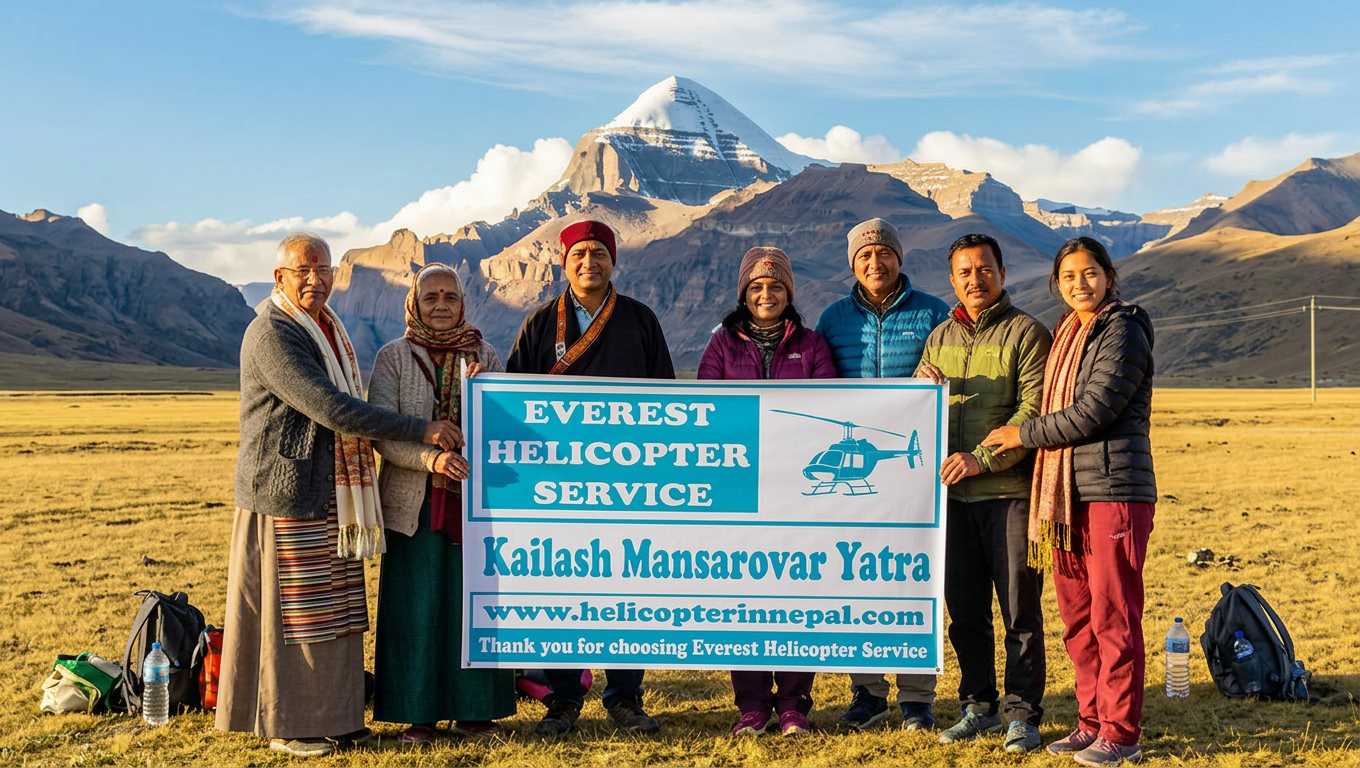

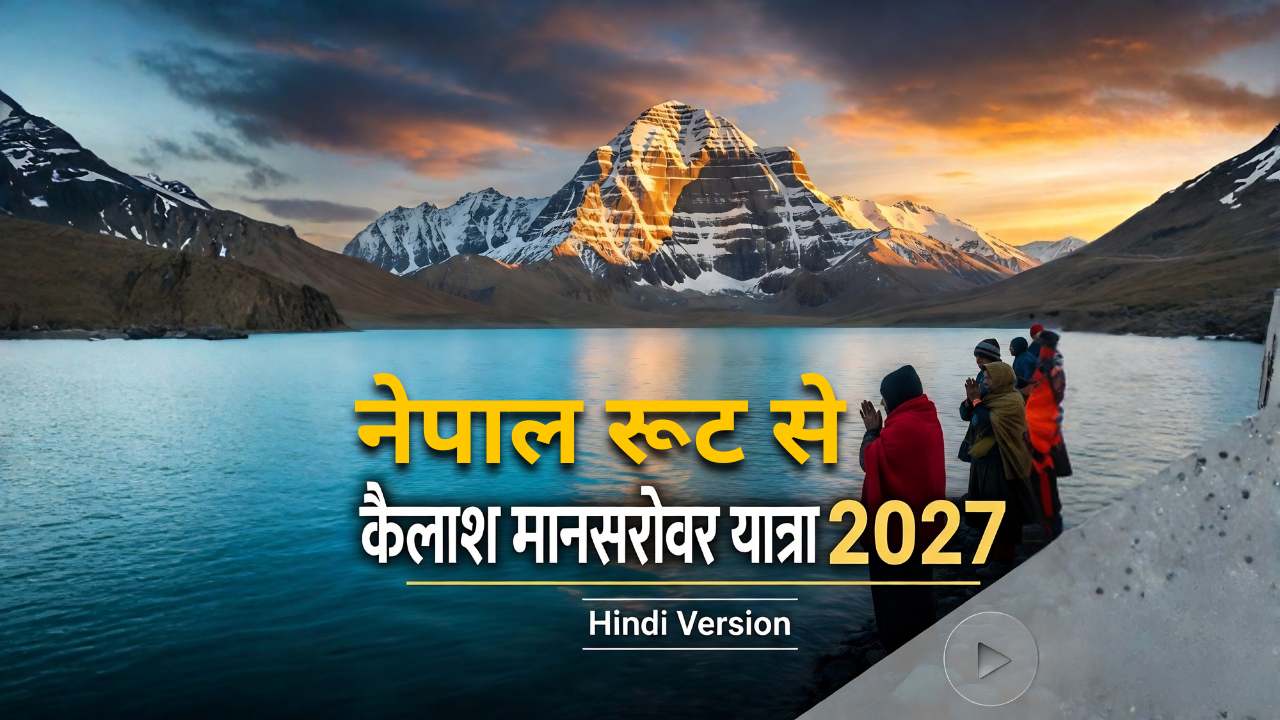
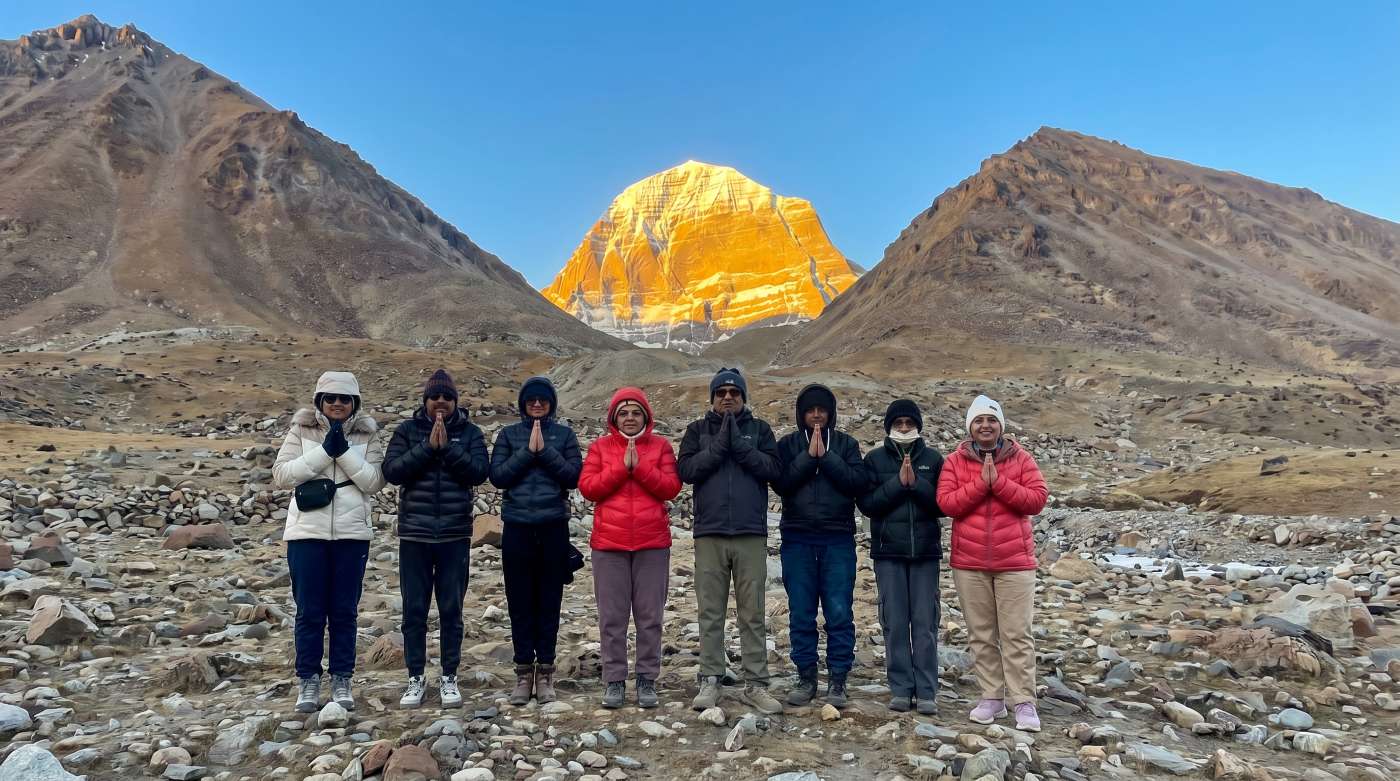
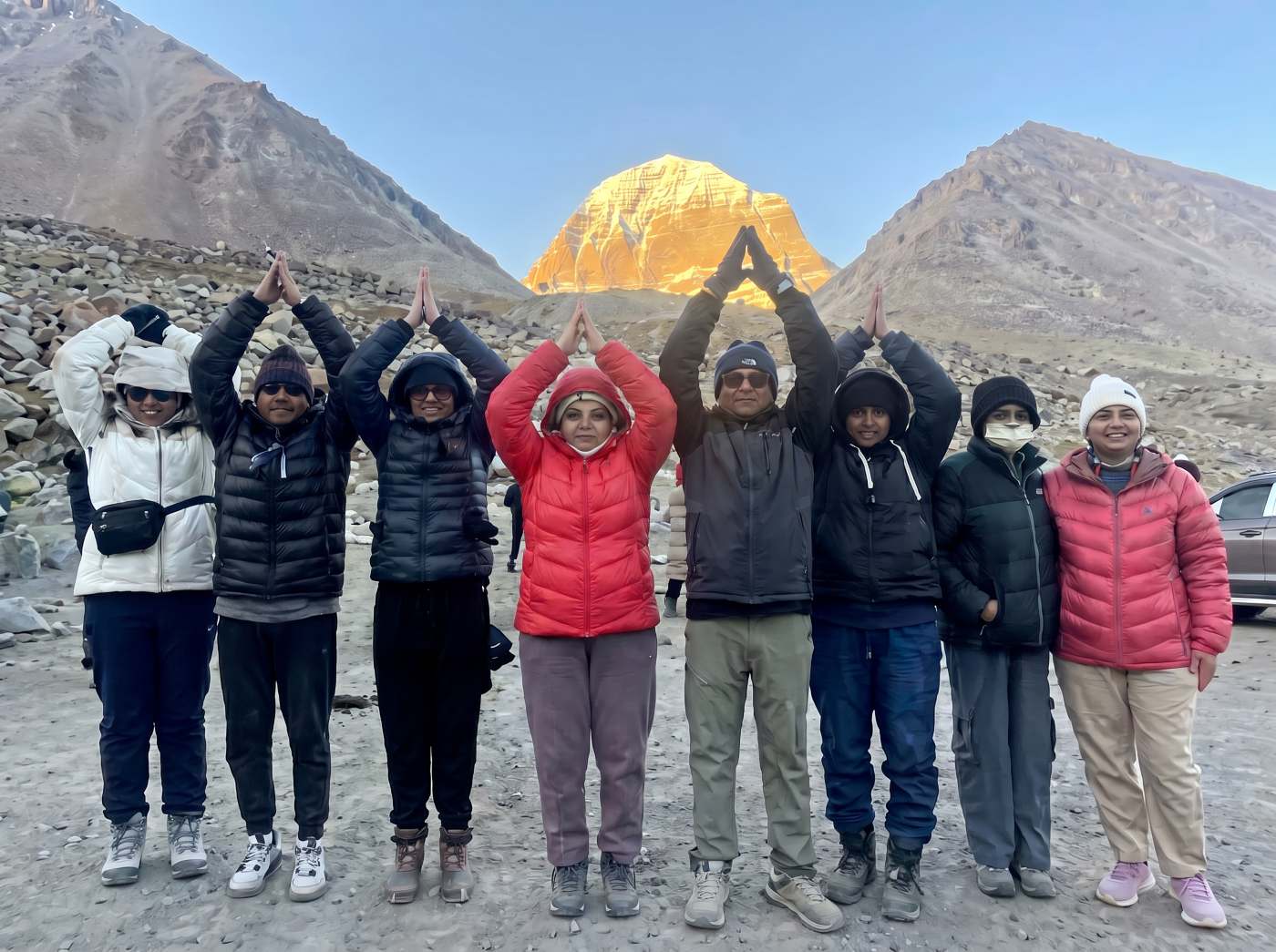
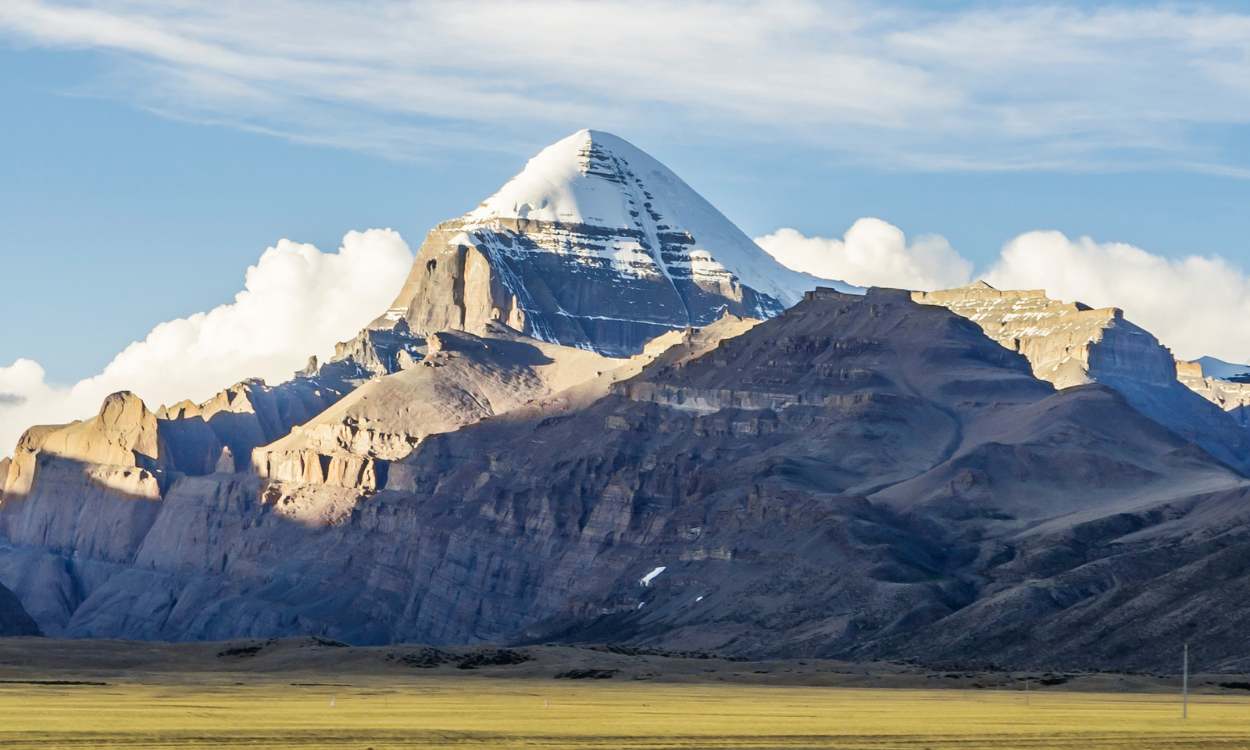
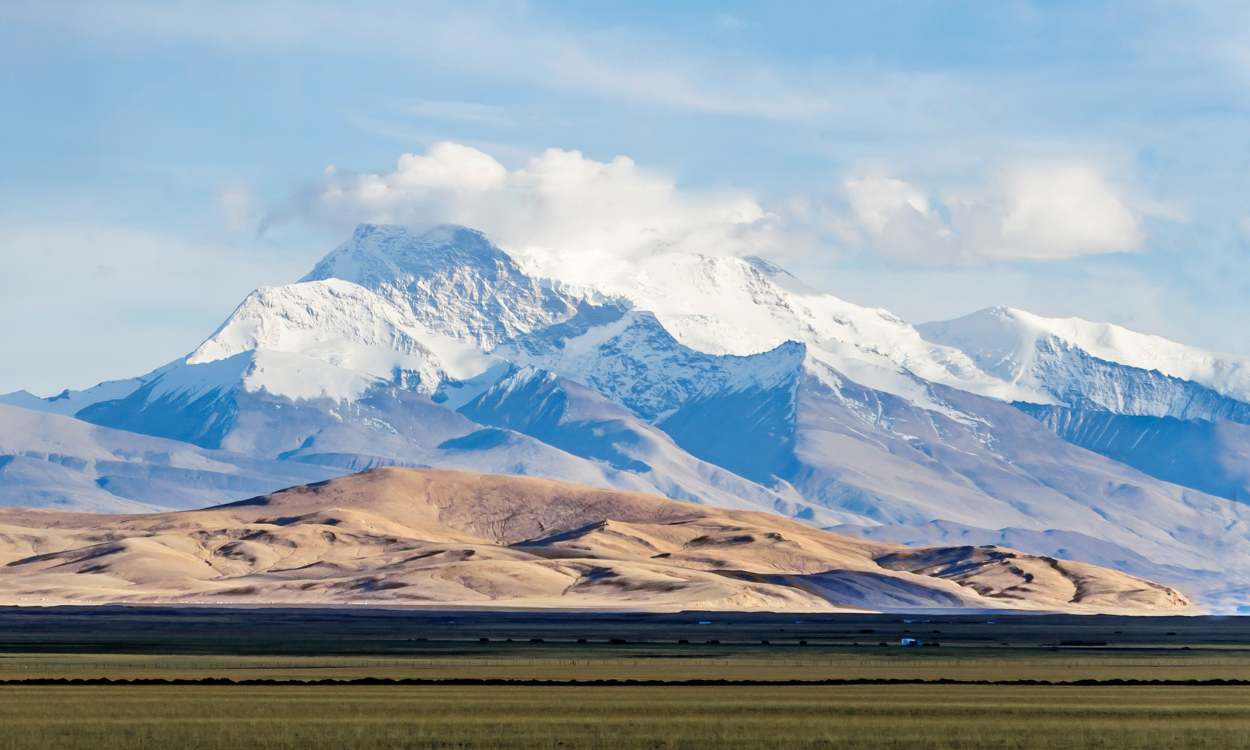
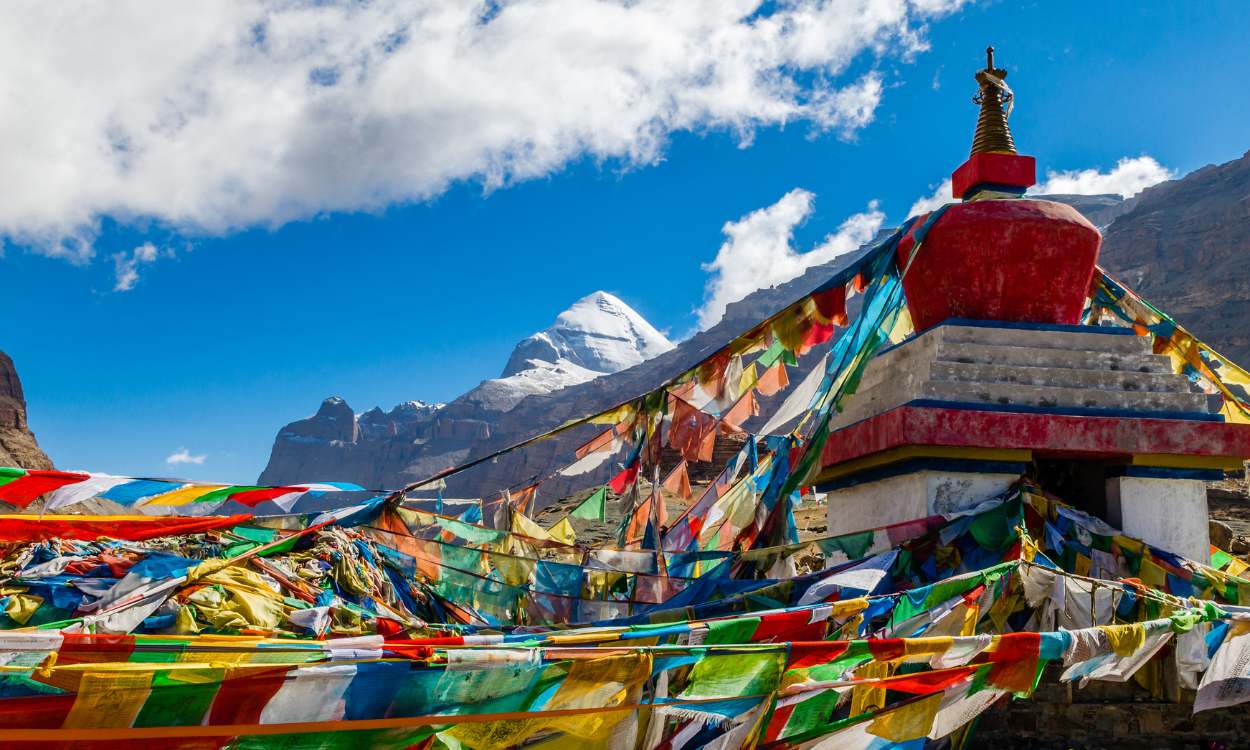
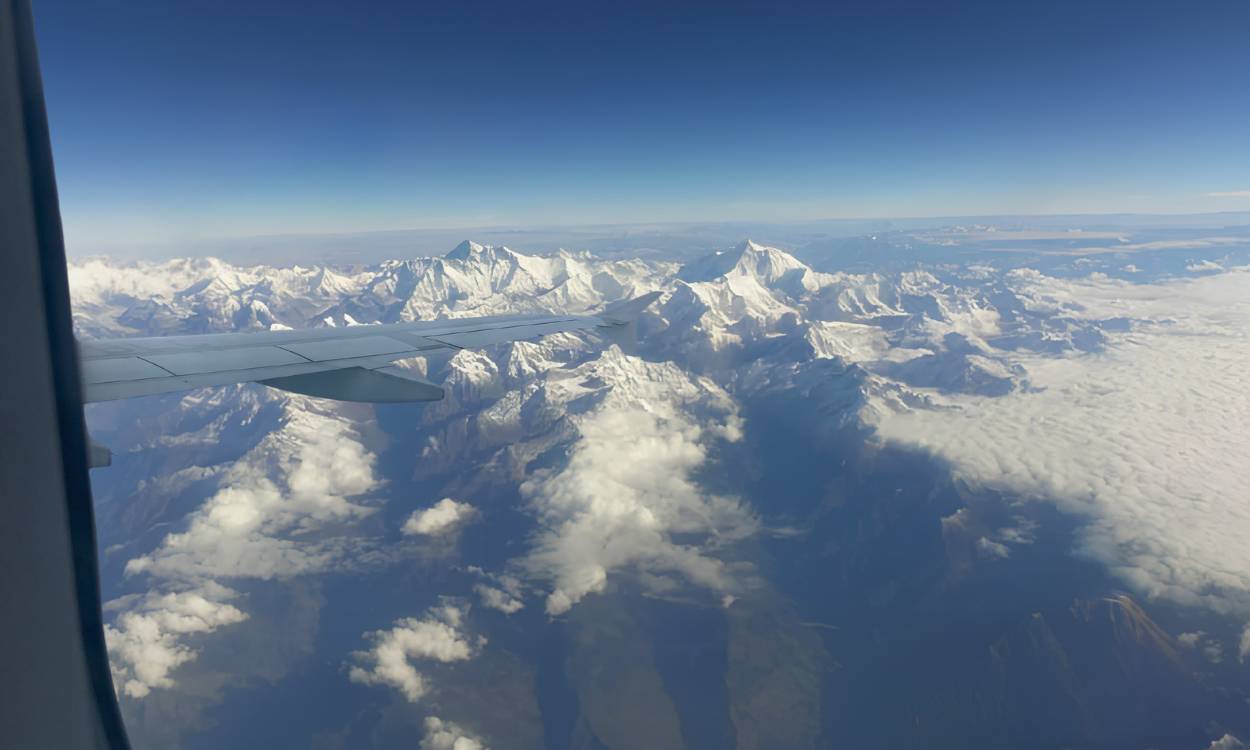
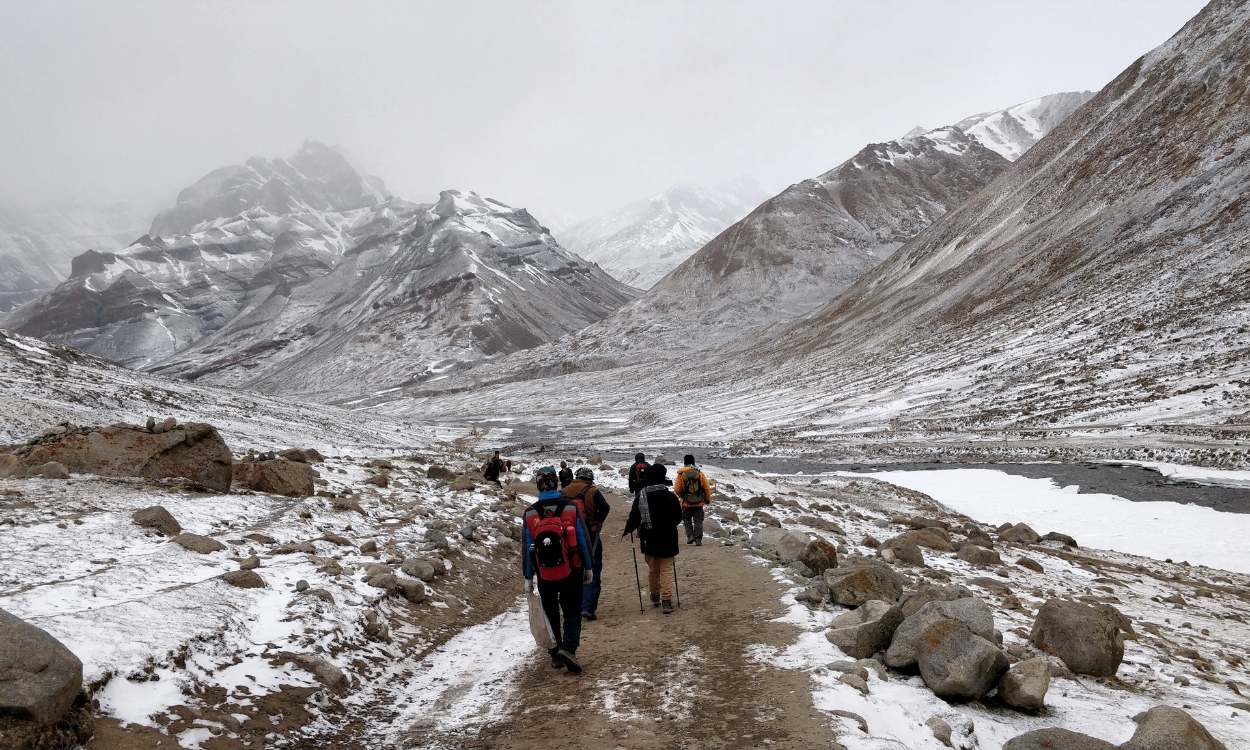
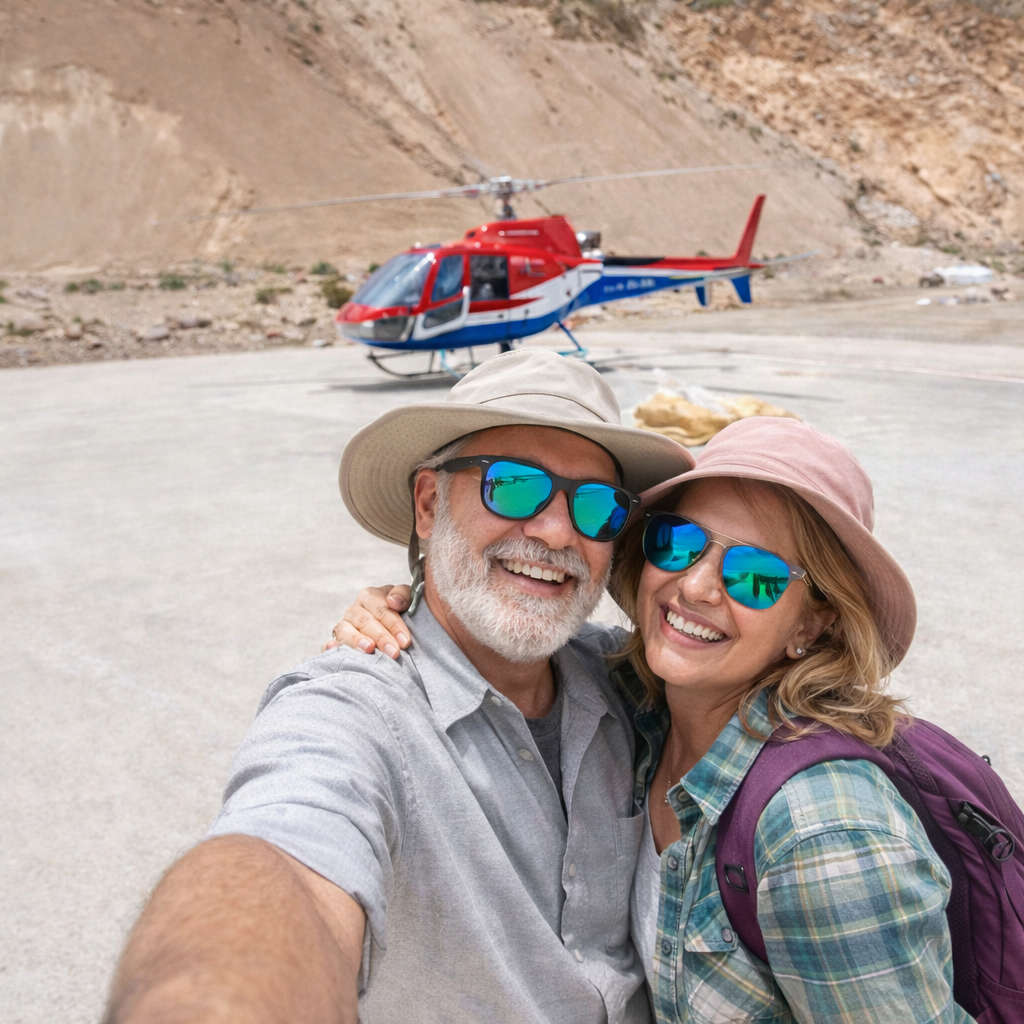
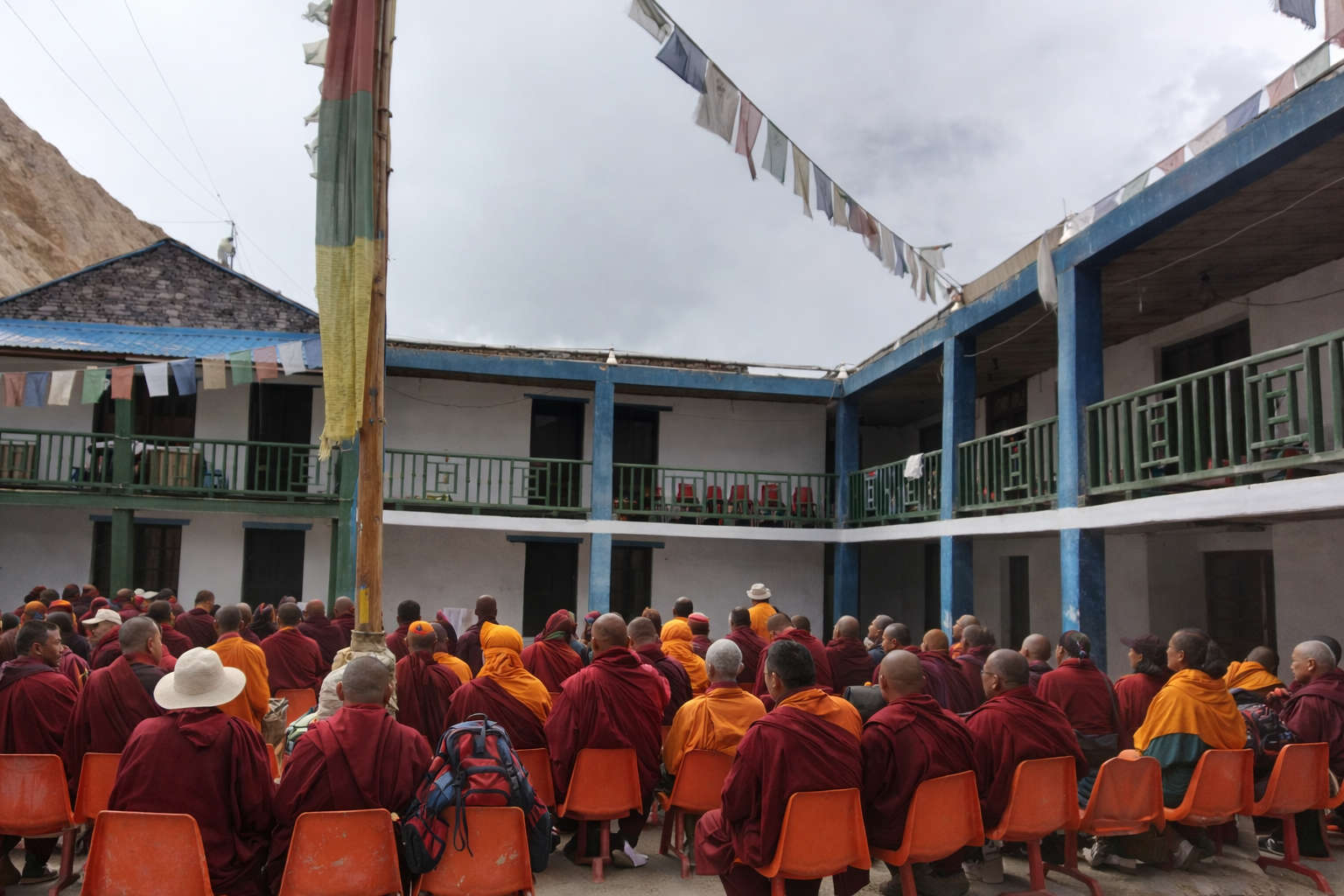
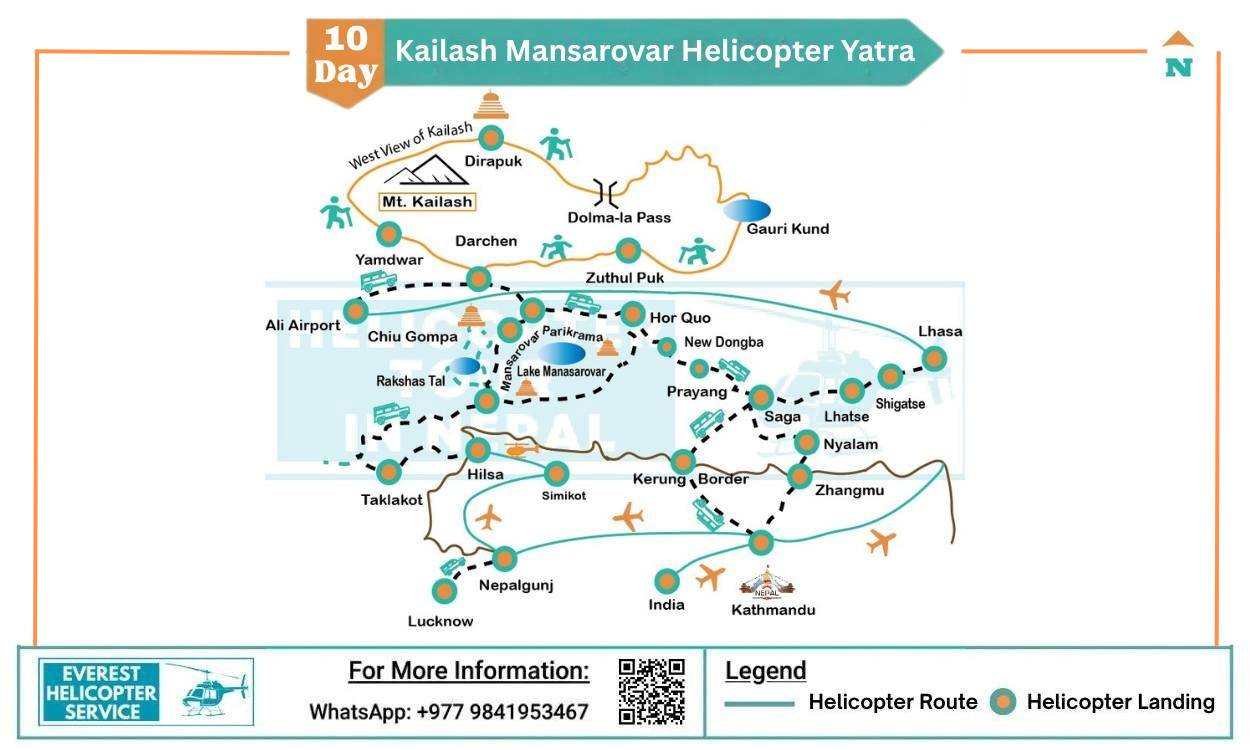



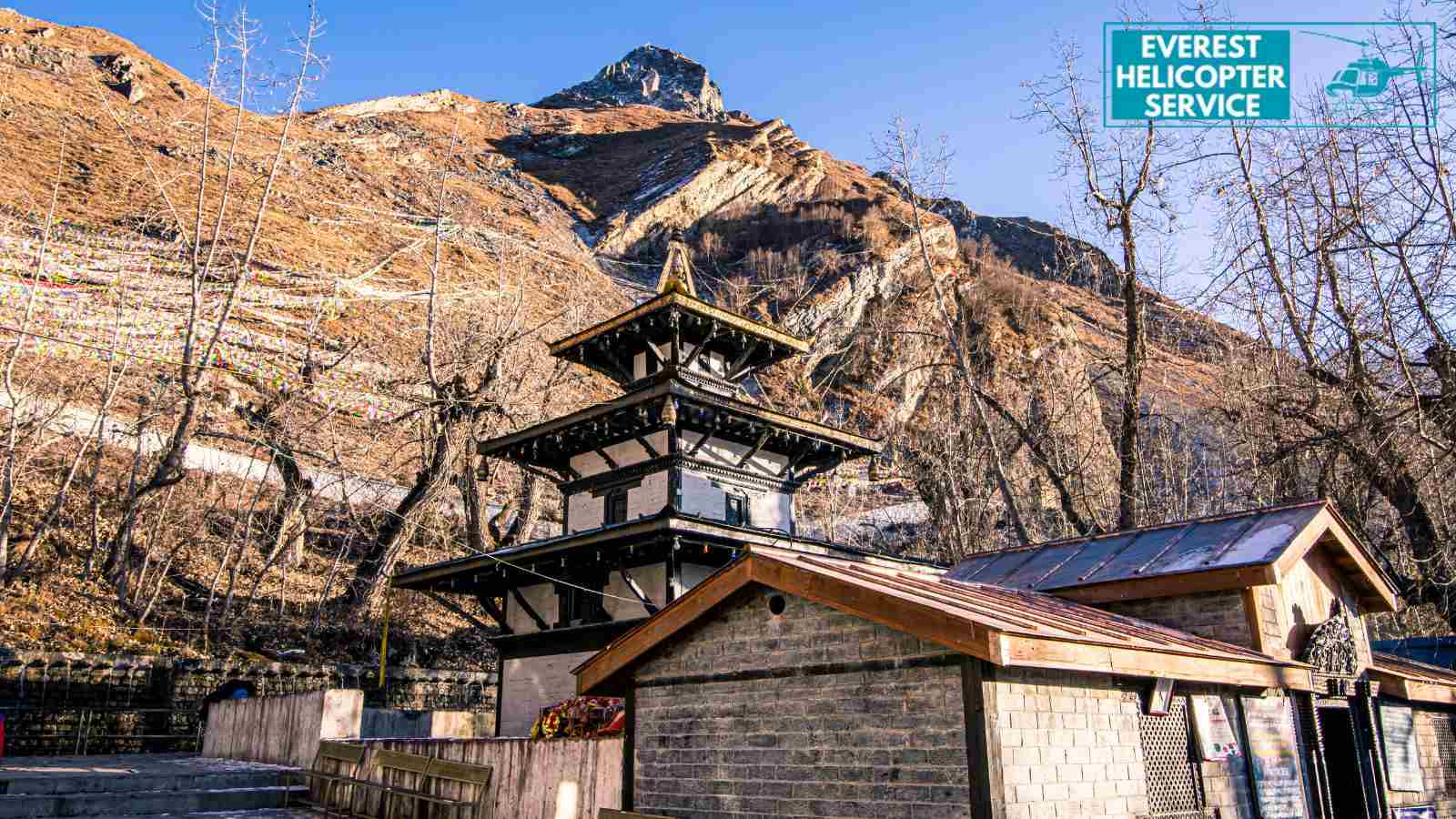
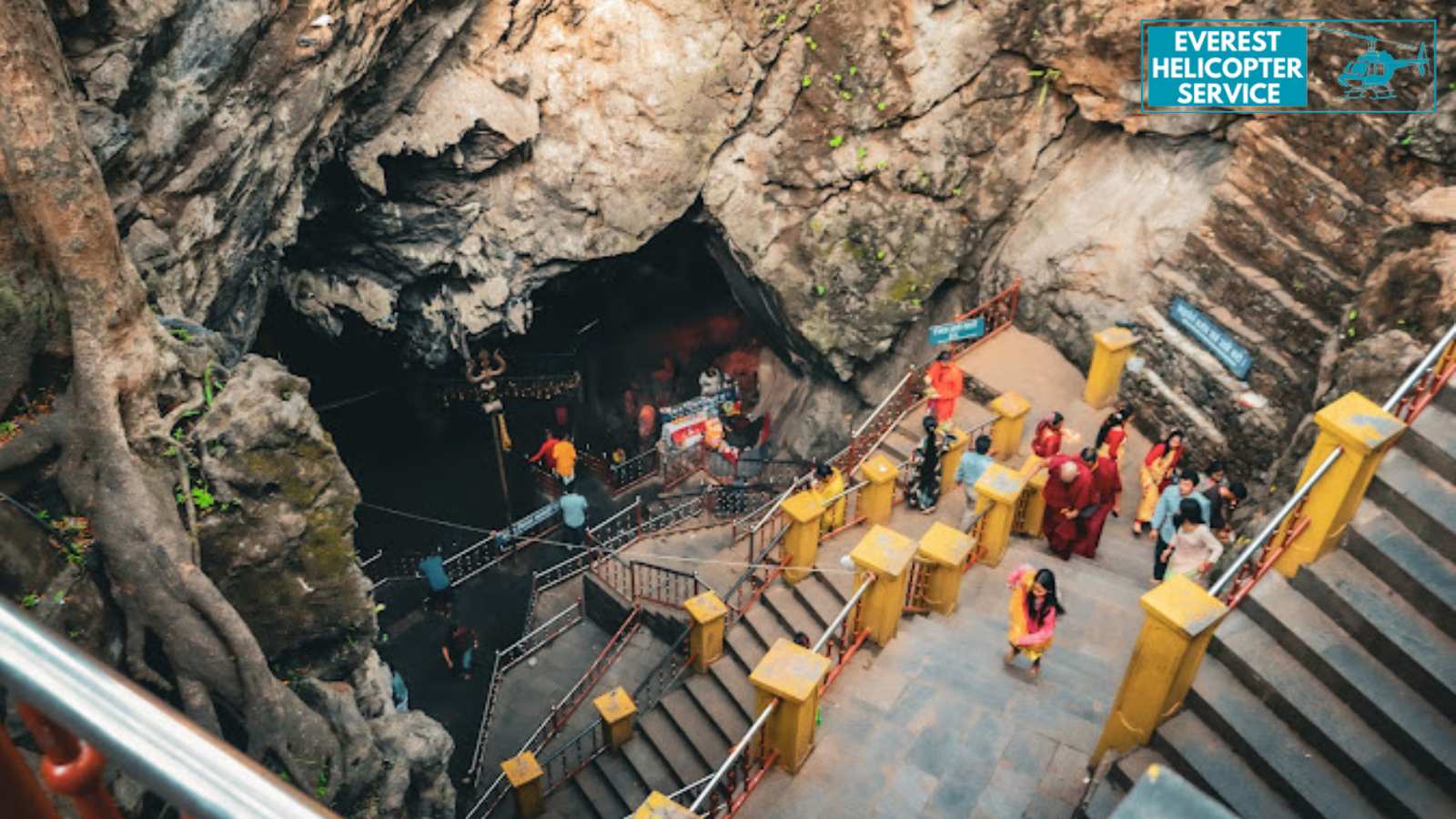
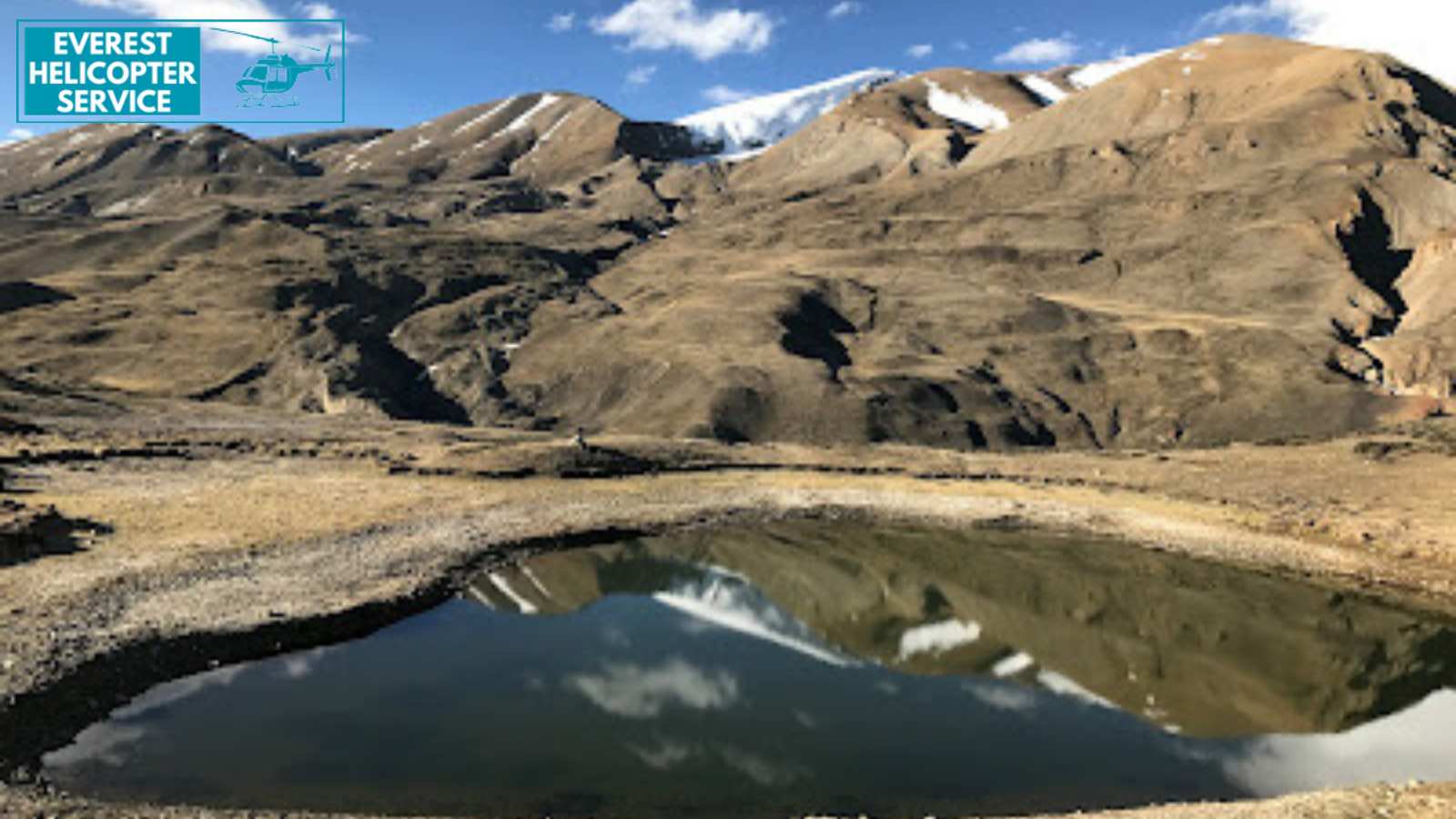
S.K. Sharma, Retired teacher, JaipurIndiaOn June, 2025
Old Review
A Once-in-a-Lifetime Spiritual Journey To Mount Kailash
I Am 67 Years Old, And I Was Certain I Would Never Be Able To Do The Kailash Yatra In My Lifetime. My Son Registered Us With Everest Helicopter Service Last Year. Mr Sushil Tiwari Handled All Permits And Documents Very Well. I Needed A Pony For The Second Day Of The Kora Due To My Knee. The Guide Arranged Everything Perfectly. When I Sat At Dolma La Pass And Saw The Flags Flying, I Could Not Speak. I Just Held My Son's Hand And Wept. This Is The Greatest Thing I Have Done In My Life.
Priya Menon, software engineer, BengaluruIndiaOn July, 2025
Old Review
Seamless And Divine Kailash Mansarovar Helicopter Experience
As A Working Professional, I Had Only 12 Days Of Leave. The Everest Helicopter Service Route From Kathmandu Was Perfect. Every Flight, Every Transfer, Every Meal Was Handled. I Did Not Have To Worry About A Single Logistical Thing. I Could Focus Entirely On The Spiritual Purpose Of The Journey. The Mansarovar Sunrise On Day 6 Is An Image I Carry With Me Every Single Day.
Anita and Rajesh PatelUSAOn September, 2025
Old Review
An Unforgettable Pilgrimage To Kailash With Top-Class Service
My Husband And I Came From New Jersey. We Were Nervous About Altitude Sickness Because We Had No Himalayan Experience. The Everest Helicopter Service Doctor's Briefing And The Pacing Of The Itinerary Were Exactly Right. By The Time We Reached Dolma La, We Were Ready. Standing On That Pass With The Prayer Flags, Looking Down At Gauri Kund, I Understood Why People Come Here From Every Corner Of The World.