
 Maximum: 5 People/Helicopter
Best price guaranteed
Safe Tour Plan
Maximum: 5 People/Helicopter
Best price guaranteed
Safe Tour Plan
Response Time 0-2 Hours , Response Rate 100%
Pheriche is a small settlement in Nepal's Khumbu region, sitting at an elevation of 4,371 meters (14,340 feet) along the classic Everest Base Camp trekking route. Located roughly two days below Everest Base Camp, it is one of the highest permanently inhabited areas in the world and serves as a critical rest and acclimatization stop for thousands of trekkers every year.
Because of its extreme altitude and remote location, access to emergency services in Pheriche is extremely limited. When medical emergencies strike, a Pheriche to Kathmandu helicopter flight is often the only fast, safe option available. Whether you are dealing with a sudden altitude illness, a trekking injury, or simply want to save several days of walking, helicopter services from this region have become an essential part of Himalayan travel planning.
Everest Helicopter Service has been providing professional, reliable helicopter flights from Pheriche and across the broader Everest region for years. Combining experienced pilots, modern aircraft, and 24/7 emergency readiness, the company is a trusted name in Khumbu helicopter service and Nepal mountain helicopter rescue. This guide covers everything you need to know about the Pheriche to Kathmandu helicopter flight, from costs and booking to safety and what to expect on board.
Distance: ~140 km (87 miles)
Departure Altitude: 4,371m (14,340ft)
Arrival Altitude: 1,400m (4,593ft)
Location: Pheriche Village/Helipad
→ 6:00 AM - 6:30 AM: Weather assessment and flight confirmation
→ 6:30 AM: Passengers arrive at Pheriche helipad
→ 6:30 AM - 6:45 AM:
Check-in and documentation verification
Passport and permit check
Luggage weighing (max 10-15kg per person)
Safety briefing by pilot/crew
Distribution of headsets/ear protection
→ 07:00 AM - Departure from Pheriche
→ 07:00 AM - 07:15 AM - Khumbu Valley
→ 07:15 AM - 07:25 AM - Upper Khumbu Region
→ 07:25 AM - 07:35 AM - Lukla/Solu Region (Optional fuel stop if needed)
→ 07:35 AM - 07:50 AM - Mid-Hills Landscape
→ 07:50 AM - 08:00 AM - Kathmandu Valley Approach
→ 08:00 AM - Landing in Kathmandu
Location: Kathmandu Landing Site
→ 8:00 AM - 8:10 AM:
→ 8:10 AM - 8:20 AM:
→ 00:00 - Emergency Call Received
→ 00:30 - 02:00 Hours - Helicopter Dispatch
→ 02:00 - Arrival at Pheriche
→ 03:00 - Landing in Kathmandu
Total Emergency Response Time: 3-4 hours from initial call
| Time | Location | Altitude | Highlights |
|---|---|---|---|
| 07:00 | Pheriche | 4,371m | Departure, village views |
| 07:10 | Tengboche | 3,860m | Monastery, Ama Dablam |
| 07:18 | Namche | 3,440m | Sherpa capital, market town |
| 07:25 | Lukla | 2,860m | Famous airport, valley views |
| 07:40 | Solu Region | 1,800m | Green hills, rivers |
| 07:55 | Kathmandu Valley | 1,400m | Valley approach, city views |
| 08:00 | Kathmandu | 1,400m | Landing |
📞 Emergency 24/7: +977-9841953467
📧 Email: everesthelicopterservice@gmail.com
🌐 Website: www.helicopterinnepal.com
Book your Pheriche to Kathmandu helicopter flight today!
Everest helicopter evacuation cost for a medical rescue from Pheriche to Kathmandu typically ranges from USD 3,500 to USD 5,000. This price covers the aircraft, pilot, fuel, and standard landing fees. It does not include medical staff or specialised equipment unless arranged in advance.
Most trekking travel insurance policies with helicopter rescue coverage will reimburse this cost in full, provided the evacuation was medically necessary and the insurer was notified during the process. Some insurers offer direct billing arrangements with operators, eliminating the need for out-of-pocket payment at the time of evacuation.
Payment methods accepted generally include major credit cards, bank transfer, and cash in USD or NPR. Confirming payment options with the operator at the time of booking or emergency call is advisable.
For private charter flights, Everest helicopter flight cost from Pheriche to Kathmandu typically ranges from USD 4,000 to USD 6,000 per flight for the full aircraft. With four to five passengers sharing, the per-person cost comes down to USD 800 to USD 1,500 roughly.
Seasonal variation is significant. Peak autumn and spring seasons see higher demand and somewhat higher prices. Off-season winter and post-monsoon September flights may be available at lower rates, though weather risk increases outside of the main windows.
Several variables affect the final Pheriche Kathmandu helicopter price beyond the base rate. Weather complications that require route changes or refuelling stops at Lukla increase costs. Weight restrictions matter because high-altitude flying at thin air requires the helicopter to stay within strict payload limits. If passengers or luggage exceed limits, a second flight or reduced luggage load may be required.
Time of day also affects cost, with early-morning departures typically priced at standard rates while afternoon or last-light emergency responses may carry a premium. Seasonal fuel price fluctuations and landing permit fees are additional variable components.
Standard Pheriche to Kathmandu helicopter flight pricing includes the full one-way flight of approximately 45 to 60 minutes, the pilot and co-pilot or crew, fuel, and standard aviation and landing permits.
What is typically not included is travel insurance, medical personnel or equipment, ground transport in Kathmandu after landing, and additional baggage beyond the standard limit.
Altitude sickness is the single biggest threat facing trekkers above 3,500 meters, and Pheriche at 4,371 meters is squarely in the danger zone. Three life-threatening conditions can develop rapidly at this elevation: Acute Mountain Sickness (AMS), High Altitude Pulmonary Edema (HAPE), and High Altitude Cerebral Edema (HACE).
AMS can escalate within hours. HAPE, which involves fluid accumulation in the lungs, and HACE, which causes swelling in the brain, can both become fatal if a patient is not descended and treated immediately. In these situations, altitude sickness helicopter evacuation is not a luxury. It is a medical necessity.
The only effective treatment for severe altitude illness is rapid descent to a lower elevation, followed by oxygen therapy and hospital care. A helicopter can bring a critically ill trekker from Pheriche down to Kathmandu in approximately 45 to 60 minutes. Attempting to walk down the same route takes two to three days, a delay that can cost lives. Emergency helicopter Nepal services exist for exactly these scenarios, and response times are often under two hours for confirmed medical emergencies.
Pheriche is also home to the Himalayan Rescue Association clinic, which operates seasonally and can help coordinate medical evacuation Pheriche to Kathmandu when evacuation becomes necessary. Their staff can assess condition severity and liaise directly with helicopter operators.
Beyond medical emergencies, a Pheriche to Kathmandu flight simply saves enormous amounts of time. Walking back to Lukla from Pheriche takes roughly two to three days depending on pace and conditions. Then trekkers must wait for a Lukla flight to Kathmandu, which is itself subject to frequent weather delays that can strand passengers for days at a time.
A helicopter from Pheriche to Kathmandu eliminates all of that. You board the helicopter at the Pheriche helipad and land in Kathmandu roughly one hour later. For trekkers with tight return schedules, important commitments, or physical fatigue after a long expedition, this is a genuinely transformative option.
Weather windows in the Khumbu region can be narrow, particularly in autumn and spring. Morning flights tend to have the most stable conditions, making early departures the standard practice for charter operations.
A helicopter flight from the Everest region is one of the most spectacular aviation experiences on the planet. As the aircraft lifts off from Pheriche, passengers are treated to close-range views of some of the world's highest peaks. Everest (8,848m), Lhotse (8,516m), Ama Dablam (6,812m), Makalu (8,485m), and Cho Oyu (8,201m) are all visible depending on flight path and weather.
The journey passes over ancient Sherpa villages, colourful prayer flags, and the winding Dudh Koshi river valley before descending toward Kathmandu. For photography enthusiasts, having a window seat and a wide-angle lens ready is essential. This is a flight that many passengers describe as the highlight of their entire Himalayan experience, making it worth considering even for non-emergency travellers. Everest helicopter tour price is often comparable to the hassle and cost of trekking back and catching fixed-wing flights.
Everest Helicopter Service is one of Nepal's most experienced operators for high-altitude helicopter flights in the Khumbu and Solukhumbu regions. The company holds all required licences from the Civil Aviation Authority of Nepal (CAAN) and operates with a strong safety-first philosophy developed through years of Himalayan flying.
The pilot team is specifically trained for high-altitude operations, which demand very different skills from standard aviation. Flying at 4,000 to 5,000 metres requires intimate knowledge of Himalayan weather patterns, mountain thermals, rotor performance at thin-air altitudes, and emergency landing options along the route. Everest Helicopter Service pilots log hundreds of flight hours per year in the Khumbu region and hold internationally recognized mountain flying credentials.
The company's safety record, fleet maintenance standards, and crew training place it among the leading providers of Pheriche helicopter service in Nepal.
Everest Helicopter Service operates from multiple pickup points across the Everest trekking region. Primary locations include Pheriche, Dingboche, Lobuche, Gorak Shep, and the area near Everest Base Camp itself. The company also covers Namche Bazaar, Tengboche, Phakding, and Lukla for connecting or stage flights.
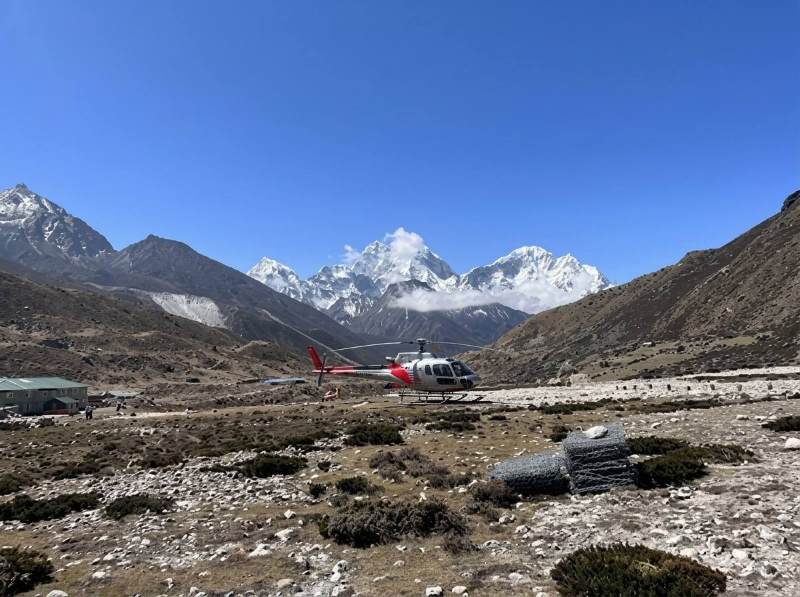
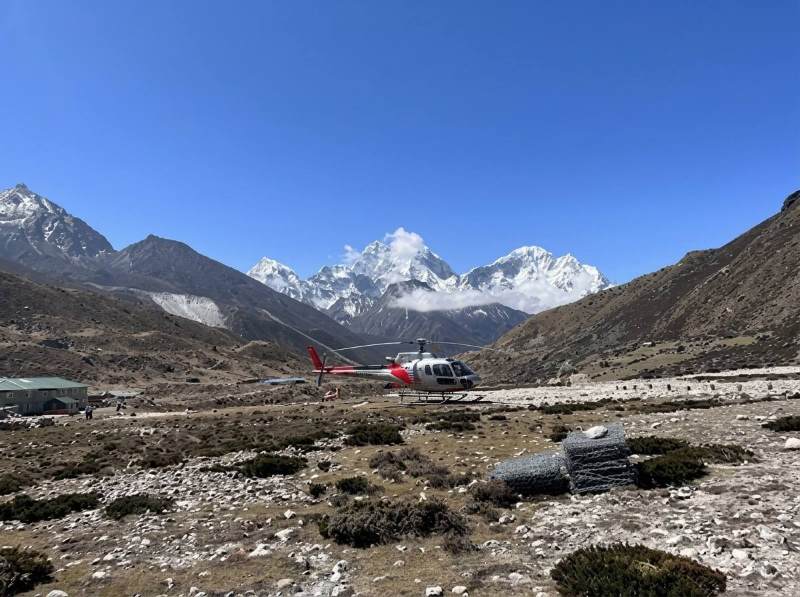
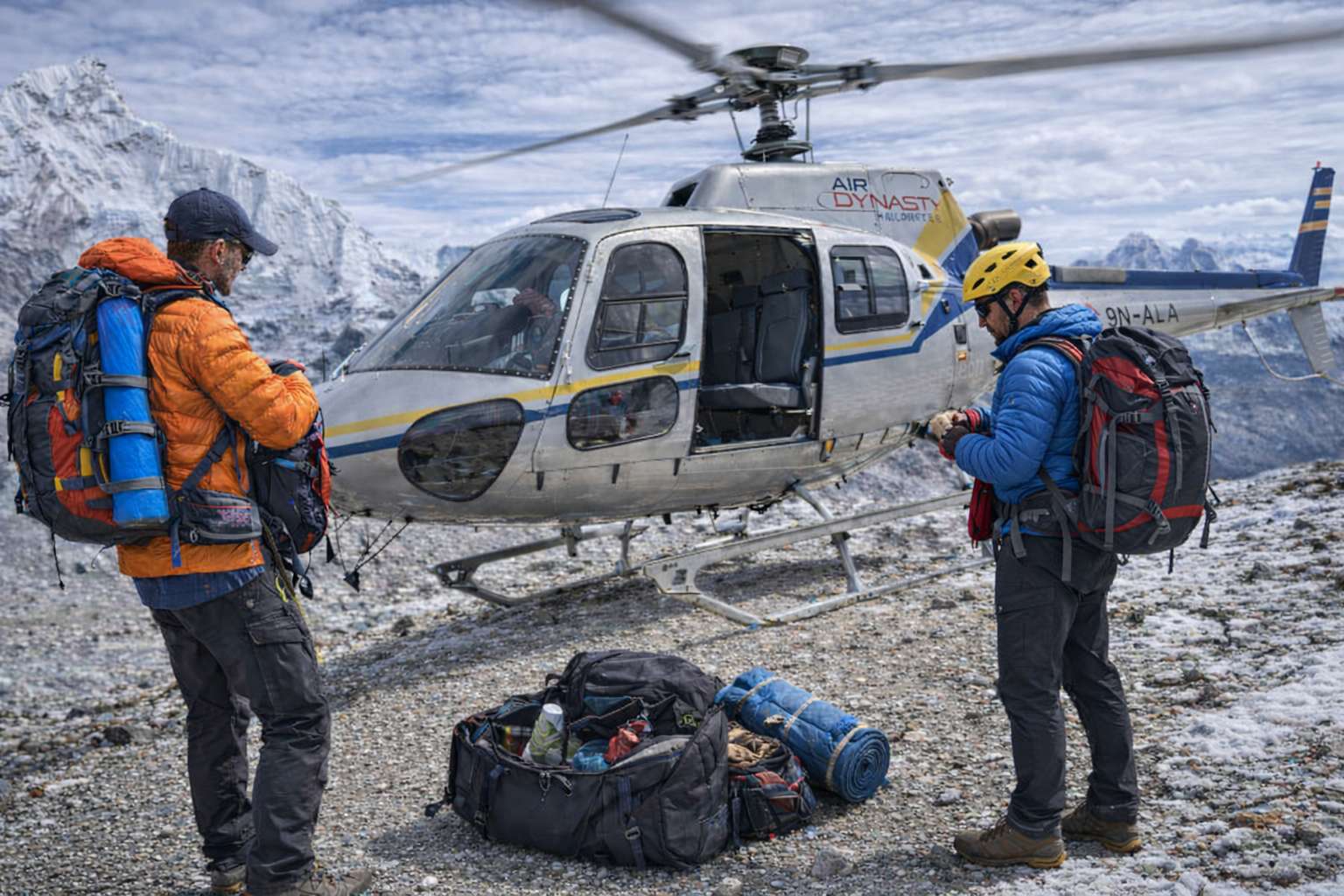
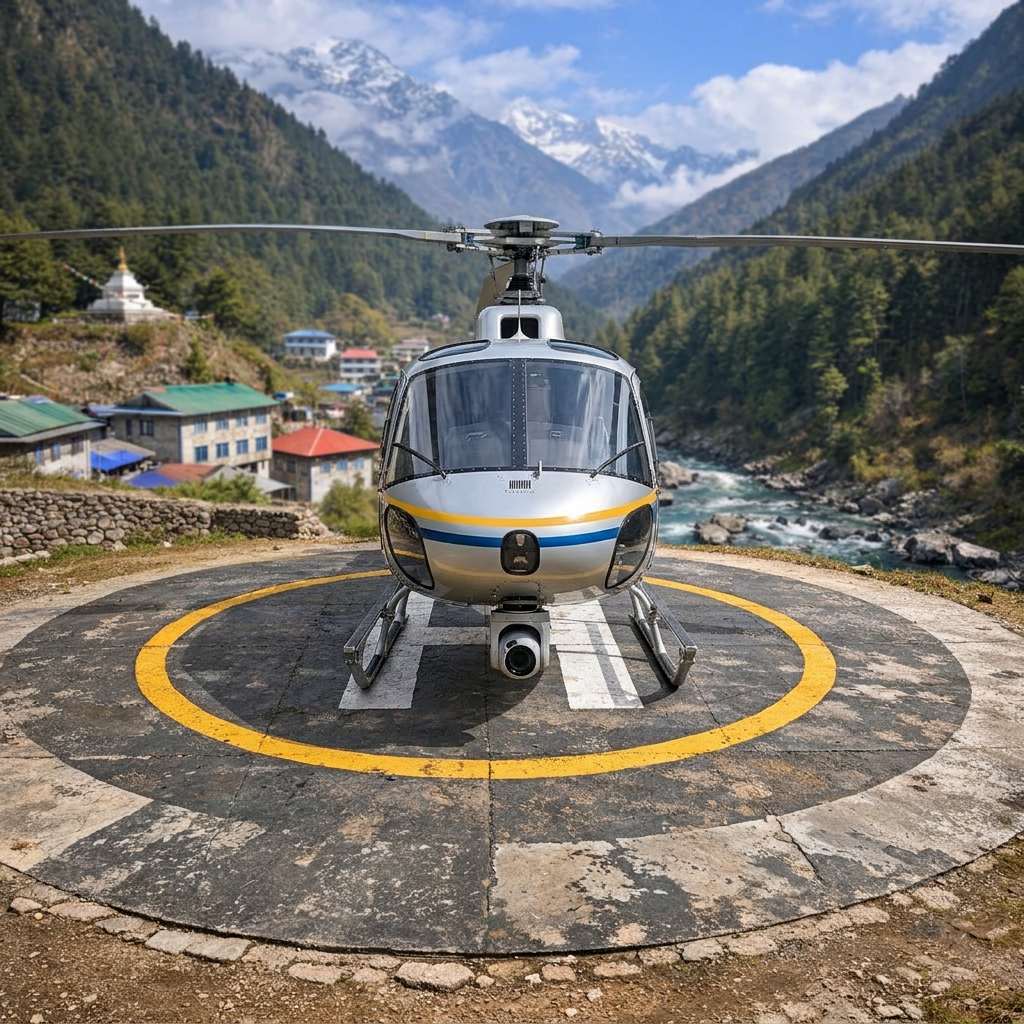
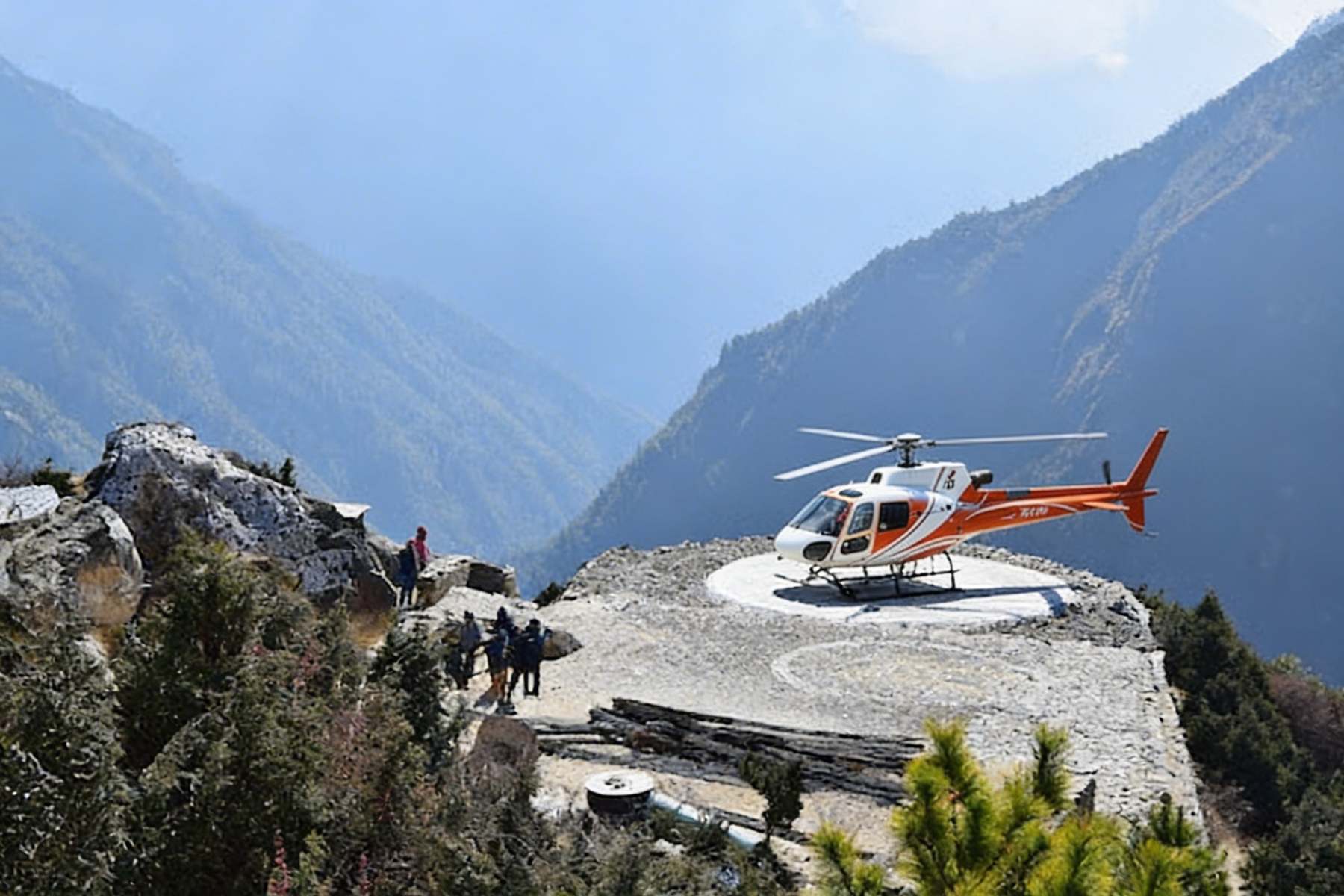
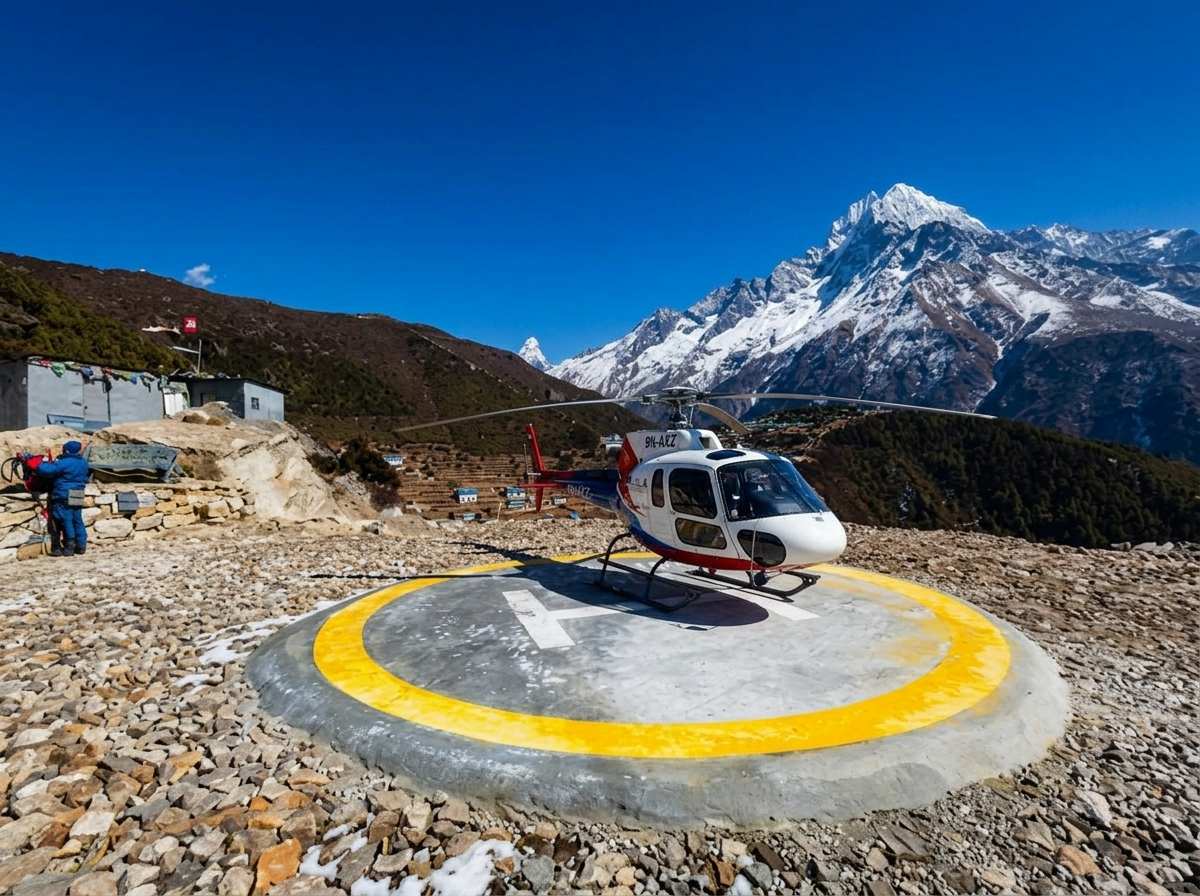
The Pheriche helipad is a cleared flat area at approximately 4,371 metres elevation on the edge of the village. It is accessible in most weather conditions outside of active snowfall or heavy cloud cover. When conditions at Pheriche prevent safe landing, pilots can sometimes divert to lower alternative landing zones in Dingboche (4,410m) or Pheriche's surrounding area where terrain provides more shelter.
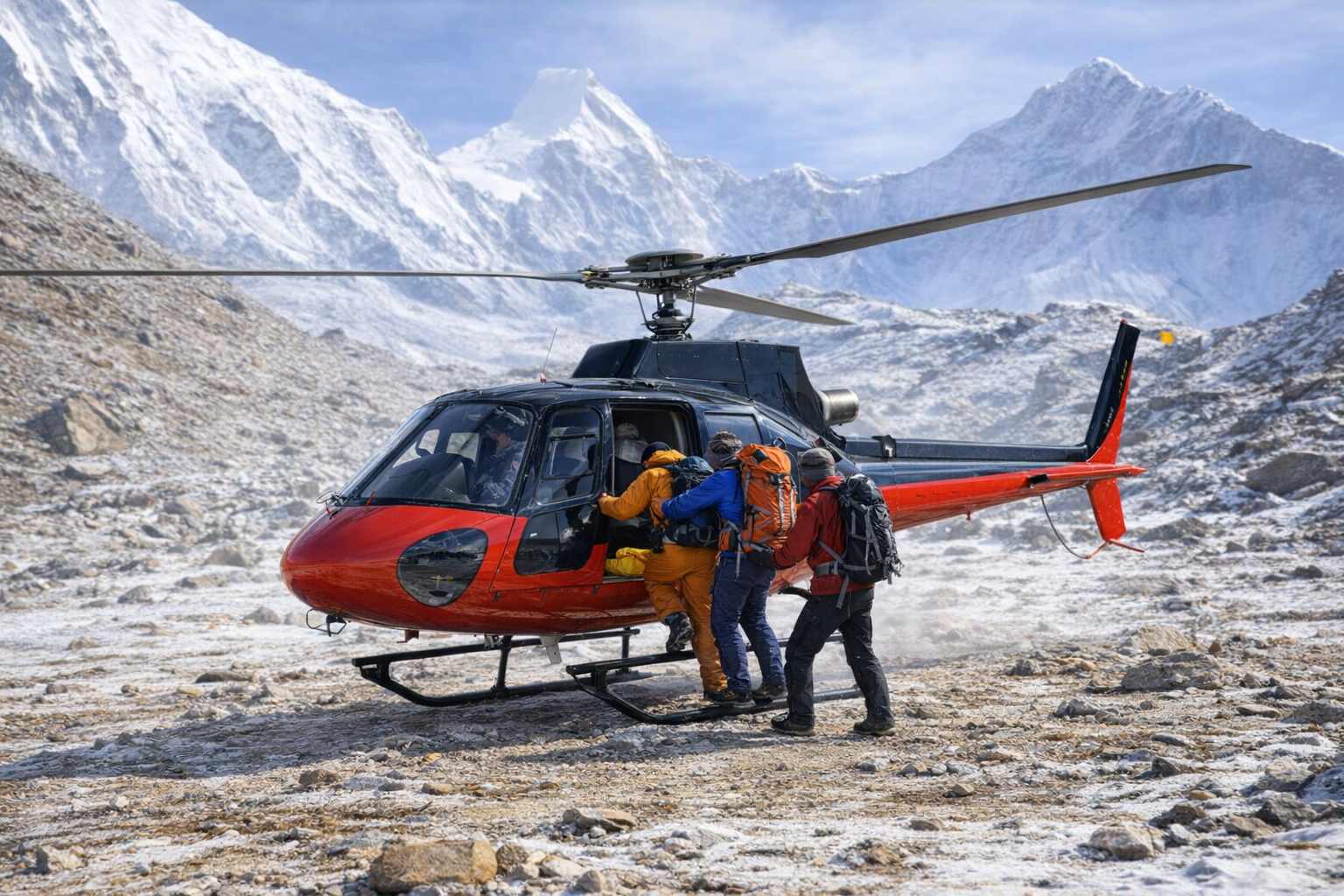
For Everest Base Camp helicopter rescue operations, the helicopter typically lands at Gorak Shep (5,164m) which has the nearest usable helipad to Base Camp. Patients are then transported or walked the short distance to the landing zone.
Everest Helicopter Service operates a 24/7 emergency evacuation line for medical rescues anywhere in the Khumbu region. Emergency helicopter Nepal responses are coordinated to launch as quickly as weather permits after a confirmed evacuation request is received.
Medical evacuation flights can be equipped with basic on-board oxygen and a medical escort depending on the situation and advance notice. For the most severe cases such as HACE or HAPE, speed of departure is the priority over additional equipment. The company works directly with insurance providers and can coordinate pre-authorisation during flight if necessary.
If you are trekking in the region, make sure your insurance company's emergency contact number is saved in your phone along with the Everest Helicopter Service emergency line. Insurance requirements for emergency helicopter Nepal services typically mandate that the insurer is contacted at or before the time of the evacuation request.
Charter flights are available for individuals and groups who want to fly from Pheriche to Kathmandu for non-emergency reasons. These include trekkers completing their expeditions early, those joining other groups in Kathmandu, or travellers who simply want to experience the Everest helicopter tour from Pheriche as part of their itinerary.
Private charter bookings can accommodate custom departure times, although morning flights are strongly recommended. Groups of up to four or five passengers can share a single aircraft, bringing the per-person cost down considerably. Helicopter charter Everest region price depends on group size, season, and specific routing. Advance booking of 24 to 48 hours is typically required for charter flights.
During peak trekking seasons (October to November and March to May), some operators run scheduled or semi-scheduled shuttle flights between Pheriche-area helipads and Kathmandu or Lukla. These shared flights offer the most cost-effective option for non-emergency passengers willing to be flexible about exact departure times. Availability varies by season and demand, so checking directly with the company before your trek begins is recommended.
For genuine medical emergencies, time is critical. The recommended process is to contact Everest Helicopter Service on their 24/7 emergency line as your first step. At the same time, your travel companion or a lodge owner should contact your travel insurance provider to begin the authorisation process.
If you are in a remote part of the trail without mobile signal, the Pheriche Himalayan Rescue Association clinic or local tea house owners often have radio communication available and can initiate the emergency helicopter Nepal call on your behalf. Satellite communication devices like a Garmin inReach are strongly recommended for solo trekkers or those venturing to Lobuche and Gorak Shep above Pheriche.
For non-emergency Nepal helicopter tour booking, the process is straightforward. Contact Everest Helicopter Service by phone, WhatsApp, or email to check availability and confirm pricing. Advance booking of at least 24 to 48 hours is standard. A deposit is typically required to confirm the booking, with the balance due before or at the time of flight.
Online booking inquiries can also be submitted through the company website. For group bookings of three or more passengers, contacting the company well in advance of your trek start date is recommended to confirm aircraft availability.
For all flights, passengers will need a valid passport. For emergency medical evacuations, a medical assessment report from the Pheriche clinic or a treating physician is helpful for insurance purposes and should be obtained wherever possible before departure. Insurance policy details including the policy number and emergency contact number are essential. Trekking permits are not directly required for the helicopter flight itself, but may be checked in combination with other travel documents.
The helicopter departs from the Pheriche helipad at 4,371 metres and follows the Dudh Koshi valley southward. The standard routing passes near Namche Bazaar and then continues toward the lower hills of the Solukhumbu region before entering the Kathmandu Valley. Total direct flight time is approximately 45 to 60 minutes under normal conditions.
Final landing is at Tribhuvan International Airport in Kathmandu, specifically at the domestic helicopter terminal or the dedicated helipad areas used by private operators. Ground transport to hotels, hospitals, or other destinations within Kathmandu can be arranged in advance.
Depending on wind, cloud, and aircraft fuel load, some flights include a brief stop at Lukla (2,860m) for refuelling. This adds roughly 15 to 20 minutes to the journey but is sometimes operationally necessary. The Lukla to Kathmandu helicopter leg after refuelling is a fast and well-established route flown multiple times daily.
During the monsoon months of June through August, weather makes this corridor difficult and most non-emergency flights are suspended. Spring and autumn are the most reliable seasons for both visibility and flight regularity.
From departure to landing, the flight offers an extraordinary viewing experience. Shortly after liftoff passengers have clear sightlines toward the upper flanks of Everest and Lhotse in good weather. Ama Dablam's distinctive shark-fin profile dominates the eastern skyline for much of the early flight. The monasteries at Tengboche, the bustling rooftops of Namche Bazaar, and the terraced farmlands of the middle hills pass below as the aircraft descends toward Kathmandu.
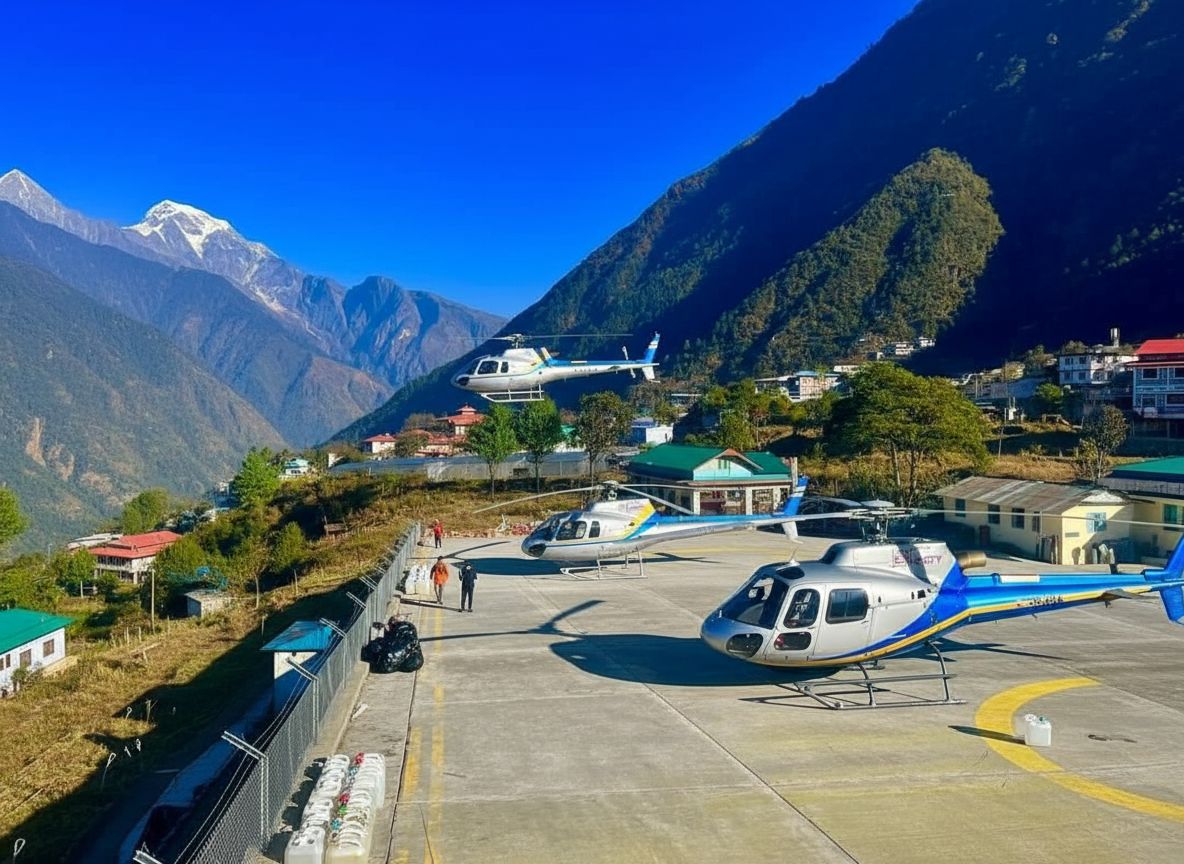
Everest Helicopter Service operates modern high-altitude capable aircraft including the Airbus AS350 B3e (also known as the H125), which is specifically engineered for single-engine high-altitude operations and is the most widely used helicopter for Himalayan rescue and charter work. Passenger capacity is typically four to five passengers plus the pilot. The AS350 B3e is certified for operations above 9,000 metres and handles the 4,371-metre departure altitude from Pheriche comfortably under most weather and load conditions.
Safe Pheriche helicopter flights require minimum visibility standards, acceptable wind levels, and stable atmospheric conditions. The best months are October and November in autumn and March, April, and May in spring. These windows align with the broader Himalayan trekking seasons and offer the most reliable flying weather.
Morning departures, typically before 10 or 11am, take advantage of the calmer air before valley winds build up. Afternoon flying increases risk from turbulence and crosswinds. During the summer monsoon from June through August, consistent cloud cover and precipitation make most non-emergency Khumbu flights impractical.
Pilots operating Everest region helicopter charter flights through Everest Helicopter Service hold CAAN licences with specific high-altitude endorsements. Many have over a thousand hours of Himalayan flying experience. Ongoing training includes emergency response procedures, mountain weather interpretation, and off-airport landing techniques relevant to rescue work.
Aircraft maintenance follows CAAN-mandated schedules with additional company-imposed checks before high-altitude operations. Safety briefings are conducted before every flight.
High-altitude helicopter operations are sensitive to total payload. The standard per-passenger weight allowance is typically 80 to 90 kilograms including the passenger's body weight. Luggage allowance is generally 10 to 15 kilograms. Passengers or groups exceeding total payload may need to reduce luggage, pay for an additional flight, or wait for a second run.
Communicating accurate weight information at the time of booking helps operators plan load distribution and avoids complications on departure day.
Bring your passport and insurance documents in a readily accessible bag. Dress warmly in layers as Pheriche is cold even in good weather and helicopter doors are not insulated. A camera with a charged battery is essential if you want to capture the views. If you have been prescribed supplemental oxygen or medications for altitude illness, bring those on board.
Pre-flight briefing covers safety procedures, seatbelt instructions, and communication protocol. Boarding at Pheriche helipad takes place in the open air, so passengers should be ready for cold wind during the boarding process. Inside the aircraft, noise levels are significant. Operators typically provide headsets or ear protection. Communication with the pilot is through the intercom system. The flight is smooth in good weather with some light turbulence possible when crossing ridgelines.
Helicopter rescue Everest cost can reach USD 5,000 or more for a single evacuation. No trekker visiting altitudes above 3,500 metres in Nepal should travel without adequate travel insurance that explicitly covers helicopter evacuation.
Minimum recommended coverage is USD 10,000 for helicopter rescue and medical evacuation. Many insurers require that you contact them before or during the evacuation rather than after the fact. Policies from providers experienced in high-altitude adventure travel such as World Nomads, Global Rescue, or Battleface typically include Nepal helicopter coverage as standard.
Always read the fine print to confirm your policy covers the altitudes you plan to reach. Some policies cap coverage below 4,000 metres, which would not cover Pheriche or Everest Base Camp evacuations.
When altitude sickness helicopter evacuation becomes necessary, the clinical decision is usually made by a doctor at the Pheriche HRA clinic or by a guide trained in wilderness first aid. If HACE or HAPE is suspected, the Gamow bag may be used to simulate lower altitude while waiting for the aircraft.
Once on board, the descent itself provides immediate physiological benefit as the aircraft drops rapidly toward lower elevations. On arrival in Kathmandu, patients are transferred to appropriate facilities. CIWEC Hospital and Norvic International Hospital are among the most experienced centres for altitude-related illness treatment in Nepal.
After the flight, collect and retain all documentation including medical assessment reports, the helicopter flight invoice with official letterhead, receipts for any payments made, and communication records with the operator. Submit these along with your insurance claim form within the timeframe specified by your insurer. Most claims for medically necessary evacuations are processed within two to four weeks.
For trekkers without a medical emergency and with flexible schedules, walking back from Pheriche to Lukla remains a valid option. The route takes two to three days at a comfortable pace through Tengboche, Namche Bazaar, and Phakding. This is a beautiful walk in good weather and gives knees and lungs time to readjust to lower altitude naturally.
The main downside is time and the uncertainty of Lukla flight schedules. Lukla airport (Tenzing-Hillary Airport) is famous for multi-day weather delays, particularly in October. Trekkers with flight connections out of Kathmandu should leave generous buffer time.
From Lukla, there are two main options to reach Kathmandu. Fixed-wing twin-otter or similar aircraft flights operate frequently on fair-weather days and cost around USD 180 to USD 220 per person. Alternatively, a Lukla to Kathmandu helicopter is also available and costs around USD 500 to USD 700 per person on a shared basis. The helicopter is faster (around 25 to 35 minutes versus 35 to 45 minutes for fixed-wing) and offers more flexibility on timing but costs more.
For medical emergencies requiring immediate helicopter evacuation from Pheriche or anywhere in the Khumbu region, contact Everest Helicopter Service directly on their emergency line at any hour. WhatsApp contact is available for those with satellite or local SIM connectivity on the trail. Save the emergency number in your phone before departing Kathmandu or Lukla.
For charter flight bookings, Nepal helicopter tour booking inquiries, group reservations, or general information, the booking team is available during Kathmandu office hours. Email and online inquiry forms are monitored daily during peak trekking seasons. For urgent non-emergency bookings, phone or WhatsApp is the fastest option.
The Everest Helicopter Service main office is located in Thamel, Kathmandu. Directions and specific address details are available on the company website. The office is accessible from Tribhuvan International Airport by taxi in approximately 20 to 30 minutes depending on traffic.
A Pheriche to Kathmandu helicopter flight is one of the most important services available to trekkers in the Everest region. Whether you need urgent altitude sickness helicopter evacuation, are completing your trek on a tight schedule, or simply want to experience the most dramatic flight in Nepal, Everest Helicopter Service delivers a safe, professional, and reliable operation backed by years of Himalayan experience.
The key facts to remember: flights take 45 to 60 minutes, costs range from USD 3,500 to USD 6,000 depending on the nature and size of the booking, and travel insurance with explicit helicopter rescue coverage of at least USD 10,000 is absolutely non-negotiable before you enter the Khumbu region.
Book your charter in advance during peak season, save the emergency contact numbers before you leave Kathmandu, and make sure your insurance policy is in your phone or pack. The mountains are magnificent and the risks are manageable with the right preparation. If you need to fly out of Pheriche for any reason, Everest Helicopter Service is ready to get you safely home.
Note: Group joining Date may vary on weather condition and number of people joined.
Pheriche
Kathmandu
Pheriche
Kathmandu
Pheriche
Kathmandu
Pheriche
Kathmandu
Pheriche
Kathmandu
Pheriche
Kathmandu
Pheriche
Kathmandu
Pheriche
Kathmandu
Pheriche
Kathmandu
Pheriche
Kathmandu
Pheriche
Kathmandu
Pheriche
Kathmandu
Pheriche
Kathmandu
Pheriche
Kathmandu
Pheriche
Kathmandu
Pheriche
Kathmandu
Pheriche
Kathmandu
Pheriche
Kathmandu
Pheriche
Kathmandu
Pheriche
Kathmandu
Pheriche
Kathmandu
Pheriche
Kathmandu
Pheriche
Kathmandu
Pheriche
Kathmandu
Pheriche
Kathmandu
Pheriche
Kathmandu
Pheriche
Kathmandu
Pheriche
Kathmandu
Pheriche
Kathmandu
Pheriche
Kathmandu
A medical emergency evacuation from Pheriche to Kathmandu typically costs between USD 4,500 and USD 5,500 for the full helicopter. A private charter flight without emergency classification ranges from USD 4,000 to USD 6,000 per aircraft. Per-person cost on a shared charter is approximately USD 900 to USD 1,500 depending on group size and season. These are the most commonly cited Pheriche Kathmandu helicopter price ranges as of 2024, but actual prices should always be confirmed directly with the operator.
The direct flight time from Pheriche to Kathmandu is approximately 45 to 60 minutes under normal conditions. If the flight includes a refuelling stop at Lukla, add 15 to 20 minutes. Boarding, pre-flight checks, and post-landing procedures add time on either end.
Helicopter flights are entirely weather-dependent. If conditions are unsafe, the flight will be delayed until weather improves or rescheduled for the following day. Everest Helicopter Service monitors conditions continuously and will communicate any changes directly to passengers. No flight will depart if safety standards are not met.
Yes, in most cases. Most adventure travel insurance policies that explicitly cover helicopter rescue in Nepal will reimburse evacuation costs, provided you contacted the insurer at or before the time of evacuation. Minimum recommended coverage for helicopter rescue Everest cost is USD 10,000. Check your policy for altitude limits before your trip.
The AS350 B3e helicopter used by Everest Helicopter Service can carry four to five passengers plus the pilot. Exact capacity on any given flight depends on total payload weight relative to altitude and temperature conditions. Your operator will confirm capacity at the time of booking.
Helicopters typically land at Tribhuvan International Airport at the domestic helicopter area or at designated private helipads. Ground transport to hospitals, hotels, or other locations in Kathmandu can be arranged through the operator.
Helicopters do not land at Everest Base Camp itself due to the altitude and crevassed terrain. The nearest practical landing point is Gorak Shep at 5,164 metres, approximately one hour's walk below Base Camp. Everest Base Camp helicopter rescue operations involve a pickup from Gorak Shep. Patients at Base Camp are assisted to Gorak Shep before the helicopter arrives.
The helicopter operator handles all required aviation permits and landing permissions. Passengers do not need to arrange permits separately. However, you should carry your trekking permit and TIMS card as standard identification during your time in the Sagarmatha National Park zone.
Maximum: 5 People/Helicopter
Best price guaranteed
Safe Tour Plan
Response Time 0-2 Hours , Response Rate 100%
© 2026 All rights reserved. Everest Helicopter Service — Operated by Royal Nepal Group Pvt. Ltd.




Michael SchmidtGermanyOn June, 2026
They Saved My Life - Professional Emergency Rescue
I Cannot Thank Everest Helicopter Service And Mr. Sushil Enough For Their Quick Response And Professionalism During My Emergency Evacuation From Pheriche To Kathmandu.
On Day 8 Of My Everest Base Camp Trek, I Developed Severe Altitude Sickness (HAPE) At Pheriche. Within Hours Of The Emergency Call, Their Helicopter Arrived Despite Challenging Morning Weather Conditions. The Pilot Was Incredibly Skilled, And The Crew Was Calm And Reassuring Throughout The Ordeal.
The Flight From Pheriche To Kathmandu Took Approximately 50 Minutes, And I Was Transferred Directly To CIWEC Hospital. The Entire Rescue Operation Was Seamless - From The Initial Radio Contact To Landing In Kathmandu.
What Impressed Me Most:
My Travel Insurance Covered The Entire $5,200 Evacuation Cost. The Team Provided All Necessary Documentation Immediately, Which Made Filing My Claim Straightforward.
This Was A Life-threatening Situation, And Everest Helicopter Service Handled It With Utmost Professionalism. If You're Trekking In The Everest Region, Make Sure Your Insurance Covers Helicopter Evacuation And Keep Their Emergency Number Handy.
Highly Recommended For Anyone Needing Emergency Services In The Khumbu Region.
Marcus FriedrichSwitzerlandOn June, 2026
Once-in-a-Lifetime Mountain Flight - Absolutely Worth It!
My Husband And I Booked A Private Charter Helicopter From Pheriche To Kathmandu After Completing Our Trek To Everest Base Camp. Due To A Tight Schedule, We Couldn't Trek Back Down To Lukla, And This Helicopter Option Turned Out To Be The Highlight Of Our Entire Nepal Adventure!
The Experience:
We Departed Pheriche Early Morning (7:30 AM) When Weather Conditions Were Optimal. The Views During The 55-minute Flight Were Absolutely Breathtaking - We Saw Everest, Lhotse, Ama Dablam, And Countless Other Peaks From A Perspective Trekkers Never Get To Experience.
The Pilot Was Fantastic - Very Experienced With Over 15 Years Flying In The Himalayas. He Even Adjusted The Flight Path Slightly So We Could Get Better Photographs Of The Mountains. His Commentary About The Peaks And Valleys Added So Much Value To The Experience.
Booking Process:
We Booked 3 Days In Advance Via Email. The Team Was Responsive, Professional, And Provided Clear Information About:
What We Loved:
Tips For Future Travelers:
While It's A Significant Expense, For Us It Was Absolutely Worth Every Rupee. The Convenience, Safety, And Once-in-a-lifetime Experience Made It An Unforgettable End To Our Everest Trek.
Highly Recommend Everest Helicopter Service For Both Emergency And Charter Flights In The Everest Region!