A helicopter flight between Kathmandu and Kerung (Gyirong) is the fastest way to cross from Nepal toward the Tibetan plateau without spending a full day on mountain roads. What normally takes seven to nine hours by road through winding Himalayan terrain can be covered in under an hour by air. This makes the route especially popular with Kailash Mansarovar pilgrims, VIP and business travelers, and anyone who needs a quick, reliable transfer to or from the Nepal-China border.
Everest Helicopter Service operates Kathmandu to Kerung and Kerung to Kathmandu charter flights with experienced mountain pilots, modern aircraft, and flexible scheduling built around pilgrimage groups, private clients, and time-sensitive travel. This guide covers the route, flight duration, pricing, required permits, best flying seasons, and everything else you need to plan your helicopter transfer.
Where is Kerung (Gyirong)?
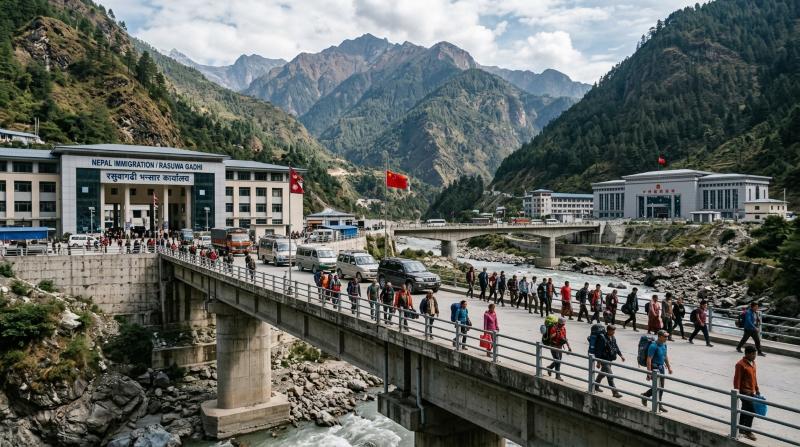
Kerung, also written as Gyirong or Jirong, is a border town on the Nepal-China frontier in the Tibet Autonomous Region. It sits close to Nepal's Rasuwa district and has become the main overland and air gateway connecting Kathmandu with Tibet. Most travelers heading toward Lhasa, Mount Kailash, or Lake Mansarovar from Nepal now pass through this crossing, since it offers a shorter, more direct connection than the older routes further east.
The road journey from Kathmandu to the Kerung border follows narrow mountain highways through the Rasuwa district, often affected by landslides, checkpoints, and seasonal road conditions. A helicopter avoids all of this entirely.
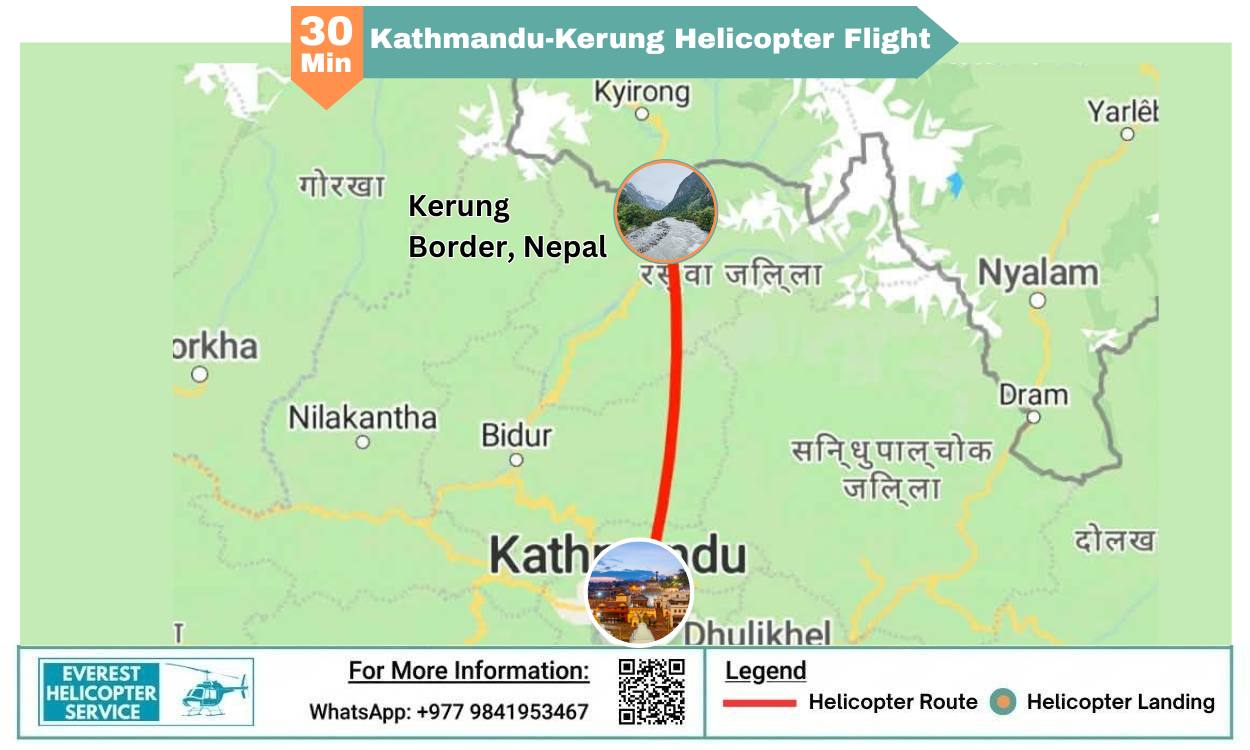
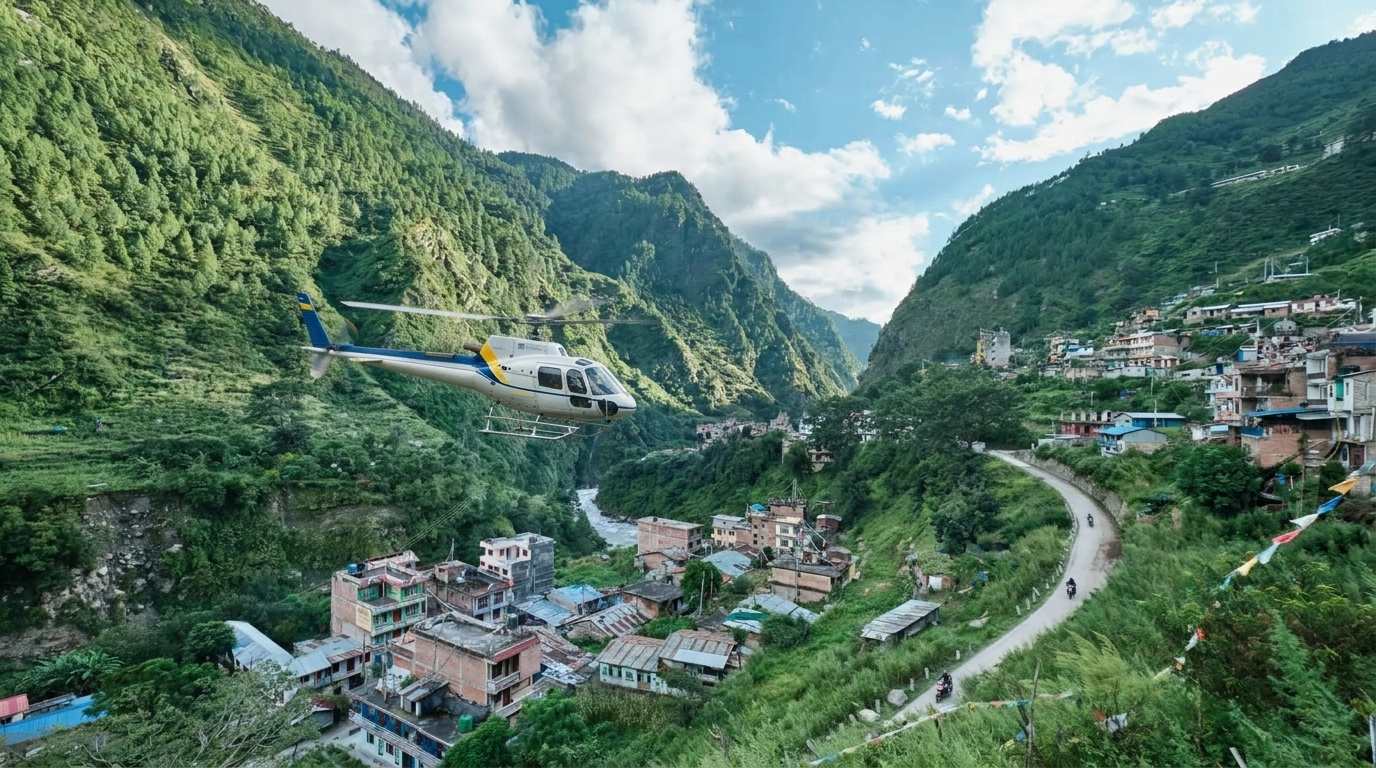
The helicopter departs from Kathmandu and flies north over the Langtang region, tracing a path along the Rasuwagadhi corridor toward the Nepal-China border near Kerung. The route passes directly through some of the most dramatic scenery in the central Himalayas before reaching the border zone.
General route: Kathmandu → Langtang Region → Rasuwagadhi → Kerung Border Area
The flight typically takes approximately 45 to 60 minutes, depending on weather, aircraft load, and exact landing point near the border.
Helicopters operating on this route land at the designated airstrip or landing zone on the Nepal side of the border, close to Rasuwagadhi/Timure. From there, passengers complete Nepal exit formalities and cross into Kerung town on the Tibetan side by a short road transfer, where Chinese immigration and customs procedures take place. Everest Helicopter Service coordinates this ground transfer and border handover as part of the overall booking.
After completing a Tibet itinerary or the Kailash Mansarovar Yatra, the return flight from the Kerung border area back to Kathmandu is the quickest way to reconnect with onward international flights, hotels, or business schedules in Nepal. Instead of a full day retracing the road route, travelers can be back in Kathmandu within the hour.
Before boarding the return flight, passengers complete Chinese exit immigration in Kerung, cross back into Nepal, and clear Nepal entry formalities at the border point near Rasuwagadhi/Timure. Everest Helicopter Service times departures around these formalities to minimize waiting.
On arrival in Kathmandu, passengers are received and can connect directly to their hotel, onward domestic flight, or international departure, depending on their itinerary.
The Kathmandu-Kerung route is considered one of the most visually striking helicopter flights in Nepal, passing close to:
This is a sample day itinerary for a one-way helicopter transfer from Kathmandu to the Kerung border area. Exact timing varies depending on flight schedule, border processing, and group size.
Morning: Departure from Kathmandu
Passengers are picked up from their hotel in Kathmandu and transferred to the helipad. A pre-flight briefing covers safety procedures, baggage limits, and the day's schedule. The helicopter departs Kathmandu and climbs north over the Langtang region, offering aerial views of Langtang National Park, Ganesh Himal, Dorje Lakpa, and Langtang Lirung as the flight tracks toward the Nepal-China border.
Flight: Kathmandu to Rasuwagadhi Border Area
The flight covers approximately 45 to 60 minutes, descending toward the landing zone near Rasuwagadhi/Timure on the Nepal side of the border. On clear days, early views of the Tibetan Plateau become visible as the helicopter approaches the border corridor.
Mid-Morning: Nepal Exit Formalities
After landing, passengers complete Nepal immigration and customs procedures at the Rasuwagadhi border point. Everest Helicopter Service coordinates the ground transfer and assists passengers with the handover process.
Late Morning: Cross into Kerung
A short road transfer takes passengers across the border into Kerung town on the Tibetan side, where Chinese immigration, customs screening, and Tibet permit verification are completed. Your Tibet-side tour operator or guide receives the group here and takes over for the onward journey.
By Late Morning to Early Afternoon: Onward to Tibet
With the border crossing complete well before midday, the group is free to continue toward Lhasa, Lake Mansarovar, or the next destination on their Tibet itinerary, having saved an entire day compared to the road transfer from Kathmandu.
A private charter for the Kathmandu to Kerung sector costs USD 2,500, covering the full aircraft for up to 5 passengers, depending on the helicopter type and baggage load.
For travelers who do not need a full private charter, a per-person shared seat rate is available at USD 500 per person, making it a practical option for smaller groups or solo pilgrims joining a shared flight.
Service Type | Capacity | Estimated Cost
Private Charter | 1-5 Pax | USD 2,500
Shared Charter | Per Person | USD 500
The return sector from Kerung to Kathmandu is priced the same as the outbound flight: USD 2,500 for a private charter, or USD 500 per person on a shared basis.
Larger pilgrimage groups often find it more economical to book a private charter and split the USD 2,500 cost among the group, rather than booking individual shared seats, especially when the group size is close to full helicopter capacity. Everest Helicopter Service can advise on the most cost-effective configuration based on group size and luggage requirements.
The Kailash Mansarovar Yatra is physically demanding, and many pilgrims prefer to conserve their energy for the high-altitude trek and parikrama rather than spend a full day on mountain roads. A Kailash Mansarovar helicopter transfer between Kathmandu and the Kerung route removes one of the most tiring legs of the journey.
By flying instead of driving, pilgrims gain back a full day that can be used for acclimatization, rest, or sightseeing in Kathmandu before or after the yatra.
After completing the Kailash Kora and returning to the Kerung border area, pilgrims are often fatigued from the high-altitude trek. A helicopter return from Tibet allows for a fast, low-stress transfer back to Kathmandu instead of a long descent by road.
Everest Helicopter Service works alongside Kailash Mansarovar tour operators to build the helicopter sector directly into a full pilgrimage itinerary. This Kerung route Kailash tour combination is increasingly popular for pilgrims who want a faster, more comfortable alternative to the standard overland-only itinerary, while still completing the full Tibet portion of the yatra by road once across the border.
A valid passport with at least six months of remaining validity from the date of travel is required for all international travelers crossing into Tibet via Kerung.
Travelers entering Tibet through Kerung typically require a Chinese Group Visa, arranged through a registered Tibet travel agency rather than a standard individual Chinese visa. This is processed in advance of travel and is mandatory for entry.
In addition to the Chinese Group Visa, a Tibet Travel Permit is required to enter the Tibet Autonomous Region. This permit is arranged by your Tibet-side tour operator and must be ready before arrival at the border.
Standard border formalities include passport checks, visa and permit verification, customs screening, and baggage inspection on both the Nepal and China sides of the Kerung crossing.
Checklist:
Spring offers generally stable weather, clearer mountain visibility, and is one of the most reliable periods for helicopter operations on this route, coinciding with the start of the Kailash Mansarovar travel season.
Autumn is widely regarded as the best season for Himalayan flying, with clear skies, minimal cloud cover, and excellent visibility of the Langtang range and surrounding peaks.
Winter flights are possible but more dependent on daily weather conditions, with colder temperatures and a higher chance of localized cloud or snow affecting the border area.
During the monsoon months, cloud cover, rain, and reduced visibility can lead to flight delays or rescheduling. Flights are still operated when conditions allow, but flexibility is recommended during this period.
Season | Flying Conditions | Recommendation
Spring | Stable, good visibility | Highly Recommended
Autumn | Clearest skies of the year | Highly Recommended
Winter | Variable, cold | Recommended with flexibility
Monsoon | Cloud and rain affect visibility | Book with buffer days
Mountain weather in the Langtang and Rasuwa corridor can change quickly. Cloud build-up, wind, and reduced visibility near the high passes are the most common reasons for delays or rescheduling on this route.
Everest Helicopter Service follows strict pre-flight weather assessment procedures and does not operate flights when conditions fall below safe visibility and wind thresholds. Passenger safety takes priority over schedule, and flights are rescheduled rather than risked when weather does not cooperate.
Flights on this route are flown by pilots experienced in high-altitude Himalayan operations, supported by aircraft maintained to manufacturer and regulatory standards for mountain flying.
Helicopter Types Used for Kathmandu-Kerung Flights
The Airbus H125 is a high-performance single-engine helicopter well suited to high-altitude Himalayan routes, commonly used for charter flights on the Kathmandu-Kerung sector.
The Airbus H130 offers a larger cabin and wider visibility, making it a popular choice for luxury groups and pilgrims traveling together who want extra comfort during the flight.
Both aircraft types have baggage weight limits that affect total passenger and luggage capacity, particularly important for Kailash Mansarovar pilgrims carrying extra gear for the Tibet portion of their journey. Exact baggage allowance is confirmed at the time of booking based on passenger count and total payload.
Helicopter | Capacity | Best For
H125 | 5 Pax | Charter Flights
H130 | 6 Pax | Luxury Groups
Flights are flown by pilots with extensive experience navigating the Langtang corridor and the high-altitude terrain along the Nepal-China border.
Everest Helicopter Service maintains a strong operational track record on the Kathmandu-Kerung sector, with a focus on punctuality, safety, and clear communication with passengers and tour operators.
Transparent private charter and shared seat pricing makes it straightforward for individual travelers, families, and pilgrimage groups to plan and budget their transfer in advance.
Flight timings can be arranged around tour group schedules, border crossing windows, and connecting road transfers on both the Nepal and Tibet sides.
With deep experience supporting Kailash Mansarovar pilgrims and Tibet-bound travelers, Everest Helicopter Service understands the specific timing, permit, and logistics requirements unique to this route.
Whether you are planning a Kailash Mansarovar pilgrimage, a business trip, or an urgent transfer to or from the Tibet border, Everest Helicopter Service offers reliable charter availability, customized departure timing, and group booking support for the Kathmandu-Kerung route.
Contact Everest Helicopter Service today to check availability and book your Kathmandu to Kerung or Kerung to Kathmandu helicopter flight.
Note: Group joining Date may vary on weather condition and number of people joined.
Kathmandu or Kerung
Kathmandu or Kerung
Kathmandu or Kerung
Kathmandu or Kerung
Kathmandu or Kerung
Kathmandu or Kerung
Kathmandu or Kerung
Kathmandu or Kerung
Kathmandu or Kerung
Kathmandu or Kerung
Kathmandu or Kerung
Kathmandu or Kerung
Kathmandu or Kerung
Kathmandu or Kerung
Kathmandu or Kerung
Kathmandu or Kerung
Kathmandu or Kerung
Kathmandu or Kerung
Kathmandu or Kerung
Kathmandu or Kerung
Kathmandu or Kerung
Kathmandu or Kerung
Kathmandu or Kerung
Kathmandu or Kerung
Kathmandu or Kerung
Kathmandu or Kerung
Kathmandu or Kerung
Kathmandu or Kerung
Kathmandu or Kerung
Kathmandu or Kerung
Kathmandu or Kerung
Kathmandu or Kerung
Kathmandu or Kerung
Kathmandu or Kerung
Kathmandu or Kerung
Kathmandu or Kerung
Kathmandu or Kerung
Kathmandu or Kerung
Kathmandu or Kerung
Kathmandu or Kerung
Kathmandu or Kerung
Kathmandu or Kerung
Kathmandu or Kerung
Kathmandu or Kerung
Kathmandu or Kerung
Kathmandu or Kerung
Kathmandu or Kerung
Kathmandu or Kerung
Kathmandu or Kerung
Kathmandu or Kerung
Kathmandu or Kerung
Kathmandu or Kerung
Kathmandu or Kerung
Kathmandu or Kerung
Kathmandu or Kerung
Kathmandu or Kerung
Kathmandu or Kerung
Kathmandu or Kerung
Kathmandu or Kerung
Kathmandu or Kerung
A private charter costs USD 2,500 for up to 5 passengers, while a shared seat costs USD 500 per person.
The flight takes approximately 45 to 60 minutes, depending on weather and route conditions.
Yes, private charters are available and can be booked directly with Everest Helicopter Service for individuals, families, or small groups.
Yes, return flights from the Kerung border area back to Kathmandu operate on the same charter and shared-seat basis as the outbound flight.
Yes, it is one of the most popular options for pilgrims wanting to save travel time and physical energy before and after the Kailash Kora.
Flights are rescheduled to the next available safe weather window. Passenger safety takes priority over fixed departure times, so it is advisable to build a buffer day into your itinerary.
Baggage allowance depends on the helicopter type, total passenger count, and payload limits, and is confirmed individually at the time of booking.
Yes, the service is widely used by international travelers, pilgrims, and business visitors, provided they hold the correct visa and Tibet travel permits.
Yes, Everest Helicopter Service regularly coordinates with Kailash Mansarovar tour operators to build the helicopter sector directly into a complete pilgrimage itinerary.
Helicopters land at the designated airstrip on the Nepal side near Rasuwagadhi/Timure, with a short road transfer across the border into Kerung town.

 Maximum: 5 People/Helicopter
Best price guaranteed
Safe Tour Plan
Maximum: 5 People/Helicopter
Best price guaranteed
Safe Tour Plan
Response Time 0-2 Hours , Response Rate 100%
© 2026 All rights reserved. Everest Helicopter Service Pvt. Ltd.



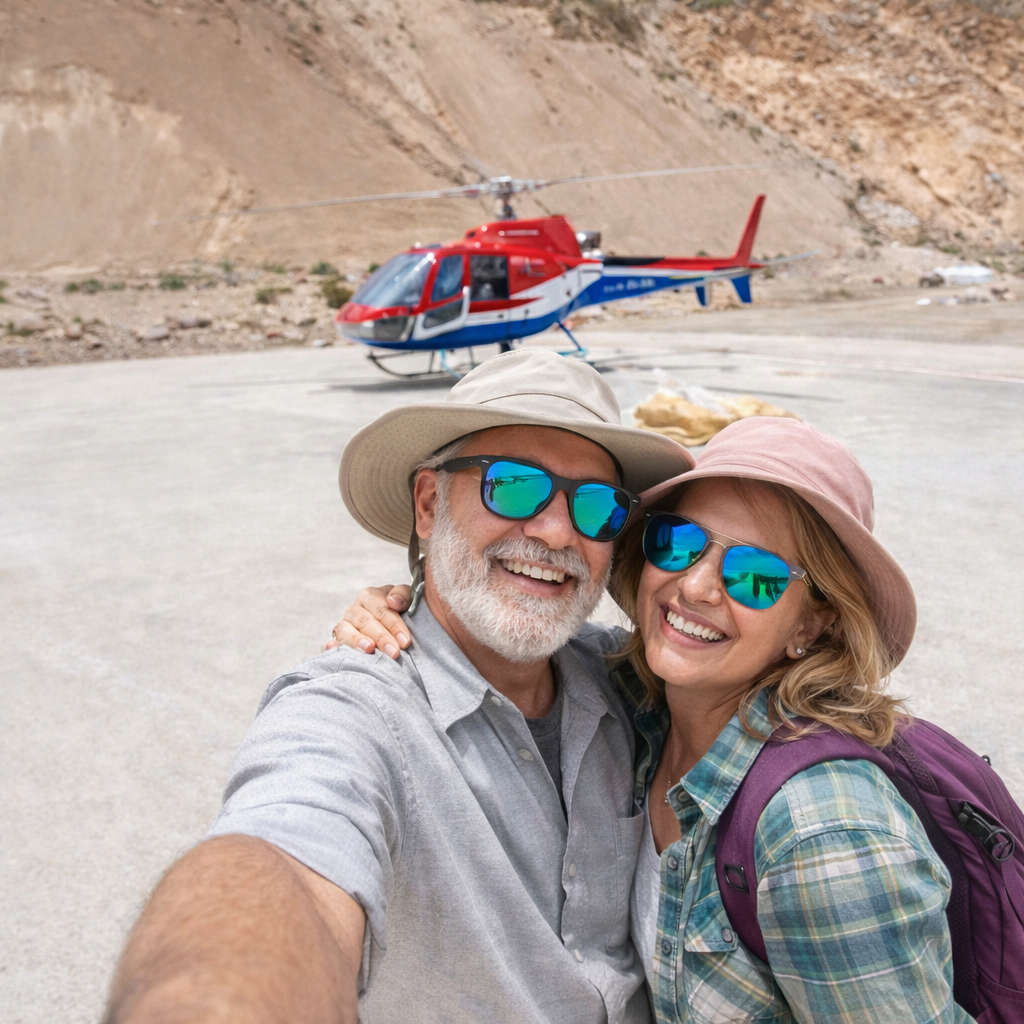
Ramesh AgarwalIndiaOn June, 2026
Lord Shiva Walked Us To Kailash. Everest Helicopter Service Flew Us Home.
I Had Walked The Kailash Kora. My Knees Knew It. My Lungs Knew It. Every Part Of Me That Had Climbed Above 5,000 Meters Knew It.
When Our Group Reached Kerung After The Yatra, The Thought Of Sitting In A Jeep For Eight Or Nine More Hours Back To Kathmandu Felt Like A Punishment I Had Not Earned. Someone In Our Group Mentioned Everest Helicopter Service. We Made One Call. Within The Hour, It Was Arranged.
The Flight Back Was Something I Will Carry With Me As Long As I Carry Anything. Lifting Off From The Border, The Tibetan Plateau Still Visible Behind Us, And Then The Himalayas Opening Up Below — Langtang Lirung, Ganesh Himal, The Entire Corridor We Had Spent Weeks Traveling By Road And Foot, Now Passing Beneath Us In Under An Hour. I Am A 67-year-old Man. I Have Done This Pilgrimage Twice In My Life. I Wish I Had Known About This On The First Trip.
Lord Shiva Walked Us To Kailash. Everest Helicopter Service Flew Us Home.
Priyanka MehtaCanadaOn June, 2026
The Practical Traveler's Voice
I'll Be Honest — I Almost Did Not Book The Helicopter.
The Road Back From Kerung To Kathmandu Looked Manageable On The Map. It Is Not Manageable After A Kailash Mansarovar Yatra. By The Time Our Group Returned To The Border, We Were Running On Spiritual Energy Alone. The Physical Kind Had Been Left Somewhere On The Parikrama Trail At 5,636 Meters.
A Friend Who Had Done The Yatra The Previous Season Told Me: Book The Helicopter For The Return, No Matter What. I Listened. I Contacted Everest Helicopter Service, Confirmed Our Return Date With The Tibet Operator, And Had The Seats Locked In Before We Even Crossed Into Tibet.
The Morning We Flew Back, The Sky Over The Langtang Range Was Completely Clear. Fifty-five Minutes Later We Were In Kathmandu, Checked Into The Hotel, Showered, And Eating A Proper Meal While Our Road-travel Counterparts Were Still Three Hours Outside The City.
Total Cost Per Person Was USD 500 On A Shared Charter. For What It Gave Back In Time, Comfort, And The Memory Of That Flight Over The Himalayas, I Would Pay It Ten Times Over.
If You Are Doing The Kailash Yatra Via The Kerung Route, Do Not Make The Return Journey By Road. Just Don't.