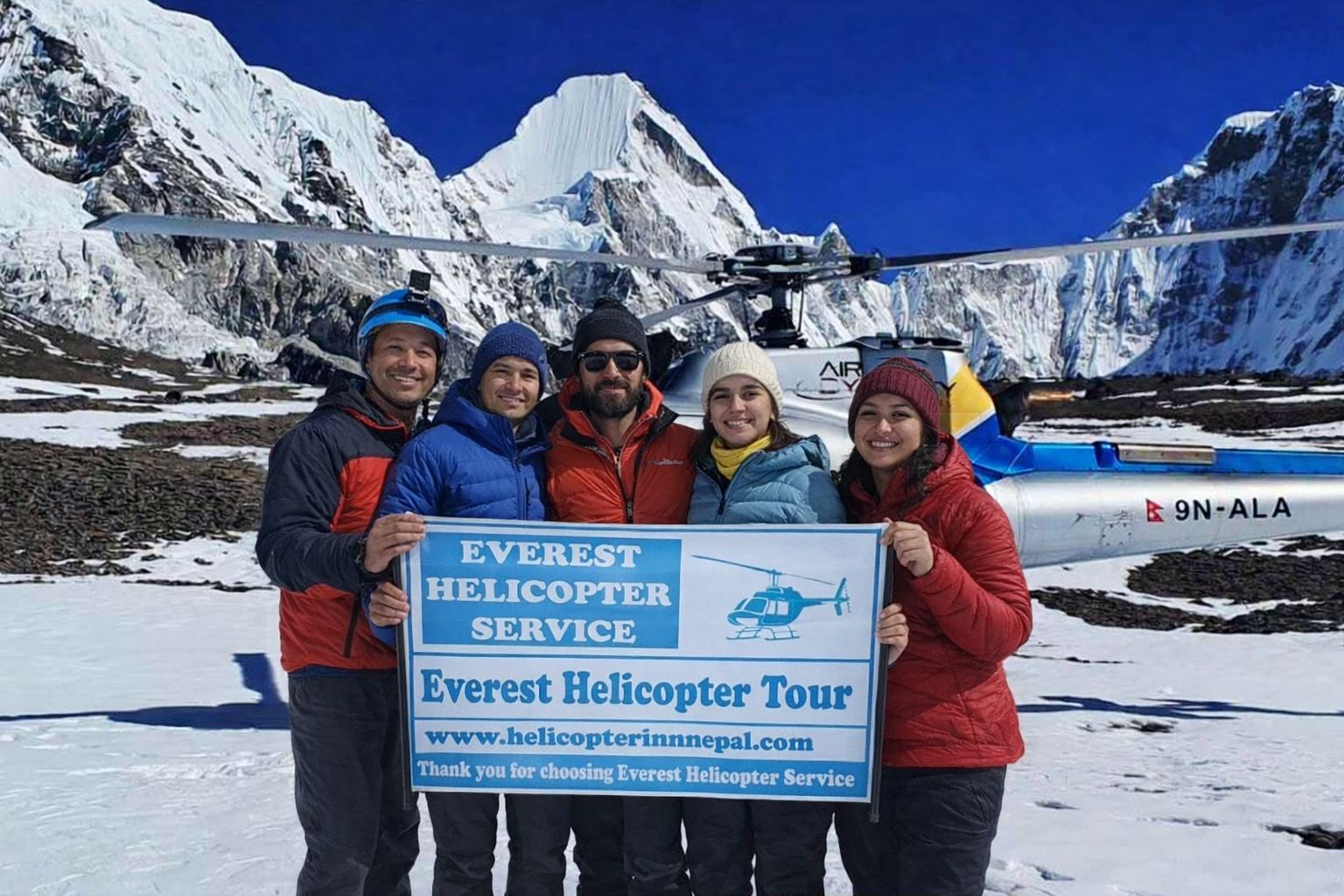
Reaching Everest Base Camp is one of the great achievements in trekking, but for many travelers, the journey isn't finished once they touch the base camp sign. What follows is usually two or three more days of walking back down the same trail through Gorakshep, Lobuche, Pheriche, Namche, and finally Lukla before a fixed-wing flight to Kathmandu. A helicopter return changes that. Instead of retracing your steps on foot, you can be lifted out of the Khumbu and back in Kathmandu the same day.
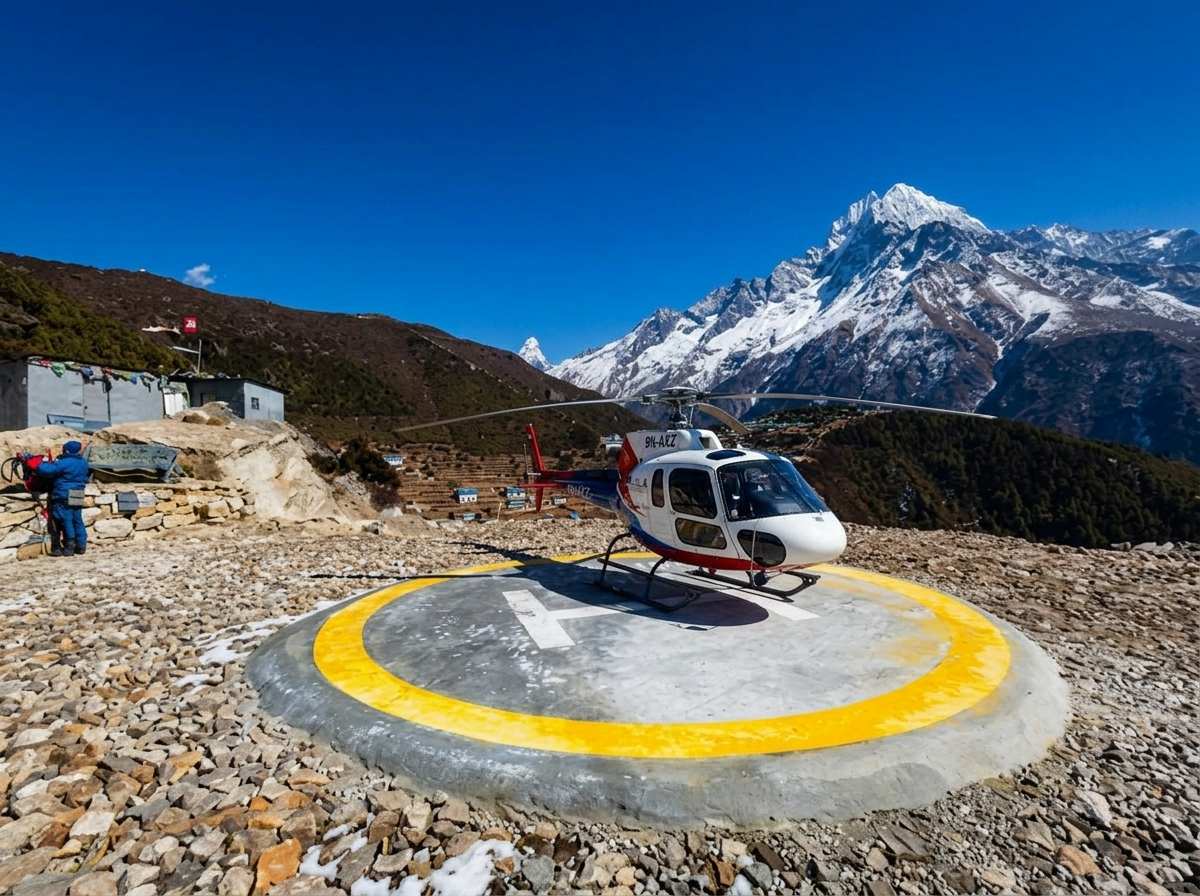
It's worth understanding from the start that helicopters do not typically land at Everest Base Camp itself. Because of the terrain, the moving Khumbu Glacier, and the layout of the seasonal tent camp, pickup is almost always coordinated from Gorakshep, the last permanent settlement before base camp and the point most trekkers pass through anyway on their way to Kala Patthar.
Everest Helicopter Service arranges Everest Base Camp to Kathmandu helicopter transfers for trekkers who have completed their trek and want a faster, more comfortable way back, as well as for those who want to build a helicopter return into their itinerary from the start. Below, you'll find everything you need to know about the EBC to Kathmandu helicopter, including Everest Base Camp helicopter pickup logistics, cost, weather considerations, and how to book.
Ready to skip the long walk down? Contact us to check Gorakshep to Kathmandu helicopter availability for your dates.
| Detail | Information |
|---|---|
| Route | Gorakshep (near Everest Base Camp) to Kathmandu |
| Typical pickup location | Gorakshep |
| Destination | Kathmandu (or Kathmandu-area airstrip/heliport) |
| Approximate flight duration | Roughly 60 to 90 minutes, depending on weather, routing, and refueling stops |
| Maximum passengers | Up to 5 passengers per aircraft, depending on altitude, weight, and weather conditions |
| Private charter price | Quoted per charter based on group size and route; contact us for a private charter quote |
| Shared-seat price | USD 1,400 per person |
| Best seasons | Spring (March to May) and autumn (September to November) |
| Altitude | Gorakshep sits at approximately 5,164 meters (16,942 feet) |
| Weather dependency | High; flights operate only in safe visual flying conditions |
| Booking requirement | Advance booking recommended; last-minute bookings considered subject to availability |
This is one of the most common questions trekkers ask, and the honest answer is: usually not directly from Everest Base Camp itself, but from Gorakshep nearby.
Everest Base Camp sits at approximately 5,364 meters (17,598 feet) on the shifting ice and rock of the Khumbu Glacier. The ground here is uneven, unstable, and changes from season to season as the glacier moves, which makes it an unreliable and generally unsuitable spot for routine helicopter landings.
Gorakshep, by contrast, sits at roughly 5,164 meters (16,942 feet), about a two to three hour walk from Everest Base Camp. It has flatter, more consistent ground, and it's already the last overnight stop most trekkers use before their final push to base camp and Kala Patthar. For this reason, Gorakshep functions as the practical pickup and operational point for helicopter from Everest Base Camp to Kathmandu itineraries.
That said, the exact pickup spot can shift based on the day's conditions. Whether a helicopter can land at a particular site depends on real-time weather, visibility, wind, aircraft performance at altitude, and operational or aviation authority requirements at the time of flight. No operator, including Everest Helicopter Service, can guarantee a landing at a specific location unless it has been operationally confirmed on the day of the flight. We recommend treating Gorakshep as the standard EBC helicopter pickup point, while staying flexible about the precise landing spot.
Everest Base Camp
Everest Base Camp itself is a seasonal camp on the Khumbu Glacier, used mainly by expedition teams during climbing seasons. Because the glacier surface is unstable and constantly shifting, it is not typically used as a routine commercial helicopter pickup point. Trekkers visiting for the day usually walk back to Gorakshep afterward.
Gorakshep
Gorakshep is the last village before Everest Base Camp and the standard base for helicopter pickups on this route. It has lodges, flatter open ground, and is already part of most trekking itineraries, making it the natural coordination point for an Everest Base Camp helicopter pickup.
Kala Patthar
Kala Patthar, a viewpoint above Gorakshep at roughly 5,545 meters (18,192 feet), offers some of the best close-up views of Everest itself. While most helicopter pickups are arranged from Gorakshep rather than Kala Patthar, some private charter itineraries may include a Kala Patthar viewing before descending to the pickup point. This should always be confirmed directly with the operator rather than assumed.
How the pickup location is confirmed
The final pickup point is confirmed close to the flight date, based on weather, group logistics, and coordination with the ground team. Everest Helicopter Service works directly with trekkers and their guides to lock in the exact meeting point and timing once conditions are clear.
| Location | Approx. altitude | Role in EBC trek | Helicopter relevance |
|---|---|---|---|
| Everest Base Camp | ~5,364 m / 17,598 ft | Final trekking destination, seasonal expedition camp | Rarely used for routine pickup due to glacier terrain |
| Gorakshep | ~5,164 m / 16,942 ft | Last village and overnight stop before EBC | Standard, most commonly used pickup point |
| Kala Patthar | ~5,545 m / 18,192 ft | Viewpoint for Everest views | Occasionally part of private charter routing, not standard pickup |
Before Your Trek
Decide whether you want to build a helicopter return into your original itinerary or add it on after you've already started trekking. Either way, it helps to let your trekking agency or Everest Helicopter Service know in advance so logistics can be planned around your schedule.
Booking the Helicopter
Once your trek dates are set, you can request availability for an EBC to Kathmandu helicopter, either as a shared seat or a private charter. Booking early gives you a better chance of securing your preferred date, especially during the busier spring and autumn trekking seasons.
Reaching Gorakshep
You'll trek to Gorakshep as part of your normal itinerary, following the standard route through Namche, Tengboche, Dingboche, and Lobuche.
Completing Everest Base Camp or Kala Patthar
From Gorakshep, you'll complete your visit to Everest Base Camp and, if included in your itinerary, Kala Patthar, before returning to Gorakshep for pickup.
Weather and Flight Confirmation
On the morning of your scheduled flight, conditions are assessed. Mountain weather changes quickly, so flight timing is confirmed shortly before departure rather than fixed rigidly weeks in advance.
Helicopter Pickup
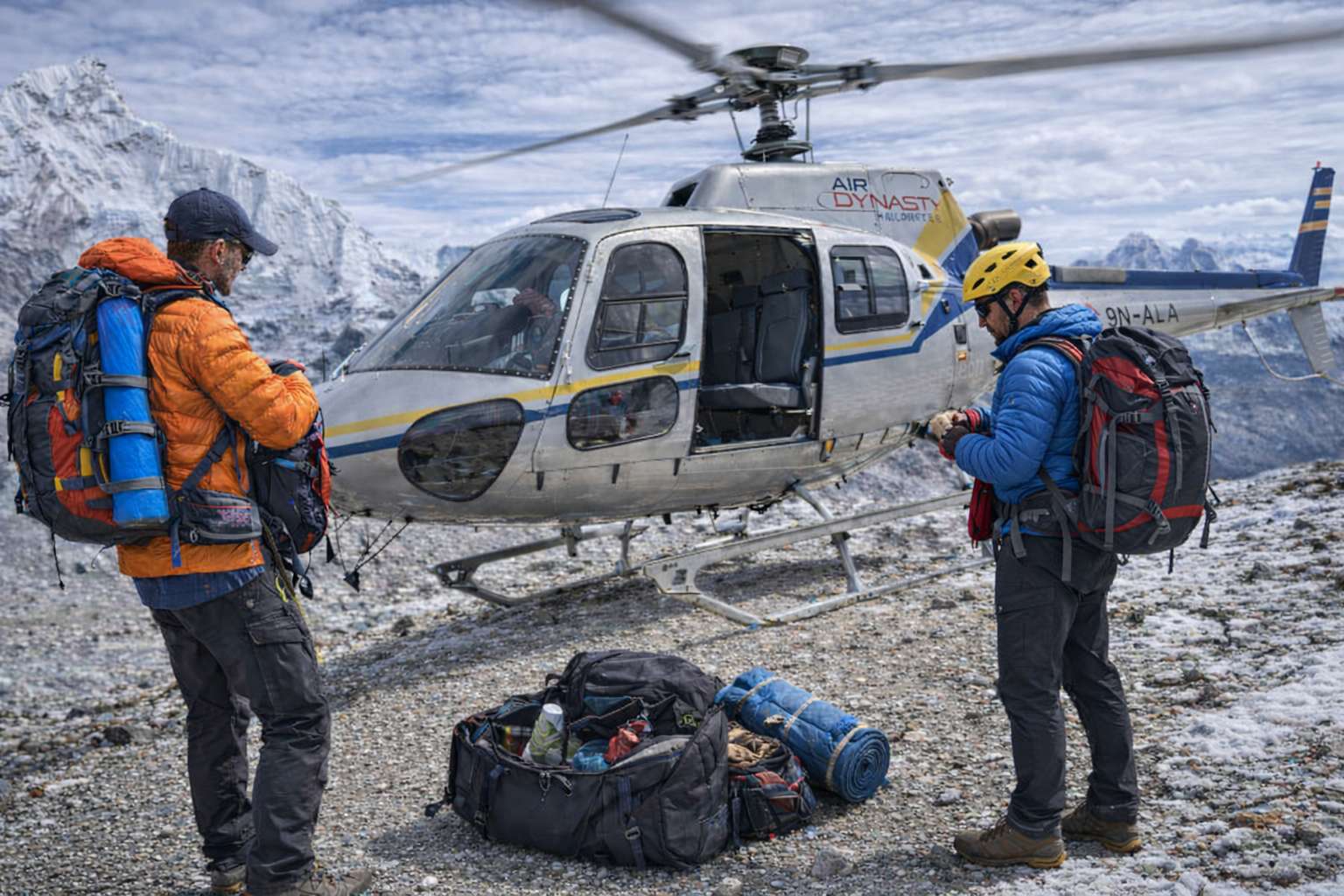
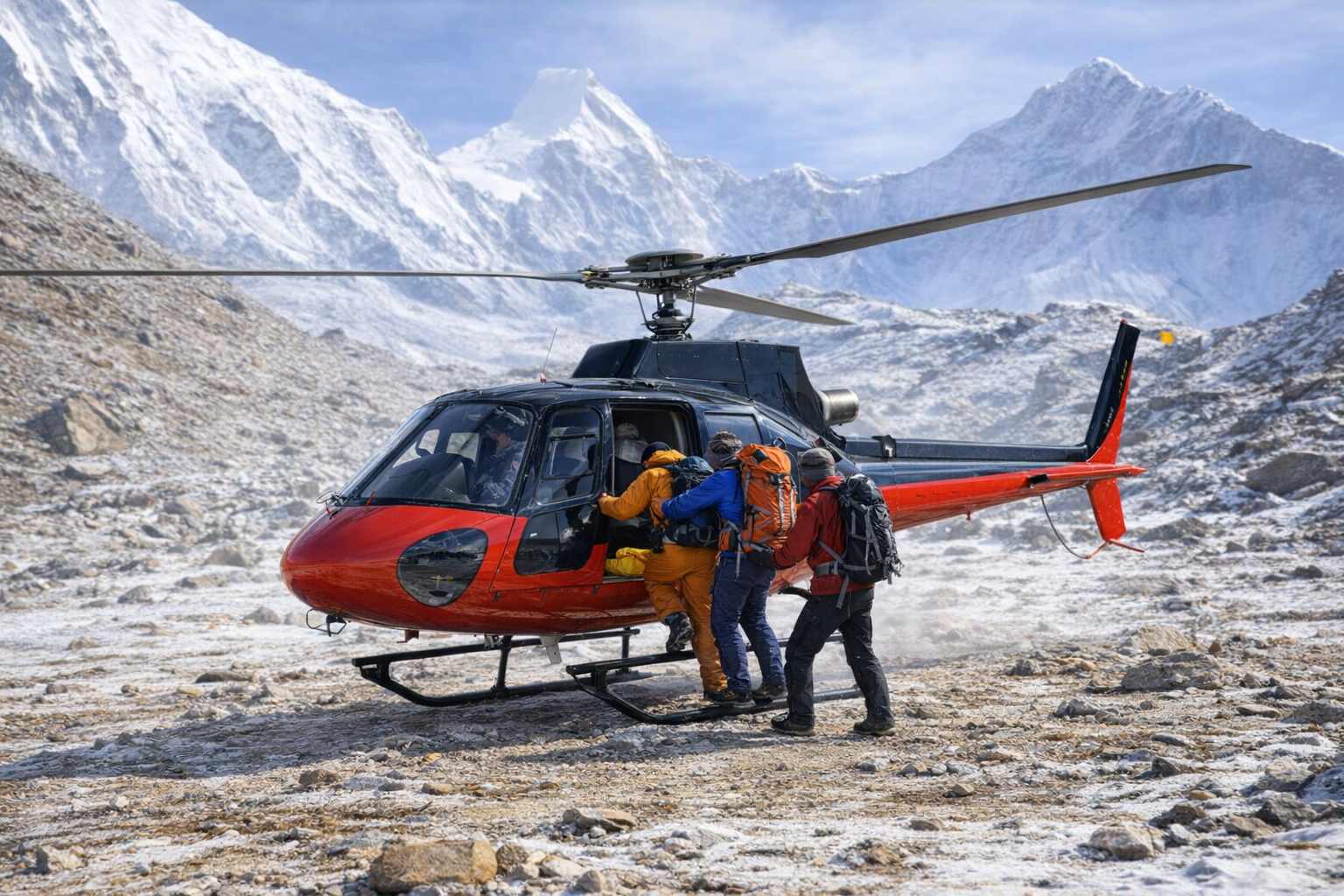
Once conditions are confirmed safe, the helicopter picks you up from Gorakshep along with your luggage, subject to weight and baggage guidelines.
Arrival in Kathmandu
The flight typically takes you back to Kathmandu, cutting out what would otherwise be two to three additional days of downhill trekking and a separate Lukla flight.
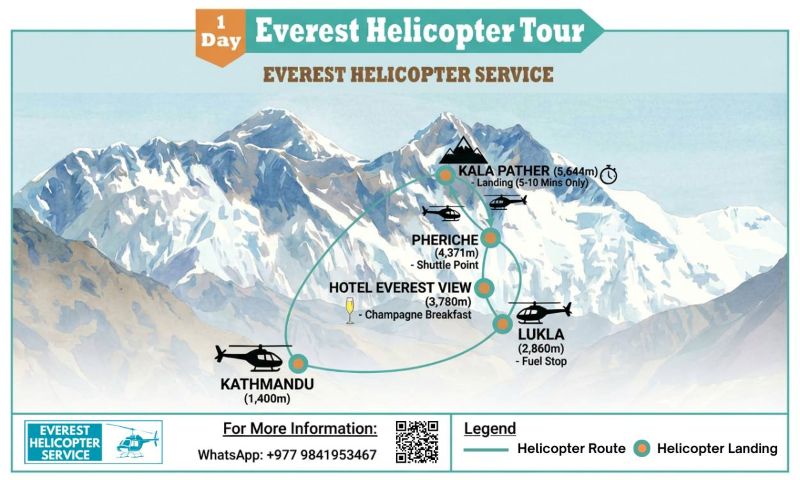
The flight from Gorakshep to Kathmandu typically passes over some of the most dramatic scenery in the Khumbu region. While the exact routing can vary by weather, aircraft, and pilot discretion, a typical journey may pass near or over:
Not every landmark is visible on every flight. Cloud cover, time of day, and flight path can all affect what you see, so treat this as a general overview of the route rather than a guaranteed sightseeing itinerary.
Day 1: Everest Base Camp / Gorakshep → Kathmandu by Helicopter
Approx. Flight Time: 1–1.5 hours, depending on routing and conditions.
Pickup: Gorakshep / designated nearby landing area.
Destination: Kathmandu.
Everest Helicopter Service offers this route on a shared-seat basis at USD 1,400 per person. Because a helicopter is chartered as a whole aircraft rather than sold seat by seat like a commercial airline, pricing works a little differently than a normal flight ticket.
| Passengers | Shared seat (per person) | Private charter |
|---|---|---|
| 1 passenger | USD 1,400 | Quoted on request |
| 2 passengers | USD 1,400 per person | Quoted on request |
| 3 passengers | USD 1,400 per person | Quoted on request |
| 4 passengers | USD 1,400 per person | Quoted on request |
| 5 passengers | USD 1,400 per person | Quoted on request |
A few things worth understanding about Everest Base Camp helicopter cost:
For an exact quote for your travel dates and group size, contact Everest Helicopter Service directly.
Exact inclusions can vary, so confirm the specifics with Everest Helicopter Service at the time of booking.
| Feature | Shared helicopter | Private charter |
|---|---|---|
| Price | Fixed per-person rate (USD 1,400) | Quoted based on charter, can work out more cost-effective for larger private groups |
| Flexibility | Departure time depends on coordinating with other passengers | You set the departure time within safe operating windows |
| Departure coordination | Managed by the operator around a shared schedule | Coordinated directly with you or your group |
| Privacy | Shared cabin with other trekkers | Full aircraft for your own group |
| Best for | Solo trekkers or small groups on a budget | Families, private groups, and those wanting flexibility |
| Group size | Typically 1 to 4 seats booked individually | Up to the aircraft's full passenger capacity, generally up to 5 |
| Availability | Subject to other passengers booking the same date | Subject to aircraft and weather availability only |
| Feature | EBC/Gorakshep to Kathmandu | EBC/Gorakshep to Lukla |
|---|---|---|
| Directness | Direct to Kathmandu in one flight | Requires an additional Lukla to Kathmandu flight afterward |
| Convenience | Highest; no second flight to arrange | Requires coordinating a connecting flight, which can be affected by Lukla's own weather delays |
| Time saved | Saves the most time versus a full walking return | Still saves trekking days, but adds a second leg |
| Additional requirements | None; single flight covers the full return | Depends on Lukla flight schedules and availability |
| Who should choose it | Travelers who want the fastest, most direct return to Kathmandu | Travelers who prefer to break the journey, or whose logistics favor a Lukla stop |
A full walking return from Everest Base Camp typically takes two to three days back to Lukla, plus a separate fixed-wing flight from Lukla to Kathmandu, which itself can be delayed by weather. An Everest Base Camp helicopter return condenses that into a single flight on the same day you leave Gorakshep, weather permitting.
While exact time savings vary by itinerary and conditions, most trekkers who choose a helicopter return save several full days compared to the standard walking route, time that can be used for extra sightseeing in Kathmandu, an earlier return home, or simply avoiding the physical strain of a long downhill trek.
Many trekkers choose to build the helicopter return into their original Everest Base Camp trek itinerary from the start, rather than deciding once they're already on the trail. A typical structure looks like this:
The exact number of days, acclimatization stops, and side trips depends on the specific trek package and your trekking agency's itinerary. Ask your operator whether the helicopter return is included as a package option or arranged separately.
A helicopter return isn't necessary for everyone, but it's a strong option for:
It's worth being clear that a commercial helicopter return is a planned, pre-booked logistics choice for healthy trekkers, not a substitute for emergency medical evacuation, which is a separate service with its own procedures.
If you're timing your Everest Base Camp trek around an international flight home, build in a buffer. Mountain weather can delay helicopter flights by hours or, in rare cases, a day or more, and treating your helicopter pickup date as the same day as your international departure is risky.
A general rule of thumb is to leave at least one full buffer day between your planned Gorakshep pickup and your international flight out of Kathmandu, more if you're traveling during a less stable weather period. If a flight cannot operate on a given day due to weather, it will typically be rescheduled for the next available safe window, so extra flexibility protects both your trek and your onward travel plans.
Helicopter operations in the Everest region depend heavily on weather. Key factors that pilots and operators assess include:
All flights are subject to safe operating conditions. No helicopter will depart, land, or continue a flight if conditions fall outside safe operational limits, regardless of booking or scheduling pressure.
Spring — March to May
Spring is one of the most popular and reliable seasons for both trekking and helicopter flights in the Everest region. Skies tend to be clearer in the mornings, and stable weather patterns make scheduling more predictable, though afternoon cloud buildup is still common.
Monsoon — June to August
Monsoon season brings frequent rain, heavy cloud cover, and reduced visibility, which can lead to more frequent delays or cancellations. Trekking and helicopter travel are still possible, but flexibility becomes especially important during these months.
Autumn — September to November
Autumn is generally considered the most reliable season for Everest region flights, with clear skies, stable weather, and excellent visibility. It's also peak trekking season, so early booking is recommended.
Winter — December to February
Winter offers clear, cold, dry conditions that are often good for flying, though high winds at altitude and occasional snowfall can cause delays. Trekker numbers are lower, which can make securing shared seats slightly slower simply due to fewer other passengers traveling the same route.
High-altitude helicopter flights operate under strict payload limits, since thinner air at altitude reduces the aircraft's lifting capacity. Because of this, baggage allowances on Everest Base Camp helicopter flights are generally more restrictive than what you'd expect on a standard domestic flight.
If your baggage exceeds the standard allowance, it may need to be sent separately, left at a lodge for later pickup, or subject to an excess baggage charge, depending on the operator's policy and the specific flight's payload capacity that day. Because exact weight limits can vary by aircraft and conditions, confirm the current baggage allowance with Everest Helicopter Service directly before your flight rather than relying on a fixed number.
Advance booking is always preferable, since it gives you the best chance of securing your preferred date and seat availability, particularly in peak spring and autumn seasons. That said, last-minute bookings are sometimes possible.
Safety underpins every part of an Everest Base Camp helicopter operation:
Flights may be delayed or cancelled for safety reasons. This isn't a sign of poor service, it reflects the reality of high-altitude mountain aviation, where conditions can change quickly and safety always takes priority over schedule.
It's important to understand the difference between a planned commercial helicopter return and an emergency helicopter evacuation, since the two involve very different processes.
Commercial transfer:
Emergency evacuation:
If you're trekking in the Everest region, appropriate travel and rescue insurance is strongly recommended regardless of whether you plan a commercial helicopter return, since it covers a different scenario entirely.
Everest Helicopter Service has been arranging helicopter tours, charters, and emergency evacuation flights in the Khumbu and Everest region since 2020. As a Nepal-based operator, our team works directly on the ground with trekking agencies, guides, and pilots who understand the specific demands of high-altitude mountain aviation.
We offer:
We're happy to answer questions about routing, pricing, and logistics before you book, so you know exactly what to expect.
Request Everest Base Camp helicopter pickup availability today and let us handle the logistics while you focus on the trek.
Skip the long walk down and get back to Kathmandu the same day you leave Gorakshep. Whether you're booking a shared seat or a private charter for your group, Everest Helicopter Service handles the coordination, weather monitoring, and logistics so your return is as smooth as your trek was memorable.
Check Availability Request Private Charter Contact Everest Helicopter Service
Note: Group joining Date may vary on weather condition and number of people joined.
Kathmandu or Everest Base Camp
Kathmandu or Everest Base Camp
Kathmandu or Everest Base Camp
Kathmandu or Everest Base Camp
Kathmandu or Everest Base Camp
Kathmandu or Everest Base Camp
Kathmandu or Everest Base Camp
Kathmandu or Everest Base Camp
Kathmandu or Everest Base Camp
Kathmandu or Everest Base Camp
Kathmandu or Everest Base Camp
Kathmandu or Everest Base Camp
Kathmandu or Everest Base Camp
Kathmandu or Everest Base Camp
Kathmandu or Everest Base Camp
Kathmandu or Everest Base Camp
Kathmandu or Everest Base Camp
Kathmandu or Everest Base Camp
Kathmandu or Everest Base Camp
Kathmandu or Everest Base Camp
Kathmandu or Everest Base Camp
Kathmandu or Everest Base Camp
Kathmandu or Everest Base Camp
Kathmandu or Everest Base Camp
Kathmandu or Everest Base Camp
Kathmandu or Everest Base Camp
Kathmandu or Everest Base Camp
Kathmandu or Everest Base Camp
Kathmandu or Everest Base Camp
Kathmandu or Everest Base Camp
Kathmandu or Everest Base Camp
Kathmandu or Everest Base Camp
Kathmandu or Everest Base Camp
Kathmandu or Everest Base Camp
Kathmandu or Everest Base Camp
Kathmandu or Everest Base Camp
Kathmandu or Everest Base Camp
Kathmandu or Everest Base Camp
Kathmandu or Everest Base Camp
Kathmandu or Everest Base Camp
Kathmandu or Everest Base Camp
Kathmandu or Everest Base Camp
Kathmandu or Everest Base Camp
Kathmandu or Everest Base Camp
Kathmandu or Everest Base Camp
Kathmandu or Everest Base Camp
Kathmandu or Everest Base Camp
Kathmandu or Everest Base Camp
Kathmandu or Everest Base Camp
Kathmandu or Everest Base Camp
Kathmandu or Everest Base Camp
Kathmandu or Everest Base Camp
Kathmandu or Everest Base Camp
Kathmandu or Everest Base Camp
Kathmandu or Everest Base Camp
Kathmandu or Everest Base Camp
Kathmandu or Everest Base Camp
Kathmandu or Everest Base Camp
Kathmandu or Everest Base Camp
Kathmandu or Everest Base Camp
Not usually from Everest Base Camp itself. Because of the unstable glacier terrain at base camp, pickups are typically coordinated from nearby Gorakshep instead.
Gorakshep is the standard pickup point for Everest Base Camp helicopter returns, as it offers more stable ground than the base camp area itself.
Yes, in most cases. Gorakshep is the last village before Everest Base Camp and functions as the operational base for helicopter pickups on this route.
Everest Helicopter Service offers this route on a shared-seat basis at USD 1,400 per person. Private charter pricing is quoted individually based on your group and dates.
The Gorakshep to Kathmandu helicopter, which is effectively the same as the Everest Base Camp helicopter route, is USD 1,400 per person on a shared-seat basis.
The flight typically takes roughly 60 to 90 minutes, depending on weather, exact routing, and any refueling stops required along the way.
Yes. A single traveler can book a shared seat, or book a private charter alone, though a private charter for one person will generally cost more per person than sharing seats with others.
Yes, private charters are available and give you full control over timing and privacy. Contact us for a quote based on your group size and travel dates.
Yes, shared-seat bookings are available at USD 1,400 per person, subject to other passengers booking the same route and date.
Yes, a Gorakshep to Lukla helicopter is also an option, though it requires an additional Lukla to Kathmandu flight to complete your journey, unlike a direct flight to Kathmandu.
Yes, shared seats can be booked individually within a group, or a private charter can be booked for your full group, up to the aircraft's passenger capacity.

 Maximum: 5 People/Helicopter
Best price guaranteed
Safe Tour Plan
Maximum: 5 People/Helicopter
Best price guaranteed
Safe Tour Plan
Response Time 0-2 Hours , Response Rate 100%
© 2026 All rights reserved. Everest Helicopter Service Pvt. Ltd.




Ethan CallowayUSAOn April, 2026
The Perfect Way To End Our Everest Trek
After Completing The Everest Base Camp Trek, We Were Exhausted But Incredibly Happy With What We Had Accomplished. The Helicopter Pickup From Gorakshep Was The Perfect Way To Finish The Journey. The Views Of The Khumbu Valley And Surrounding Mountains From The Air Were Incredible.
Everything Was Well Coordinated, From The Booking To The Pickup Arrangements. Sushil Tiwari, was Very Helpful And Kept Us Informed Throughout The Process. The Flight Saved Us Several Days Of Descending On Foot And Allowed Us To Return To Kathmandu Comfortably. Highly Recommended For Trekkers With Limited Time.
Sofia LindströmSwedenOn April, 2026
Excellent Service And Very Well Organized
We Booked A Helicopter From The Everest Region To Kathmandu After Completing Our Trek. The Entire Process Was Straightforward And Professionally Handled. Communication Before The Flight Was Clear, And The Pickup Arrangements At Gorakshep Were Explained Properly.
The Helicopter Journey Itself Was Fantastic, Especially Seeing The Himalayan Landscape From Above. Sushil was Responsive And Helpful Throughout The Arrangements. After Several Days Of Trekking, Reaching Kathmandu By Helicopter Was Extremely Convenient. A Very Well-organized Service.
Arjun MalhotraIndiaOn May, 2026
Absolutely Worth It After EBC
After Reaching Everest Base Camp, We Were Pretty Tired And Decided To Return To Kathmandu By Helicopter. It Was Definitely Worth It. The Pickup Arrangements Were Smooth, And The Flight Gave Us Amazing Views Of The Mountains That We Had Just Spent Days Walking Through.
Sushil made The Arrangements Easy And Kept Communication Simple. It Saved Us A Lot Of Time And Made The End Of Our Trek Much More Comfortable. Would Definitely Consider Doing It Again.
Elena PetrovBulgariaOn May, 2026
An Unforgettable Flight Over The Himalayas
The Helicopter Return From The Everest Region Was One Of The Highlights Of Our Nepal Trip. After Completing The Trek, Flying Over The Khumbu Valley Gave Us A Completely Different Perspective Of The Himalayas. Seeing The Mountains From Above After Experiencing Them On Foot Was Something I Will Remember For A Long Time.
The Coordination Was Professional And Everything Was Clearly Communicated. Sushil Tiwari, Travel Expert helped Arrange The Flight And Made The Process Easy For Us. The Experience Was Exciting, Comfortable, And An Excellent Way To Finish Our Everest Adventure.
Oliver WhitakerNew ZealandOn August, 2026
A Comfortable Return After A Challenging Trek
The Everest Base Camp Trek Was Challenging, And After Completing It We Wanted A More Comfortable Way To Return To Kathmandu. The Helicopter Pickup From The Everest Region Was An Excellent Choice. It Saved Us Several Days Of Trekking And Allowed Us To Enjoy The Himalayan Scenery From A Completely Different Viewpoint.
The Arrangements Were Handled Professionally, And Mr Tiwari, MD provided Clear Information Throughout The Booking Process. We Appreciated The Attention To Detail And Smooth Coordination. It Was A Comfortable And Memorable Ending To Our Trek In Nepal.