Everest Base Camp Helicopter Tour Cost: Updated Price Guide
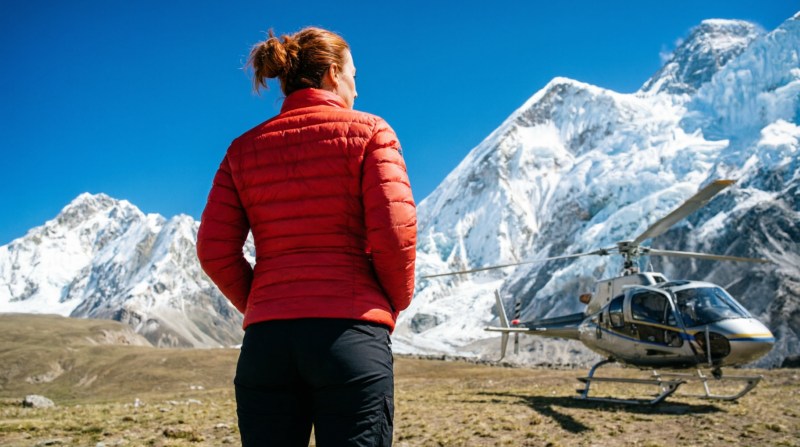
Flying to Everest Base Camp by helicopter has become one of the most sought-after experiences in Nepal. In a single morning, travelers can see Mount Everest, Lhotse, Nuptse, and Ama Dablam up close, land near 5,545 meters at Kala Patthar, and be back in Kathmandu in time for lunch. It is no surprise that demand for this tour keeps climbing every season.
The challenge for most travelers is not deciding whether to book the tour. It is figuring out what it actually costs. Search online and you will find prices ranging from under 1,000 dollars per person to well over 5,000 dollars, often with no explanation of why. Some quotes include permits and breakfast. Others do not. Some are shared flights, others are private charters with a completely different price structure.
This guide breaks down real, current pricing for Everest Base Camp helicopter tours based on actual Nepal helicopter operations, not estimates. You will learn:
- What shared and private tours actually cost per person
- What determines the final price you pay
- What is included and what is charged separately
- Hidden fees that catch travelers off guard
- The cheapest and busiest times of year to fly
- Real example pricing for solo travelers, couples, and families
- How to book with confidence and avoid overpaying
The figures in this guide reflect standard Nepal helicopter tour pricing practices from a licensed Everest region operator. Because fuel costs, permit fees, and exchange rates shift over time, always confirm the exact quote before booking, but use this guide as your baseline for understanding what a fair price looks like.
Everest Base Camp Helicopter Tour Cost at a Glance
| Tour Type | Price (USD) | Duration | Landing | Best For |
|---|---|---|---|---|
|
1,300–1,500 per person |
4–5 Hours |
Kala Patthar Overfly and Everest View Hotel Landing |
Solo travelers & couples |
|
|
5,500–6,500 per helicopter |
4–5 Hours |
Flexible itinerary |
Families & private groups |
|
|
1,200–1,500 per person |
2.5–3 Hours |
Hotel Everest View |
Luxury sightseeing |
|
|
1,500–1,800 per person |
5–6 Hours |
Gokyo Lake |
Photography enthusiasts |
|
|
500–700 per person |
45–60 Minutes |
Lukla Airport |
Trekking transfers |
Key Takeaway: The single biggest cost driver is whether you fly shared or private, and whether your package includes an actual landing at Kala Patthar or only a flyover. A shared overfly-only tour and a private charter with a guaranteed landing can differ in price by 3,000 dollars or more per person, so always check exactly what "Everest Base Camp Helicopter Tour" includes before comparing quotes.
What Determines the cost?
Helicopter tour pricing is not arbitrary. Several factors combine to set the final number on your invoice.
Type of Helicopter
Operators generally use Airbus H125 (AS350 B3e) helicopters for Everest flights because they perform reliably at high altitude. These aircraft are expensive to operate, maintain, and insure, and that cost is built into every ticket.
Fuel Prices
Aviation fuel in Nepal is imported and subject to global price swings. Since a Kathmandu-Everest-Kathmandu round trip covers significant distance and altitude gain, fuel is one of the largest line items behind the scenes.
Passenger Weight Limitations
Helicopters flying above 5,000 meters have strict weight restrictions for safety. This is why group flights are capped at around 5 passengers per aircraft, and why some operators ask for weight declarations before confirming your seat.
Number of Passengers
A shared tour splits the operating cost of the helicopter across 4 to 5 people, dramatically lowering the per-person price. A private charter means one or two travelers absorb the full cost of the aircraft, fuel, and crew.
Shared vs Private Booking
This is the single largest swing factor. Shared tours are priced per seat. Private charters are priced per flight, then divided by however many people you bring along.
Weather Conditions
Mountain weather changes fast. Operators build contingency into scheduling, and last-minute weather-related rerouting or delays can occasionally affect final costs, particularly for private charters with custom itineraries.
Airport Taxes
Every departure from Kathmandu's domestic terminal carries a standard airport tax, charged per passenger.
Landing Permissions
A confirmed landing at Kala Patthar costs more to arrange than a scenic overfly, because it requires additional coordination, fuel reserves for the return climb, and stricter weather minimums.
National Park Permits
Flying into the Everest region requires a Sagarmatha National Park entry permit and a Khumbu Pasang Lhamu Rural Municipality fee. These are fixed government charges, not markup from the operator.
Helicopter Positioning Costs
Aircraft need to be fueled and positioned at Lukla for the Everest run. These logistics are folded into the overall tour price rather than itemized separately.
Pilot Experience
High-altitude mountain flying requires specialized training. Experienced pilots with thousands of hours in the Everest region command higher operating costs, which is reflected in ticket pricing.
Luxury Services
Private charters often include extras such as VIP vehicle transfers, extended landing time, and a private breakfast experience, all of which add to the base cost.
Seasonal Demand
Peak months bring more bookings chasing the same limited number of daily helicopter slots, which keeps prices firmer than during quieter months.
Emergency Logistics
Operators maintain oxygen, medical kits, and rescue coordination capacity as part of standard operations. This is a fixed safety cost embedded in every ticket rather than an optional add-on.
Shared vs Private Helicopter Tour
| Feature | Shared Tour | Private Charter |
|---|---|---|
| Price | Lower | Higher |
| Privacy | Shared with others | Exclusive |
| Flexibility | Fixed schedule | Fully customizable |
| Pickup Time | Fixed | Flexible |
| Photography | Limited | Unlimited opportunities |
| Best For | Solo travelers | Families |
| Couples | Good | Excellent |
| Groups | Limited | Excellent |
| Departure | Scheduled | On demand |
| Cost Per Person | Lower | Lower for groups of 5 |
Recommendations:
- Solo travelers and couples on a budget should choose a shared group joining tour, ideally the version that includes a Kala Patthar landing rather than overfly only.
- Photographers should prioritize the shared or private option with a guaranteed landing, since ground-level shots of Everest are only possible when the helicopter actually touches down.
- Families of 4 to 5 often find that a private charter, split across the group, ends up close in per-person cost to a shared landing tour, while offering far more comfort and flexibility.
- Luxury travelers and couples celebrating a special occasion should book private, since the extended breakfast experience and VIP transfers are difficult to replicate on a shared flight.
- Groups of 5 or more should request a private group quote directly, since chartering the full aircraft for your own group is often more efficient than booking multiple shared seats.
Complete Cost Breakdown
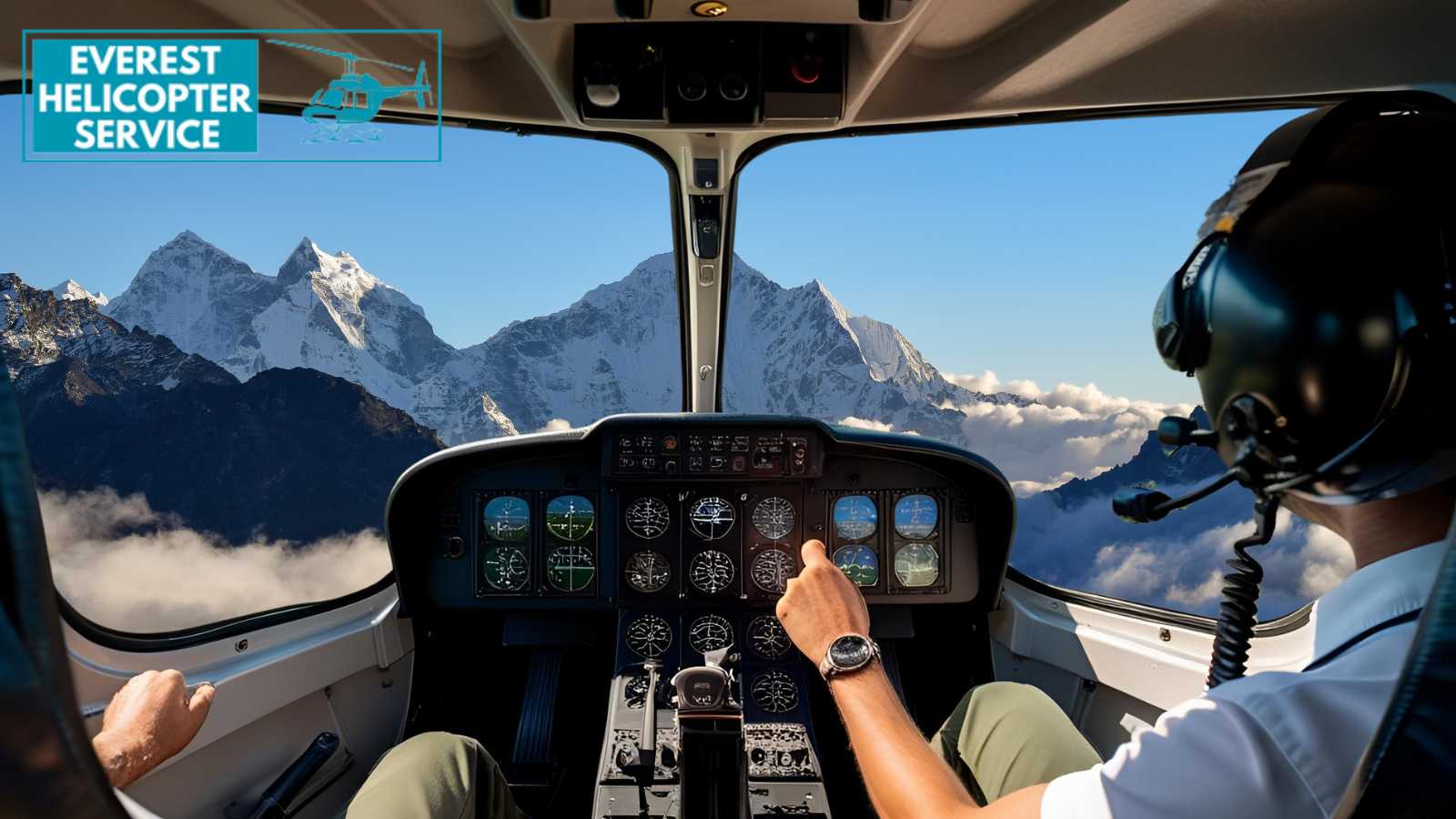
A typical shared Everest Base Camp helicopter tour price is generally structured as follows.
Included in the base package price:
- Helicopter charter (shared seat or private aircraft)
- Round-trip airport transfers between your Kathmandu hotel and the domestic terminal
- Experienced, government-licensed pilot
- Refueling stop at Lukla
- Scenic flight over Everest Base Camp and the Khumbu Icefall
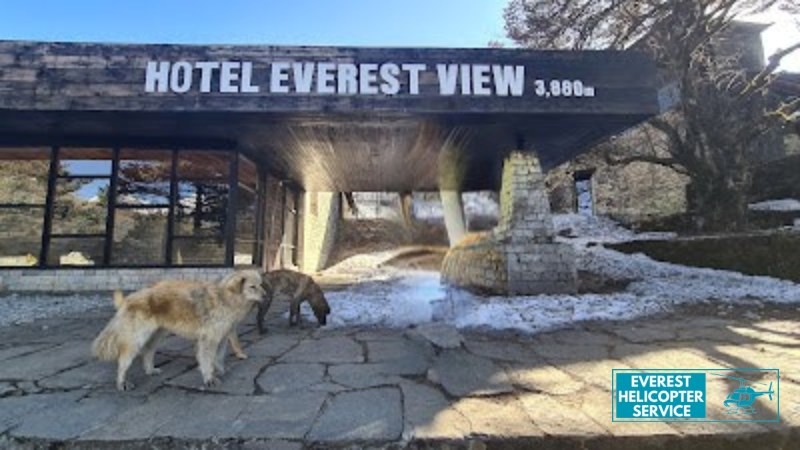
- Landing at Hotel Everest View (Syangboche) for a breakfast stop
- Sagarmatha National Park permit
- Khumbu Pasang Lhamu Rural Municipality permit
- Domestic airport tax
- Passenger insurance during the flight
- Emergency oxygen onboard
Commonly charged separately:
- Breakfast at Hotel Everest View (typically around 45 dollars per person, unless the package specifically states it is included)
- Personal travel insurance with helicopter evacuation coverage (strongly recommended, not the same as the operator's onboard passenger insurance)
- Tips for the pilot and ground staff (optional, at your discretion)
- Weather-related rescheduling costs in rare cases where a new slot requires additional coordination
- Personal expenses such as souvenirs, drinks, or snacks purchased along the way
| Item | Included | Estimated Cost (USD) |
|---|---|---|
| Helicopter Flight | Yes | Included |
| Airport Tax | Sometimes | 5–10 |
| Sagarmatha National Park Permit | Sometimes | 30 |
| Khumbu Municipality Fee | Sometimes | 20 |
| Hotel Pickup & Drop | Usually | Included |
| Everest View Hotel Breakfast | Sometimes | 30–40 |
| Oxygen Cylinder | Yes | Included |
| Experienced Pilot | Yes | Included |
A note on permits: Government fees for Sagarmatha National Park entry, the municipality tax, airport tax, and the Lukla landing fee typically total in the range of 60 to 65 dollars per person, payable in Kathmandu. Some operators build this into the quoted package price, while others list it as a separate local payment. Always confirm which structure your quote follows before comparing prices between operators.
Month-by-Month Price Guide
Spring (March, April, May)
Weather is generally clear with mild temperatures. Visibility is excellent, flight reliability is high, and this is one of the two peak booking windows of the year. Demand is strong, so prices hold firm and popular dates can sell out weeks in advance. Best for photographers and first-time visitors who want the highest chance of a successful landing.
Autumn (September, October, November)
This is the most reliable flying season, with the highest success rate for landings and clearest mountain visibility of the year. It is also the busiest period for both trekkers and helicopter tourists, so book early, particularly for October and November dates.
Winter (December, January, February)
Mornings are cold but skies are often crystal clear, giving sharp, dramatic mountain views with fewer crowds. This is generally the best window for travelers hoping to find slightly better availability and, in some cases, lower group-joining prices, though early departure times are essential to catch stable morning weather.
Monsoon (June, July, August)
Cloud cover and afternoon rain reduce the success rate of flights significantly compared to other seasons. Mornings still offer flying windows, but cancellations and rescheduling are more common. This period tends to have the most flexible availability and, at times, promotional pricing, but is not recommended for travelers with a tight schedule.
| Month | Weather | Visibility | Demand |
|---|---|---|---|
| January | Cold | Excellent | Low |
| February | Cold | Excellent | Moderate |
| March | Excellent | Excellent | High |
| April | Excellent | Excellent | Very High |
| May | Good | Good | High |
| June | Monsoon Begins | Limited | Low |
| July | Rainy | Poor | Very Low |
| August | Rainy | Poor | Very Low |
| September | Improving | Good | Moderate |
| October | Best | Excellent | Peak |
| November | Excellent | Excellent | Peak |
| December | Cold | Excellent | Moderate |
Why Prices increase during peak seasons?
March through May and September through November are Nepal's two primary tourist seasons for a reason: this is when the Himalaya offer the most stable, photogenic flying conditions. During these windows, demand for the limited number of daily helicopter slots rises sharply, since both independent travelers and trekking groups want to fly on the same clear-weather days.
Because helicopter capacity per operator is fixed (a limited number of aircraft and daily landing slots at Kala Patthar), prices during peak season rarely drop, even with advance booking. Photography conditions are also at their best in these months, which pushes demand higher among travelers specifically chasing landing shots at Kala Patthar. Operational limitations, including refueling logistics at Lukla and coordination with Hotel Everest View for breakfast stops, mean that only so many flights can run per morning, reinforcing firm pricing throughout these seasons.
Peak vs Off Season
| Season | Months | Demand | Price | Weather |
|---|---|---|---|---|
| Spring | March–May | High | Higher | Excellent |
| Summer | June–August | Low | Lowest | Rainy |
| Autumn | September–November | Very High | Highest | Best |
| Winter | December–February | Moderate | Moderate | Cold but clear |
Cheapest time to book
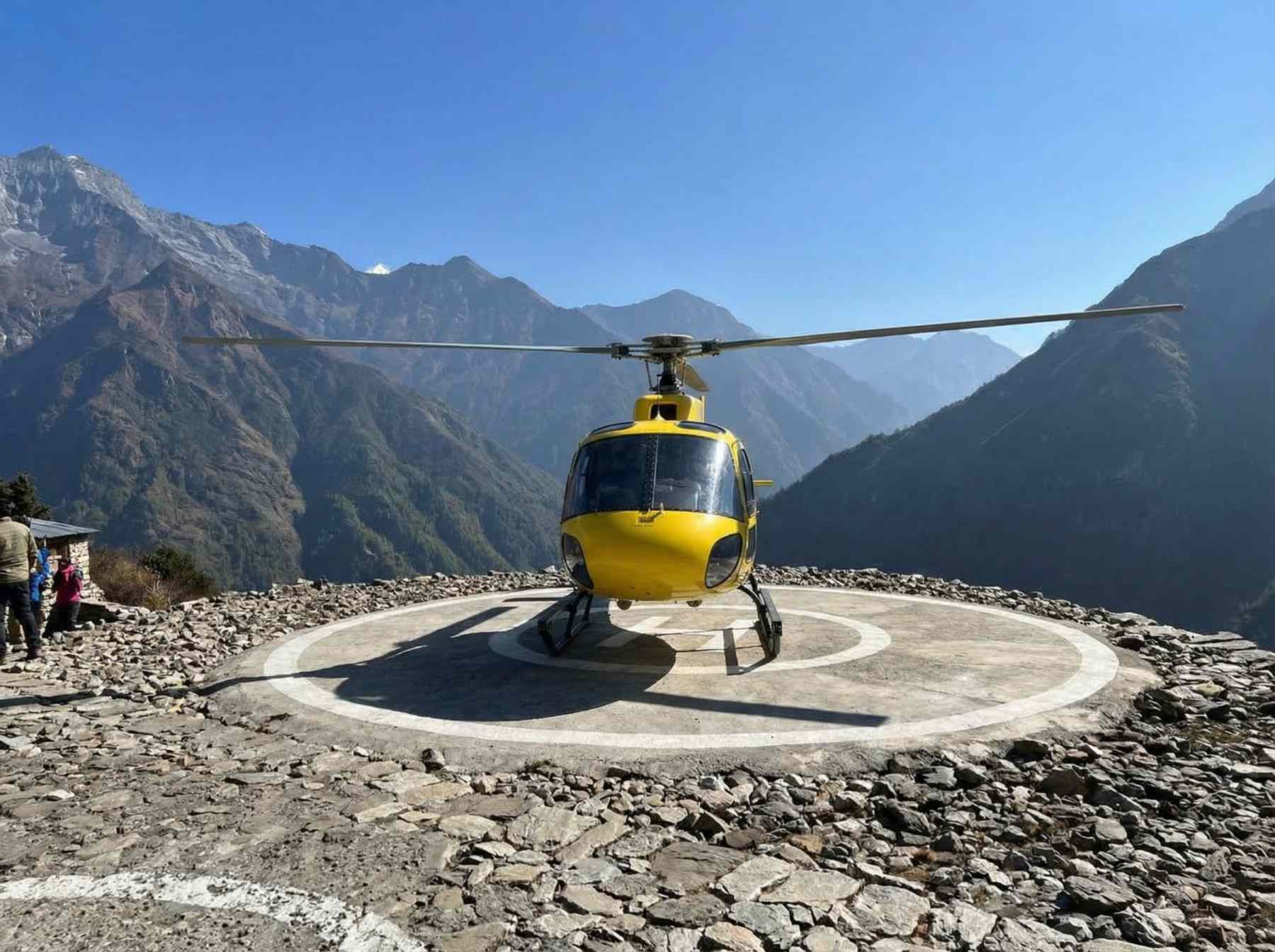
Winter mornings, particularly in December and January, often provide the best combination of clear skies and comparatively lower demand, which can translate into better availability and occasional pricing flexibility from operators.
Monsoon months carry the highest cancellation risk but also the most room for last-minute deals, since operators are working to fill seats on flyable mornings.
Shoulder periods just before or after the main spring and autumn rushes (early March, late May, early September) can offer a useful middle ground: still reasonably stable weather, but before or after the heaviest demand spike.
Additional ways to book smart:
- Ask about joining an already-forming shared group rather than booking a brand-new private slot, since joining an existing group split lowers per-person cost.
- Book directly with the operator rather than through a third-party agent, since direct booking typically removes an added commission layer.
- Stay flexible with your travel dates by a day or two, which gives you a better chance of joining a shared flight at standard pricing instead of paying for a private charter due to lack of group availability.
Hidden costs many travelers miss
Airport tax: Usually included in the package, but confirm this explicitly with your operator.
Permit fees: Sagarmatha National Park and municipality charges are often payable locally in Kathmandu rather than included in the online quote.
Breakfast at Hotel Everest View: Frequently excluded from shared tour pricing and charged around 45 dollars per person at the hotel.
Extra luggage: Helicopters have strict weight limits; excess baggage may need to be left behind or shipped separately.
Weather delays: If a flight is postponed rather than cancelled, you may need an extra night in Kathmandu, which means additional accommodation costs.
Hotel upgrades: If you choose to upgrade your breakfast or add a stay at Hotel Everest View beyond the standard stop, this is priced separately.
Personal expenses: Drinks, souvenirs, and snacks along the way are not included.
Travel insurance: Personal travel insurance with helicopter evacuation coverage is a separate purchase, distinct from the operator's onboard passenger insurance.
Tips for the pilot and ground crew: Optional but customary, and not included in the ticket price.
To avoid surprises, ask your operator for a full written breakdown that separates the base package price from permits, breakfast, and any potential weather contingency costs before you pay a deposit.
Hidden Costs
| Expense | Approximate Cost |
|---|---|
| Airport Tax | USD 5–10 |
| Breakfast | USD 30–40 |
| Extra Luggage | Operator dependent |
| Personal Expenses | Variable |
| Travel Insurance | Depends on policy |
| Hotel Stay Due to Weather | Variable |
| Tips | Optional |
Is the helicopter tour worth the price?
Helicopter Tour vs Trek
| Feature | Helicopter Tour | Everest Base Camp Trek |
|---|---|---|
| Duration | 4–5 Hours | 12–14 Days |
| Cost | USD 1,300–1,500 | USD 1,200–2,000 |
| Difficulty | Easy | Challenging |
| Altitude Exposure | Short | Long |
| Luxury | Excellent | Basic teahouses |
| Scenic Views | Outstanding | Excellent |
| Suitable for Seniors | Yes | Limited |
| Family Friendly | Yes | Depends on fitness |
| Time Required | One Day | Two Weeks |
Recommendation: Travelers with limited vacation time, physical limitations, or a strong preference for comfort will find the helicopter tour delivers an extraordinary Everest experience in a single morning. Travelers seeking the full cultural and physical journey through the Khumbu, with time to acclimatize and explore Sherpa villages, are better served by the classic trek. Many travelers also combine both, trekking partway and flying out, or flying in and trekking down.
Helicopter Landing Points
| Landing Point | Elevation | Purpose |
|---|---|---|
| Lukla Airport | 2,845 m | Fuel stop (if required) |
| Pheriche | 4,371 m | Shuttle and weight management |
| Kala Patthar | 5,545 m | Best Everest viewpoint |
| Hotel Everest View | 3,880 m | Breakfast and panoramic views |
Ways to save money
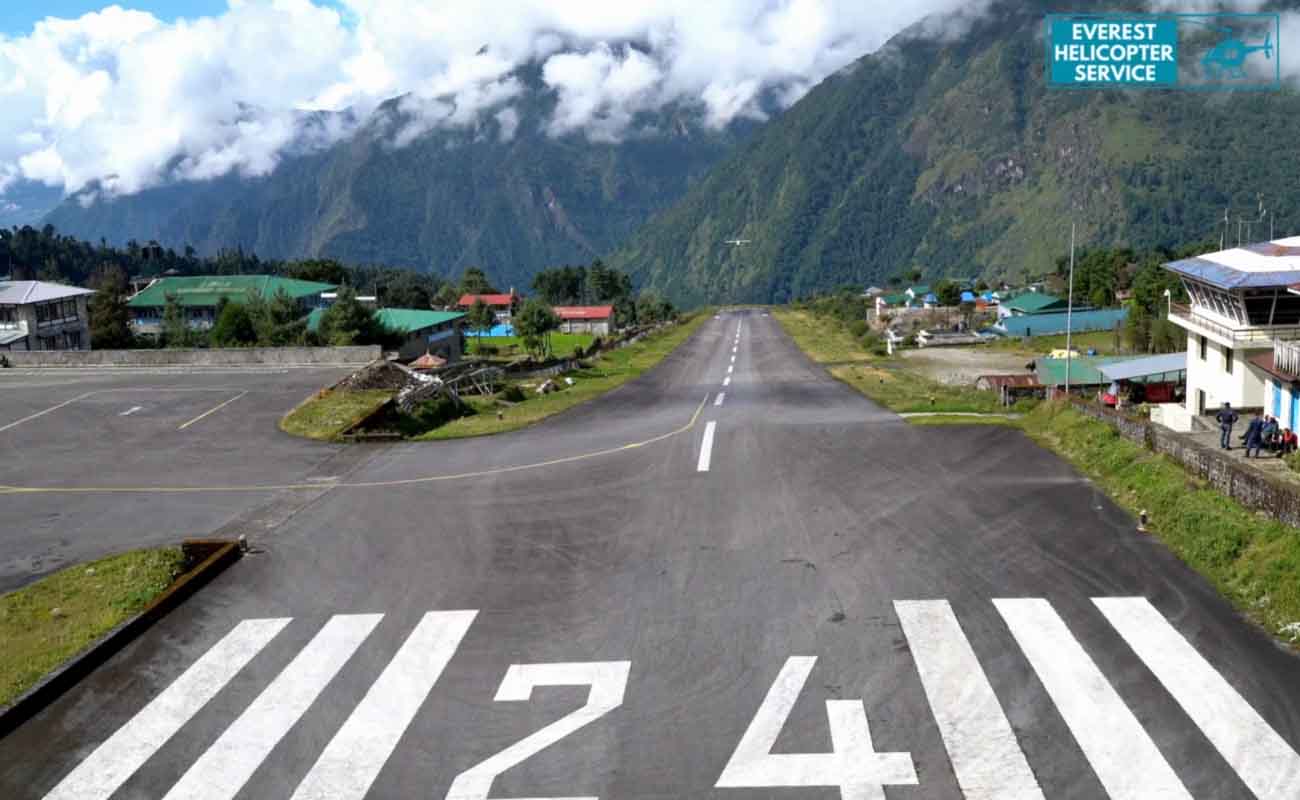
- Join a shared group departure instead of booking a private charter
- Travel during winter or early shoulder-season weeks for potentially better availability
- Book directly with a local Nepal-based operator rather than through an international reseller
- Travel as part of a group to split private charter costs more efficiently
- Reserve your seat as early as possible for peak season dates
- Stay flexible with your exact departure date to have a better shot at joining an already-forming group
- Compare what is included, not just the headline price, since two similarly priced tours can differ significantly in permits, breakfast, and landing guarantees
- Avoid unnecessary booking intermediaries who add a commission on top of the operator's direct rate
Cost Details for Everest Base Camp Helicopter Tour
What's Included
- Round-trip hotel to airport transfers in Kathmandu
- Shared or private helicopter flight to the Everest region
- Government-licensed, experienced mountain pilot
- Refueling stop at Lukla
- Scenic flight over Everest Base Camp and the Khumbu Icefall
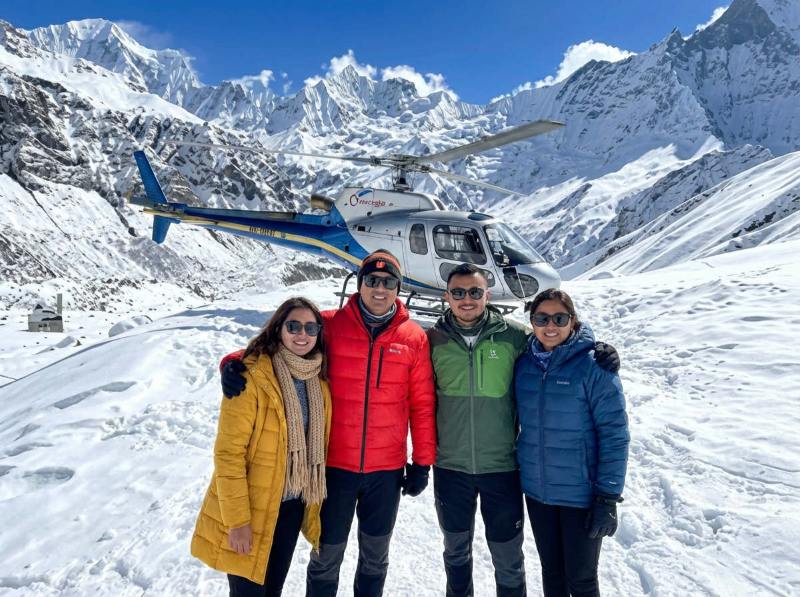
- Landing at Kala Patthar on landing-inclusive packages
- Landing at Hotel Everest View for a breakfast stop
- Sagarmatha National Park permit
- Khumbu Pasang Lhamu Rural Municipality permit
- Domestic airport tax and flight permits
- Passenger insurance during the flight
- Emergency oxygen onboard
What's not included
- Breakfast at Hotel Everest View (unless specifically stated as included, typically standard on private charters)
- Personal travel insurance with helicopter evacuation coverage
- Nepal entry visa fee
- Personal expenses such as souvenirs, snacks, and drinks
- Tips for the pilot and ground staff
- Additional charter costs resulting from weather-related itinerary changes
- Excess baggage beyond the standard weight allowance
These items are excluded because they vary by traveler, by choice, or by circumstances outside the operator's control, such as weather. Keeping them separate from the base package allows for transparent, predictable core pricing.
Real Pricing Examples
Best Tour for Different Travelers
| Traveler Type | Recommended Tour |
|---|---|
| Solo Traveler | Shared Tour |
| Couple | Shared or Private |
| Family | Private Charter |
| Honeymoon | Private Charter |
| Photographer | Private Charter |
| Luxury Traveler | Private Charter |
| Elderly Traveler | Hotel Everest View Tour |
| Corporate Group | Private Charter |
Example 1: Solo Traveler, Shared Flight
A solo traveler joining a shared group tour with a Kala Patthar landing can expect to pay in the range of 1,700 to 1,900 dollars for the seat itself. Adding government permits (around 60 to 65 dollars), optional breakfast at Hotel Everest View (around 45 dollars), and personal travel insurance brings the realistic all-in total to roughly 1,800 to 2,050 dollars. This is a strong value option for a bucket-list flight without committing to a private charter.
Example 2: Couple, Private Charter
A couple booking a private charter together might see a total charter price in the 5,500 to 5,800 dollar range, which works out to roughly 2,750 to 2,900 dollars per person. In exchange, they get the entire helicopter to themselves, flexible departure timing, an included breakfast experience, and VIP-level transfers, making it a strong choice for honeymooners or special occasions where privacy and personalization matter more than per-seat savings.
Example 3: Family of Five, Private Helicopter
A family of five chartering the entire aircraft together can bring the private charter's total cost down to close to 1,100 to 1,200 dollars per person, since the fixed cost of the helicopter is now split five ways. This often ends up cheaper per person than two separate couples booking two private charters, while still delivering full privacy, flexible timing, and an included breakfast stop, making it an efficient option for families and small groups traveling together.
| Travelers | Tour Type | Total Cost | Cost Per Person |
|---|---|---|---|
| 1 | Shared | USD 1,400 | USD 1,400 |
| 2 | Shared | USD 2,800 | USD 1,400 |
| 2 | Private | USD 5,400 | USD 2,700 |
| 3 | Private | USD 5,400 | USD 1,800 |
| 4 | Private | USD 5,400 | USD 1,350 |
| 5 | Private | USD 5,400 | USD 1,080 |
Booking Tips
When to Book: For March through May and September through November departures, book 4 to 6 weeks ahead. Winter and monsoon travel generally allows 2 to 3 weeks of notice, and private charters should ideally be reserved at least one week in advance.
Recommended Booking Timeline
| Travel Month | Recommended Booking Time |
|---|---|
| January | 2–4 Weeks Before |
| February | 2–4 Weeks Before |
| March | 2–3 Months Before |
| April | 2–3 Months Before |
| May | 1–2 Months Before |
| June | 2–4 Weeks Before |
| July | 2 Weeks Before |
| August | 2 Weeks Before |
| September | 1 Month Before |
| October | 3 Months Before |
| November | 2–3 Months Before |
| December | 1 Month Before |
Best Departure Time: Early morning departures, typically between 6:00 and 7:00 AM, offer the most stable mountain weather and the best photography light, regardless of season.
Weather Flexibility: Build at least one buffer day into your Nepal itinerary around your scheduled flight date, since mountain weather can shift quickly and reputable operators will reschedule rather than fly in unsafe conditions.
Weight Declarations: Be prepared to provide an accurate passenger weight before your flight, since helicopters operating above 5,000 meters have strict safety limits on total payload.
Cancellation Policies: Understand the refund structure before paying a deposit. Many operators offer a sliding scale (higher refund percentage the earlier you cancel) along with full refund or free rescheduling for weather-related cancellations.
Travel Insurance: Purchase a personal travel insurance policy that specifically covers helicopter evacuation up to at least 6,000 meters, separate from the operator's onboard passenger insurance.
Photography Preparation: Bring a wide-angle lens for cabin shots and mountain panoramas, extra batteries (cold temperatures drain batteries quickly), and a microfiber cloth to keep helicopter windows clear for photos.
Health Considerations: Passengers with heart conditions, respiratory issues, or severe hypertension should consult a physician before booking, given the brief but genuine high-altitude exposure at Kala Patthar.
Altitude Awareness: Landing time at Kala Patthar is intentionally short (typically 5 to 10 minutes) as a safety measure against altitude-related symptoms at 5,545 meters, so most travelers experience no ill effects.
Frequently Asked Questions
Frequently Asked Cost Questions
| Question | Short Answer |
|---|---|
| Cheapest Everest helicopter tour? | Shared group tour |
| Best value? | Private charter for five travelers |
| Most expensive option? | Luxury private charter |
| Best month? | October or November |
| Cheapest month? | July or August (weather permitting) |
| Are permits included? | Depends on the operator |
| Is breakfast included? | Often included in premium packages |
| Is there a luggage limit? | Yes, based on helicopter weight restrictions |
How much does an Everest Base Camp helicopter tour cost?
Shared group tours generally range from about 1,300 dollars per person for an overfly-only tour to around 1,900 dollars per person for a version that includes a Kala Patthar landing. Private charters typically total around 5,500 to 5,800 dollars for the aircraft, which can be split among up to five passengers.
Can helicopters actually land at Everest Base Camp?
Generally no. Due to the unstable, crevassed terrain of the Khumbu Glacier at Base Camp, helicopters do not land directly at Everest Base Camp itself. Instead, tours land at Kala Patthar, a nearby rocky viewpoint at 5,545 meters, while flying over Base Camp for aerial views and photographs.
Why do helicopters land at Kala Patthar instead of Base Camp?
Kala Patthar offers a stable, rocky landing surface at high altitude with an unobstructed view of Mount Everest, Lhotse, and Nuptse, whereas the glacier surface at Base Camp itself is unsuitable and unsafe for helicopter landings.
How long is the tour?
Most Everest Base Camp helicopter tours run 4 to 6 hours from hotel pickup to hotel drop-off in Kathmandu, including the Lukla refueling stop and the Hotel Everest View breakfast stop.
What is the baggage limit?
Baggage allowances are limited due to strict helicopter weight regulations at high altitude. Large suitcases are not permitted; a small daypack is standard, and operators will confirm exact limits at booking.
Is breakfast included?
On most shared group tours, breakfast at Hotel Everest View is available but charged separately, typically around 45 dollars per person. Private charter packages more often include breakfast as part of the total price.
Is oxygen available during the flight?
Yes. Emergency oxygen is carried onboard as a standard safety measure, and pilots are trained to recognize and respond to any signs of altitude discomfort.
Can children join the tour?
Most operators set a minimum age around 4 years old, with no strict upper age limit, though travelers above 70 or with significant health conditions may need medical clearance before flying.
What happens in bad weather?
Flights operate only when weather conditions are safe. If a flight is cancelled for weather, reputable operators offer a full refund or a free rescheduling to the next available date.
Can I book a private helicopter for just my group?
Yes. Private charters are available for individuals, couples, families, or small groups who prefer complete privacy, flexible timing, and a personalized itinerary rather than joining a shared departure.
Is the Kala Patthar landing guaranteed?
Landing is always subject to weather and safety conditions on the day of the flight. Reputable operators are transparent that landing cannot be 100 percent guaranteed regardless of season, though success rates are highest in spring and autumn.
How far in advance should I book?
Peak season dates (spring and autumn) should be booked 4 to 6 weeks ahead. Winter and monsoon travel typically allows 2 to 3 weeks notice, while private charters should be reserved at least one week in advance.
What is the cancellation policy?
Policies vary by operator but commonly follow a sliding scale, with higher refund percentages the further out you cancel, and full refund or free rescheduling for weather-related cancellations.
Do I need travel insurance?
Yes. While the operator provides passenger insurance for the flight itself, a separate personal travel insurance policy covering helicopter evacuation up to at least 6,000 meters is strongly recommended.
Will I get altitude sickness during the tour?
It is highly unlikely given the very short exposure time at Kala Patthar, typically only 5 to 10 minutes on the ground. Travelers with pre-existing heart or respiratory conditions should consult a doctor before booking.
Can I bring a camera or GoPro?
Yes, photography and video are encouraged, and all passengers are given window seats specifically to support photography during the flight.
What is the difference between an overfly tour and a landing tour?
An overfly tour flies past and around Everest Base Camp and Kala Patthar without touching down, while a landing tour includes an actual 5 to 10 minute stop at Kala Patthar, allowing you to stand at high altitude with Everest directly in front of you.
Are government permits included in the price?
This varies by operator and package. Some quotes bundle in the Sagarmatha National Park permit, municipality fee, and airport tax; others list these as a separate local payment of roughly 60 to 65 dollars per person. Always confirm which applies to your quote.
How many people fly on a shared tour?
Shared group tours are generally limited to a maximum of 4 to 5 passengers per helicopter, in line with high-altitude weight restrictions.
Is the helicopter tour safer than trekking to Base Camp?
Both options carry different risk profiles. The helicopter tour minimizes altitude exposure time and physical exertion, while trekking allows for gradual acclimatization. Reputable operators for both options maintain strong safety records, licensed pilots or guides, and emergency response protocols.
Why Choose Everest Helicopter Service?
Everest Helicopter Service is a licensed Nepal-based operator specializing in Everest region helicopter tours, private charters, luxury mountain flights, pilgrimage flights, rescue operations, and helicopter transfers throughout Nepal.
- Licensed Nepal operator with an established track record in Everest region flying
- Experienced mountain pilots trained specifically for high-altitude Himalayan operations
- Transparent pricing with a clear breakdown between the base package, permits, and optional add-ons
- Flexible booking options covering shared group joining, private charters, and custom itineraries
- Complimentary hotel pickup and drop-off included with every tour
- Modern helicopter fleet suited to high-altitude Everest region operations
- Responsive customer support for booking, weather updates, and rescheduling
- Strong safety standards, including onboard oxygen, insurance coverage, and pre-flight briefings
- Customized private charter options for families, couples, and special occasions
- A consistent record of positive traveler feedback from past Everest flights
Contact Everest Helicopter Service
| Contact Method | Details |
|---|---|
| everesthelicopterservice@gmail.com | |
| Phone / WhatsApp | 9779841953467 |
| Website | www.helicopterinnepal.com |
| Office | Kathmandu, Nepal |
| Office Hours | 8:00 AM – 7:00 PM (NPT) |
The true cost of an Everest Base Camp helicopter tour depends on far more than the headline number you see in an ad. Whether you fly shared or private, whether your package includes an actual Kala Patthar landing or only a flyover, and whether breakfast and permits are bundled in or billed separately, all shift your final price significantly. Understanding these variables before you book is the difference between a fair, transparent quote and an unpleasant surprise on the day of your flight.
If you are ready to see Mount Everest up close, whether as a solo traveler joining a shared morning departure or a family booking a private charter for the whole group, reach out to Everest Helicopter Service for a current, itemized quote. Our team can walk you through shared and private options, confirm exact permit and breakfast costs for your dates, and help you reserve your seat or charter with full confidence.
Don't just dream about Everest. Fly to it.
Book your Everest Base Camp Helicopter Tour today — seats fill fast.
On 27 Jul 2026