Kala Patthar Vs Everest Base Camp: Which Helicopter Landing Offers The Best Everest Views?
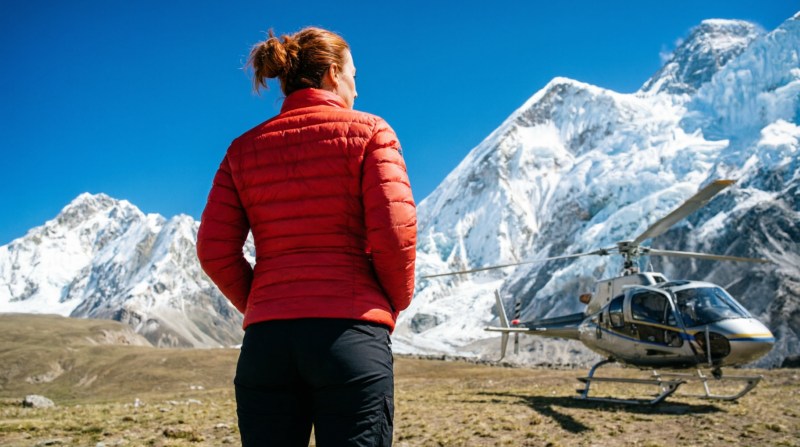
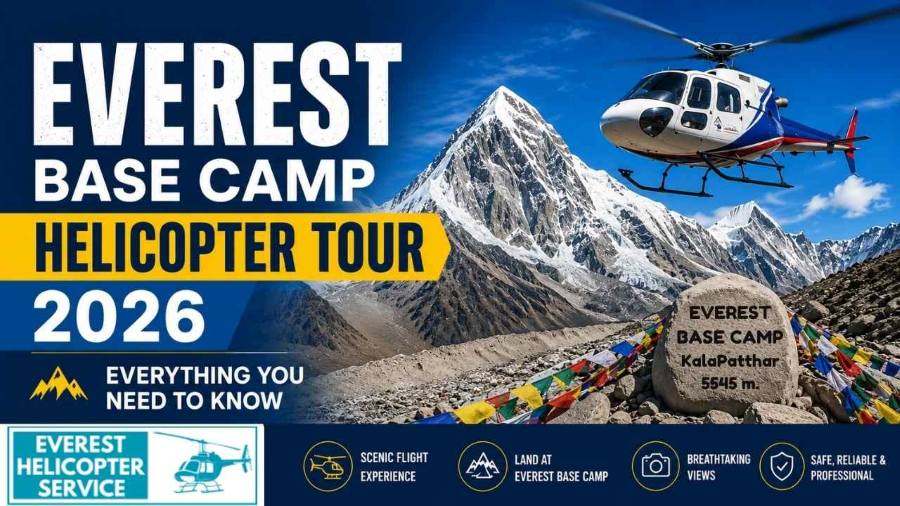
Every year, thousands of travelers book an Everest Base Camp helicopter tour expecting the helicopter to touch down right at the famous base camp they have seen in photographs and documentaries. Some are surprised — and occasionally disappointed — to learn that the landing point is often not Everest Base Camp at all, but a rocky summit called Kala Patthar, located a short distance away.
This confusion is one of the most common misunderstandings in Nepal helicopter tourism. It is also entirely understandable. The term "Everest Base Camp helicopter tour" is used broadly across the industry to describe any helicopter journey into the Khumbu region that includes a high-altitude landing near Mount Everest. But Kala Patthar and Everest Base Camp are two distinct locations with very different altitudes, accessibility conditions, visual experiences, and photographic opportunities.
Understanding the difference before you book is not just useful — it is essential. The location where your helicopter lands determines what you see, how you feel, how long you can stay, and how many photographs you come home with.
This guide by Everest Helicopter Service explains both locations in full detail, answers every question travelers commonly ask about Everest helicopter landing points, and helps you make an informed decision about which experience is right for you. Whether you are a first-time visitor to Nepal, a senior traveler, a professional photographer, or a family planning a luxury Himalayan escape, this guide covers everything you need to know.
Key Takeaways
- Kala Patthar at 5,545 meters provides the clearest, most unobstructed panoramic views of Mount Everest from any helicopter landing point in the world.
- Everest Base Camp sits at approximately 5,364 meters and offers a glacier-level expedition atmosphere, but with limited direct visibility of Everest's summit.
- Most Everest helicopter tours land at Kala Patthar rather than Everest Base Camp due to better visibility, safer landing surfaces, and more favorable wind conditions.
- Helicopters can land at Everest Base Camp, but it is subject to season, weather, glacier conditions, and CAAN regulations.
- For families, seniors, luxury travelers, and photographers, Kala Patthar is the superior landing choice.
- The Everest helicopter breakfast stop at Hotel Everest View is an experience in itself and is included in most full tour packages.
- Both locations are extraordinary. The right choice depends entirely on your goals as a traveler.
Quick Facts
| Feature | Kala Patthar | Everest Base Camp |
|---|---|---|
| Altitude | 5,545 m (18,192 ft) | 5,364 m (17,598 ft) |
| Location | Above Gorakshep | Khumbu Glacier |
| Helicopter Landing | Common (weather permitting) | Possible only under suitable operational conditions |
| Best Everest View | ★★★★★ | ★★★☆☆ |
| Walking Required | Minimal | Minimal to short walk, depending on landing area |
| Photography | Excellent | Very Good |
| Oxygen Level | Lower | Slightly Higher |
| Average Landing Time | 5–10 Minutes | 5–10 Minutes (if landing is possible) |
| Suitable for Seniors | Yes (short stay) | Yes (subject to conditions) |
| Best Season | Spring & Autumn | Spring & Autumn |
Understanding Everest Helicopter Landings
The Everest region is one of the most complex aviation environments in the world. Helicopters operating in the Khumbu region deal with thin air, rapidly changing weather, strong mountain winds, and challenging terrain that requires specialized skills and modern aircraft. Understanding where helicopters actually land — and why — removes the confusion that many travelers carry into their booking process.
The standard Everest helicopter landing point for most commercial tour operators is Kala Patthar, a prominent peak on the ridge of Pumori, at 5,545 meters above sea level. This is the default landing location for the vast majority of Everest helicopter tours departing from Kathmandu.
The typical flight route looks like this:
Kathmandu → Lukla → Pheriche → Kala Patthar → Hotel Everest View → Kathmandu
This route gives passengers a complete aerial tour of the Khumbu Valley before the landing. You fly over the Lukla airstrip, over the pine forests and terraced farms of the lower Khumbu, over the dramatic landscape of Namche Bazaar, and up through the high-altitude terrain past Pheriche before reaching the landing zone near Kala Patthar.
On certain tours, particularly in the pre-monsoon season when the Khumbu Glacier surface is more stable, operators may offer a landing at or near Everest Base Camp itself. This is a different — and in many ways more adventurous — experience. But it comes with more variables and is less reliably available than the Kala Patthar landing.
Both landing points sit above 5,300 meters and are classified as extreme altitude environments by international aviation and medical standards. Everest Helicopter Service conducts thorough pre-flight safety briefings, carries supplemental oxygen on every flight, and ensures that passenger time at altitude is carefully managed.
What is Everest Base Camp?
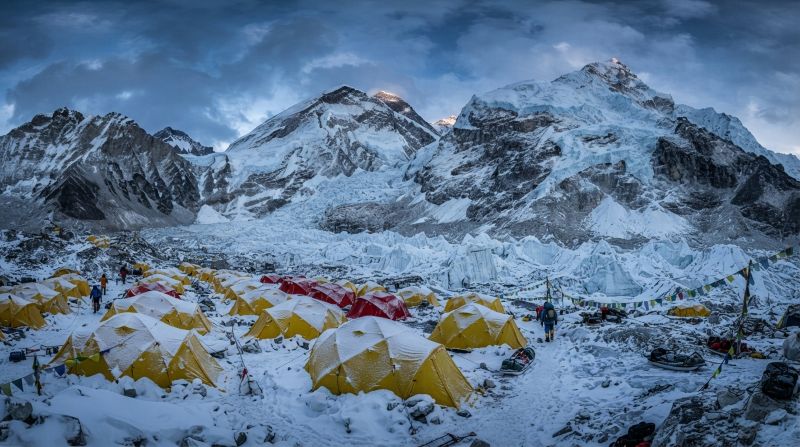
Everest Base Camp is perhaps the most famous campsite in the world. Located at approximately 5,364 meters above sea level on the Khumbu Glacier in the Solukhumbu District of Nepal, it serves as the staging point for all expeditions ascending Mount Everest via the South Col route — the route first successfully climbed by Sir Edmund Hillary and Tenzing Norgay Sherpa in May 1953.
During the spring climbing season from April through May, Everest Base Camp is transformed into a small city of brightly colored expedition tents, satellite dishes, kitchen setups, and hundreds of climbers and support staff from dozens of countries. The atmosphere is electric. Teams from across the world are preparing for summit attempts on the highest point on Earth.
From the ground at Everest Base Camp, you are immersed in the sound and movement of the Khumbu Glacier — the dramatic river of moving ice that descends from the Western Cwm above. The Khumbu Icefall, one of the most dangerous sections of the entire Everest climb, towers above you. It is a landscape that feels raw, powerful, and deeply connected to the history of high-altitude mountaineering.
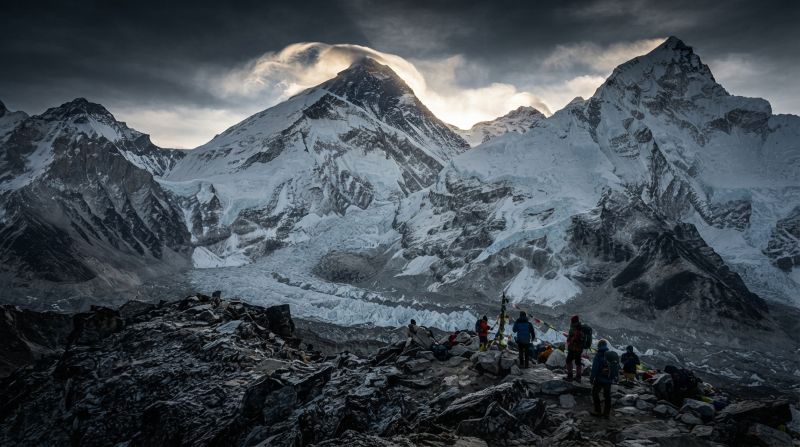
However, and this is a critical point for travelers to understand: from Everest Base Camp itself, you cannot actually see the summit of Mount Everest. The peak is obscured by the ridgelines of Nuptse and the surrounding terrain. What you can see is the icefall and the lower flanks of the mountain, along with a spectacular panorama of surrounding peaks including Pumori, Lingtren, and Khumbutse.
For trekkers who have spent 10 to 14 days walking through the Khumbu Valley to reach this point, the emotional significance of standing at Base Camp transcends the visual experience. The journey is the point. But for helicopter tour passengers who are visiting for 20 to 30 minutes, the visual experience matters enormously — and that is where Kala Patthar has a decisive advantage.
What is Kala Patthar?
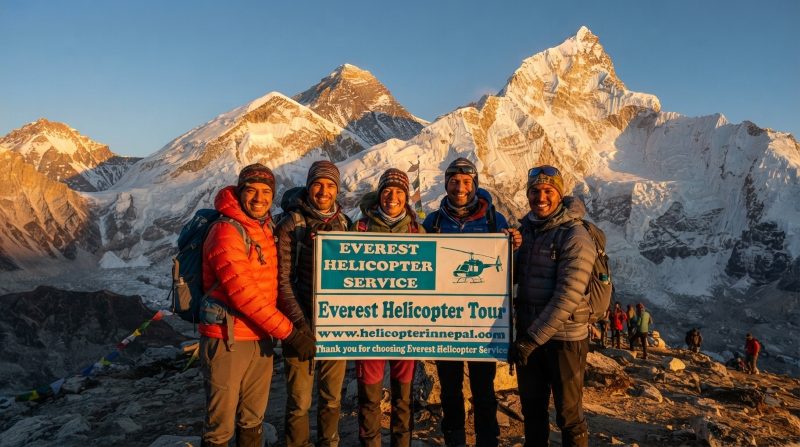
Kala Patthar, which translates from Nepali as "black rock," is a prominent, rocky peak on the southern slopes of Pumori, sitting at 5,545 meters above sea level. It is located a short distance from Gorakshep, the last permanent settlement on the classic Everest Base Camp trek route.
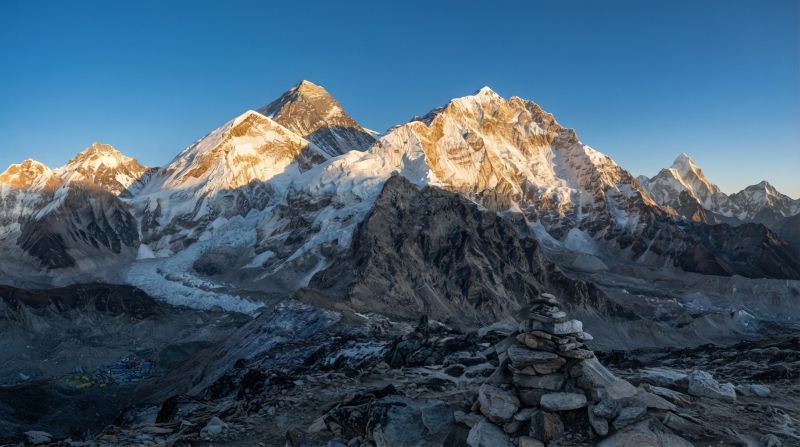
Despite being less famous by name than Everest Base Camp, Kala Patthar is widely recognized among mountaineers, trekkers, and photographers as the single best viewpoint for Mount Everest. From its summit, you have an almost completely unobstructed view of Everest's south face, including the summit pyramid, the Southeast Ridge, the Hillary Step, and the entire upper mountain. You can also see Lhotse, Nuptse, Changtse, the Khumbu Glacier, and much of the upper Khumbu Valley stretching away below you.
The view from Kala Patthar at sunrise is considered one of the great natural spectacles on Earth. As the first light hits the summit of Everest, the peak glows with an extraordinary golden and rose-coloured alpenglow that appears briefly before the sun fully rises. Professional photographers and filmmakers from around the world make the trek or fly by helicopter specifically to capture this moment.
For helicopter tours, Kala Patthar offers a stable, rocky landing area that is consistently safer and more reliable than the glacier surface at Everest Base Camp. The Himalayan aerial adventure of approaching Kala Patthar by helicopter — banking around the ridgeline with Everest filling the window — is itself one of the most thrilling few minutes of flying available anywhere in the world.
The Kala Patthar helicopter landing experience is the default choice of Everest Helicopter Service for a straightforward reason: it delivers the best possible view of Mount Everest in the safest possible operational environment.
Does the Helicopter Land at Everest Base Camp?
This is the single most frequently asked question by travelers researching Everest helicopter tours, and it deserves a clear, detailed answer.
Yes, helicopters can land at or near Everest Base Camp. But it is not the standard procedure, it is not guaranteed, and it is subject to a number of operational and regulatory variables.
Here is what you need to understand:
Glacier conditions
Everest Base Camp sits on the Khumbu Glacier. The surface of this glacier changes constantly. During the spring climbing season, when hundreds of expedition members are moving across the glacier, landing conditions may be more defined. At other times of year, the glacier surface can be extremely uneven, icy, and unstable as a helicopter landing zone.
CAAN regulations
The Civil Aviation Authority of Nepal (CAAN) regulates all helicopter operations in the country, including landing permissions in the Sagarmatha National Park and the Khumbu region. Landing at Everest Base Camp requires specific permissions, and the availability of these permissions can vary by season and by operational context.
Weight and Performance Limitations
At altitudes above 5,000 meters, helicopter performance is significantly reduced due to the thin air. Every kilogram of passenger and cargo weight affects the aircraft's ability to land and take off safely. In some cases, split shuttle flights are necessary, where passengers are transported in two separate trips to manage weight restrictions safely.
Weather and Wind
The weather at Everest Base Camp can be unpredictable and changes quickly. Afternoon winds in particular can make helicopter landings challenging or unsafe. Most Everest helicopter tours are scheduled for early morning departures specifically to take advantage of the most stable atmospheric conditions of the day.
Safety First
Everest Helicopter Service always prioritizes the safety of passengers and pilots above all other considerations. If conditions at Everest Base Camp on a given day do not meet the required safety standards, the landing will default to Kala Patthar, which offers consistently better conditions for commercial helicopter operations.
The Short Answer
If you are booking an Everest Base Camp helicopter tour with the specific expectation of landing at Everest Base Camp rather than Kala Patthar, confirm the landing point with your operator before booking. Everest Helicopter Service is transparent about landing locations and will always give you an honest answer about what is possible on your chosen dates.
Why Do Most Helicopters Land at Kala Patthar Instead?
There are five primary reasons why Kala Patthar is the preferred Everest helicopter landing point for the majority of commercial tours.
Better Everest visibility
From Kala Patthar, the summit of Mount Everest is fully visible in all its glory. No ridgeline, no terrain feature, nothing obstructs the view. This is simply not the case at Everest Base Camp, where the geometry of the surrounding peaks hides the summit from ground-level view. For travelers who want the best possible view of Everest's summit, Kala Patthar wins without contest.
Stable Landing Surface
The rocky terrain of Kala Patthar provides a far more predictable and stable surface for helicopter landings than the moving ice and snow of the Khumbu Glacier at Base Camp. A stable landing surface means safer operations, faster turnaround, and the ability to operate more consistently across seasons.
Passenger safety and Experience
The slightly lower altitude of Kala Patthar compared to some Base Camp approach areas, combined with the clear, open terrain, makes the experience more manageable for passengers of varying health backgrounds. At Kala Patthar, passengers can stand, move short distances, take photographs, and appreciate the view without feeling immediately overwhelmed by the altitude.
Wind conditions
Wind patterns in the Khumbu region are complex and shift as the day progresses. The ridgeline of Kala Patthar typically experiences more manageable wind conditions in the early morning than the glacier bowl around Everest Base Camp, which is more exposed to channelled valley winds.
Superior Photography
For photographers — amateur and professional alike — Kala Patthar delivers a composition that is simply impossible to match from Base Camp. The full southern face of Everest, the sweep of the Khumbu Glacier below, the jagged ridgelines of Nuptse and Lhotse, and the vast Himalayan panorama stretching in every direction make Kala Patthar one of the great photography locations on Earth.
Kala Patthar vs Everest Base Camp Comparison
| Feature | Kala Patthar | Everest Base Camp |
|---|---|---|
| Elevation | 5,545 m | 5,364 m |
| Distance from Gorakshep | Around 1.5 km uphill | Around 3 km |
| Mount Everest Visibility | Unobstructed panoramic view | Summit mostly hidden |
| Best for Photography | Excellent | Good |
| Helicopter Accessibility | Excellent | Depends on glacier and weather |
| Landing Surface | Rocky ground | Glacier terrain |
| Wind Conditions | Moderate | Can change quickly |
| Glacier View | Khumbu Glacier | On the Khumbu Glacier |
| Sunrise View | Outstanding | Limited |
| Popular Among | Photographers, sightseeing visitors | Trekkers and expedition teams |
| Safety | High with brief landing | Subject to glacier and operational conditions |
Which Landing Offers Better Everest Views?
The answer is clear and consistent: Kala Patthar offers better Everest views than Everest Base Camp for helicopter tour passengers.
Everest Visibility Comparison
| Mountain | Visible from Kala Patthar | Visible from Everest Base Camp |
|---|---|---|
| Mount Everest | Excellent | Partial |
| Nuptse | Excellent | Excellent |
| Lhotse | Excellent | Excellent |
| Pumori | Excellent | Good |
| Ama Dablam | Excellent | Good |
| Khumbu Glacier | Excellent | Excellent |
| Khumbu Icefall | Excellent | Excellent |
This is not a matter of opinion. It is a function of geography. Mount Everest's summit is located behind a series of ridgelines when viewed from Base Camp at ground level. The terrain of the Khumbu Glacier and the surrounding walls of Nuptse and the West Ridge physically block the view of the summit from that position.
From Kala Patthar, those obstructions fall away. You are standing on an elevated ridge with a clear, unimpeded line of sight to the summit pyramid of Everest. The full southern face of the mountain — from the glaciated lower flanks to the very tip of the summit at 8,849 meters — is visible in one sweeping panorama.
This is why Kala Patthar is the viewpoint used for the most iconic Mount Everest photographs. The images you have seen in National Geographic, in BBC documentaries, on the covers of mountaineering books — the ones that show Everest's full triangular summit rising above the ridgeline — were almost certainly taken from Kala Patthar or its nearby slopes.
For helicopter passengers who have a limited window of time at altitude, choosing Kala Patthar means spending that time at the location that gives you the most visually powerful experience of Mount Everest. The mountain fills your field of vision. The Khumbu Glacier sweeps away below you. The surrounding eight-thousanders create a landscape that is almost incomprehensible in scale.
Everest Base Camp, for its part, offers something different rather than lesser. The experience of standing at the starting point of every Everest expedition, with the Khumbu Icefall rising above you and the glacier moving almost imperceptibly beneath your feet, is deeply moving. For trekkers who have walked for two weeks to reach that point, it is one of the great experiences in adventure travel. But for a 20-minute helicopter landing where the visual experience is paramount, Kala Patthar is the stronger choice.
Photography Comparison
Photography Comparison
| Photography Type | Kala Patthar | Everest Base Camp |
|---|---|---|
| Everest Summit | ⭐⭐⭐⭐⭐ | ⭐⭐⭐ |
| Panorama | ⭐⭐⭐⭐⭐ | ⭐⭐⭐⭐ |
| Glacier Photography | ⭐⭐⭐⭐ | ⭐⭐⭐⭐⭐ |
| Portrait Photos | ⭐⭐⭐⭐⭐ | ⭐⭐⭐⭐ |
| Helicopter Photos | ⭐⭐⭐⭐⭐ | ⭐⭐⭐⭐ |
| Sunrise | ⭐⭐⭐⭐⭐ | ⭐⭐⭐ |
| Landscape | ⭐⭐⭐⭐⭐ | ⭐⭐⭐⭐ |
Landscape photography
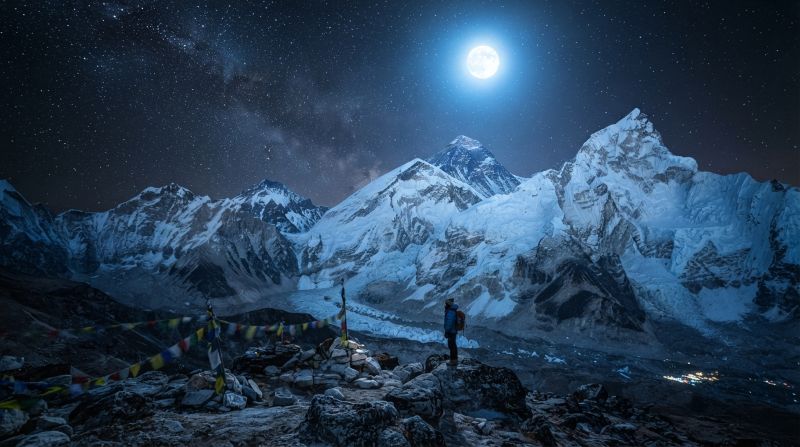
Kala Patthar is simply one of the finest landscape photography locations in the world. The full southern face of Everest, the textured surface of the Khumbu Glacier, the surrounding peaks, and the immense scale of the Himalayan environment combine to create compositions of extraordinary power. Wide-angle lenses capture the full panorama. Telephoto lenses bring the summit of Everest close enough to show individual snow features.
At Everest Base Camp, landscape photography focuses primarily on the expedition environment: tent clusters, the chaotic surface of the glacier, the Khumbu Icefall, and the surrounding walls of rock and ice. These are compelling images with strong documentary value, but they do not deliver the summit-view Everest panorama that most travelers are hoping to photograph.
Sunrise Photography
If you are staying overnight at Hotel Everest View and flying to Kala Patthar on the morning of Day 2, early morning departures give you the best chance of catching alpenglow on Everest's summit. The period approximately 20 minutes before and after sunrise produces the most extraordinary light of the day. Kala Patthar's open sightline to the summit makes it ideal for capturing this moment. Everest Base Camp, with its limited summit view, cannot match this for sunrise photography.
Portraits and Human Interest Photography
Both locations are strong for portraits and human interest shots. The combination of the Himalayan environment, the landing and takeoff of the helicopter, and the expressions of travelers experiencing extreme altitude for the first time creates powerful photographic material at both locations.
Drone restrictions
Important note for photographers: Drone operation in the Sagarmatha National Park and the Khumbu region requires special permits from the Government of Nepal and the Civil Aviation Authority of Nepal. Do not bring a drone with the assumption that you can fly it freely. Consult Everest Helicopter Service before your departure if aerial photography is a priority.
Lighting Tips
- Morning light (before 9 AM) provides the warmest, most dramatic illumination on Everest's south face from Kala Patthar.
- Overcast days diffuse the light and can reduce contrast for landscape shots, but they also reduce harsh shadows.
- Carry lens cloths. Condensation from the temperature difference between the heated helicopter cabin and the freezing outside air will affect your lens the moment you step out.
- Keep camera batteries warm inside your jacket until you need them. Cold temperatures drain lithium batteries quickly at altitude.
- Use a lens hood to reduce glare from snow and ice in bright conditions.
Helicopter Landing Rules in the Everest Region
All helicopter operations in the Khumbu region are governed by the Civil Aviation Authority of Nepal and subject to the regulations of Sagarmatha National Park, a UNESCO World Heritage Site. Travelers should understand the following operational realities before departure.
Helicopter Landing Rules
| Rule | Details |
|---|---|
| Maximum Landing Time | Usually 5–10 minutes at high altitude |
| Engine | Often remains running during the stop |
| Passenger Weight | Flights may be split into smaller groups above Pheriche due to performance limits |
| Walking Distance | Stay close to the landing area unless instructed |
| Safety Distance | Follow crew instructions and keep clear of rotor blades |
| Weather | Flights depend on visibility and wind conditions |
| Oxygen | Do not stay longer than instructed |
Landing duration
Time at the landing site is typically limited to 20 to 30 minutes. This is not an arbitrary restriction — it is a function of altitude physiology. Spending extended periods above 5,000 meters without proper acclimatization carries real health risks. Everest Helicopter Service schedules landing times to maximize the experience while protecting passenger wellbeing.
Weight limits
High-altitude helicopter performance is directly affected by total weight. Passengers may be asked to weigh in prior to departure. If weight limits require it, the flight may be operated in split shuttles, where two groups fly separately to and from the landing site.
Safety briefing
All passengers receive a pre-flight safety briefing before departure. This covers emergency procedures, altitude awareness, oxygen usage, and behavior at the landing site. Pay close attention. These briefings are brief but important.
High altitude procedures
Supplemental oxygen is carried on every flight and at the landing site. If you feel breathlessness, headache, dizziness, or nausea at altitude, inform the pilot immediately. Descending quickly is the most effective treatment for altitude-related discomfort.
Weather delays and Cancellations
All Everest helicopter flights are weather-dependent. Departures may be delayed or cancelled due to cloud cover, wind, poor visibility, or sudden mountain weather changes. If your flight is delayed, Everest Helicopter Service will rebook you at the earliest available opportunity. Flexible travel schedules are advisable when planning an Everest helicopter tour.
Who Should Choose Which Landing?
| Traveler Type | Recommended Landing |
|---|---|
| First-Time Visitor | Kala Patthar |
| Photographer | Kala Patthar |
| Luxury Traveler | Kala Patthar |
| Family | Kala Patthar |
| Senior Citizen | Kala Patthar |
| Adventure Trekker | Everest Base Camp |
| Mountaineering Enthusiast | Everest Base Camp |
| Scenic Flight Traveler | Kala Patthar |
Best Time for Visit and Helicopter Landings
| Month | Weather | Visibility | Helicopter Flying | Recommendation |
|---|---|---|---|---|
| January | Cold | Good | Good | Good |
| February | Cold | Excellent | Excellent | Recommended |
| March | Mild | Excellent | Excellent | Best |
| April | Stable | Excellent | Excellent | Best |
| May | Warm | Very Good | Very Good | Recommended |
| June | Monsoon Begins | Poor | Limited | Not Recommended |
| July | Monsoon | Poor | Limited | Avoid |
| August | Monsoon | Poor | Limited | Avoid |
| September | Improving | Good | Good | Recommended |
| October | Clear | Excellent | Excellent | Best |
| November | Clear | Excellent | Excellent | Best |
| December | Cold | Excellent | Very Good | Recommended |
Best months overall: April, May, October, November
Is Kala Patthar Safe for Elderly Travelers?
Yes, Kala Patthar is accessible to elderly travelers and those with limited mobility, but proper preparation and awareness are essential.
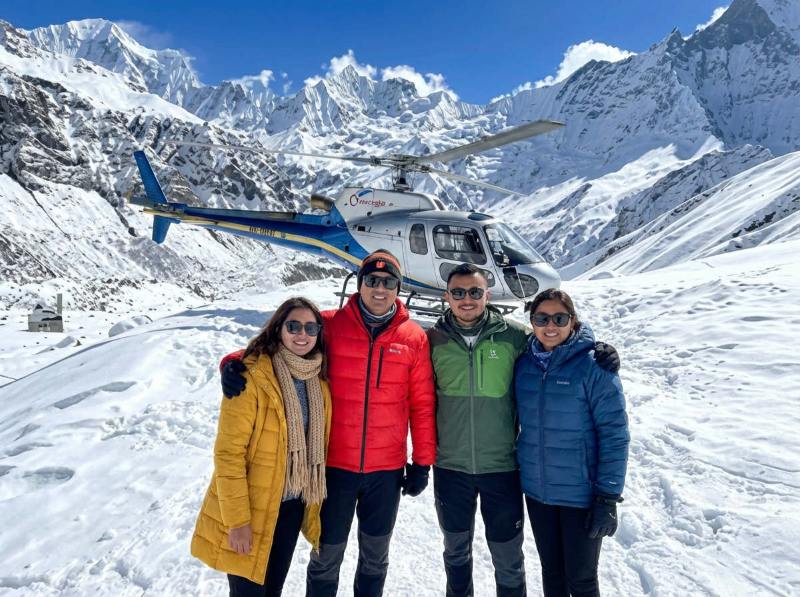
The helicopter removes all the physical effort of reaching 5,545 meters. There is no walking, no climbing, no days of gradual altitude gain required. You fly directly to the landing site, step out of the helicopter, stand on the rocky ridge, take in the view, and return to the aircraft.
The walking required at the landing site is minimal — usually no more than a few steps to a stable standing position with clear views. There are no technical terrain challenges.
However, altitude physiology affects everyone differently regardless of age or fitness. Some people feel the effects of thin air immediately upon stepping out of the aircraft. Breathlessness, light-headedness, and mild headache are normal responses to being above 5,500 meters without acclimatization.
Everest Helicopter Service carries supplemental oxygen on every flight and at the landing site specifically for this reason. If an elderly passenger feels unwell at altitude, oxygen is available immediately and the flight returns to lower altitude promptly.
Medical considerations for elderly Travellers
- Consult your physician before booking if you have a history of heart disease, lung disease, high blood pressure, or any respiratory condition.
- Share your medical history honestly with Everest Helicopter Service at the time of booking.
- Avoid alcohol for at least 24 hours before your flight.
- Stay well hydrated in the days before your departure.
- Dress in warm, layered clothing. Temperature at 5,545 meters is dramatically colder than Kathmandu.
For Luxury Travelers
Elderly travelers and those who simply prefer a less physically demanding experience will find the combination of the helicopter tour and an overnight stay at Hotel Everest View ideally suited to their needs. All the wonder of the Himalayan environment, none of the physical hardship.
Everest Helicopter Breakfast Stop at Everest View Hotel
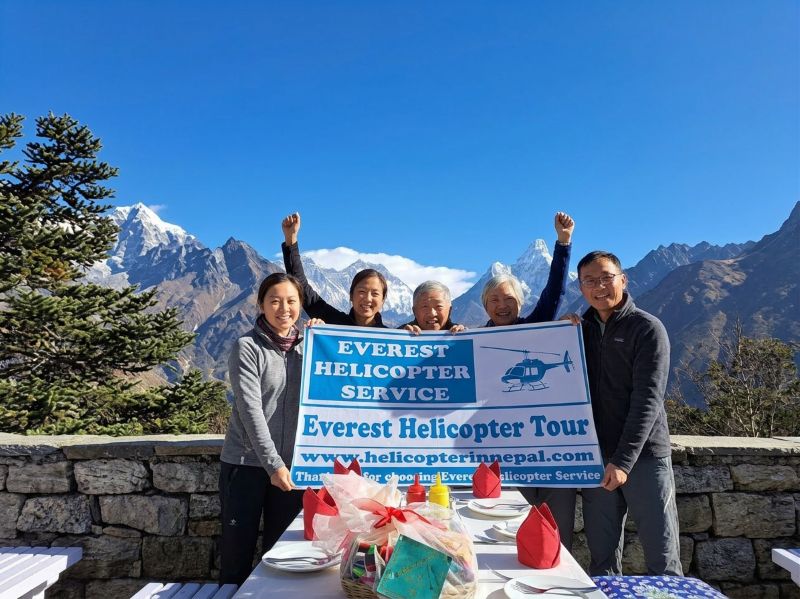
No article about Everest helicopter tours would be complete without discussing one of the most celebrated experiences in the entire itinerary: breakfast at Hotel Everest View.
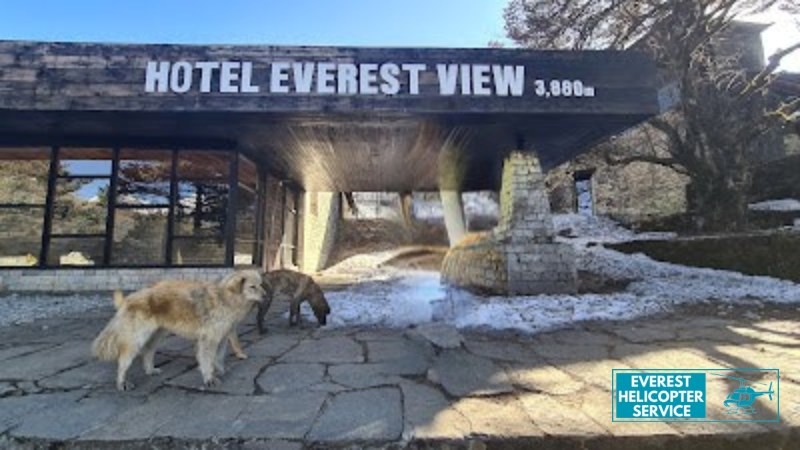
Hotel Everest View sits at 3,780 meters above sea level near Syangboche, overlooking the Khumbu Valley with a panoramic view of Mount Everest, Lhotse, Ama Dablam, and Thamserku. It holds the Guinness World Record as the highest-altitude hotel in the world and has been welcoming guests since the 1970s.
On overnight Everest helicopter tours, Day 2 begins before sunrise. You step out onto the hotel terrace in the cold mountain air and watch the alpenglow appear on the summit of Everest. As the sky brightens and the mountain turns from dark grey to brilliant gold, you sit down for breakfast with one of the most extraordinary views in the world directly before you.
The Everest helicopter breakfast stop is not simply a meal. It is the culmination of an experience that begins the previous day with your helicopter flight into the Khumbu, your landing at Kala Patthar, and your overnight at the highest hotel in the world. Breakfast becomes a moment of quiet reflection at the foot of the greatest mountains on Earth.
After breakfast, the helicopter returns you to Kathmandu, typically arriving by mid-morning and leaving the rest of your day free.
Everest Helicopter Tour Itinerary
| Time | Activity |
|---|---|
| 05:30 AM | Hotel Pickup |
| 06:00 AM | Check-in at Airport |
| 06:30 AM | Helicopter Departure |
| 07:15 AM | Lukla Refueling Stop |
| 07:40 AM | Fly over Namche Bazaar |
| 08:00 AM | Pheriche Shuttle (if required) |
| 08:20 AM | Kala Patthar Scenic Landing |
| 08:30 AM | Aerial View of Everest Base Camp |
| 09:00 AM | Breakfast at Hotel Everest View |
| 10:00 AM | Return Flight to Kathmandu |
| 11:30 AM | Hotel Drop-off |
Note: Timings are approximate and subject to weather and operational conditions.
Cost Factors Affecting Everest Helicopter Landing
The price of an Everest helicopter tour varies depending on a number of factors. Understanding these helps you compare options accurately and choose the right package.
Cost Factors
| Factor | Effect on Price |
|---|---|
| Shared vs Private | Major |
| Number of Passengers | Major |
| Flight Duration | Moderate |
| Landing Permissions | Moderate |
| Weather Delays | Moderate |
| Fuel Price | Moderate |
| Airport Taxes | Minor |
| Charter Route | Major |
Shared vs Private charter
Shared helicopter tours place you with other passengers — typically four to five people per aircraft. This distributes the cost across the group and makes the experience significantly more affordable per person. A private helicopter charter gives your group exclusive use of the aircraft and allows for a more flexible, personalized itinerary. The private option is popular for honeymoon couples, family groups, and corporate travelers.
Shared vs Private Helicopter Landing
| Feature | Shared Tour | Private Charter |
|---|---|---|
| Cost | Lower | Higher |
| Flexibility | Fixed schedule | Flexible timing |
| Privacy | Shared with others | Exclusive |
| Waiting Time | Possible | Minimal |
| Ideal For | Solo travelers, couples | Families, groups, photographers |
| Customization | Limited | High |
Landing Location
Some operators charge differently depending on whether the tour includes a Kala Patthar landing, an Everest Base Camp landing, or both. Confirm what is included in your specific package.
Split Shuttle Flights
At extreme altitude, weight management is critical for safe helicopter performance. If the combined passenger weight requires it, flights may be split into two shuttles. This adds operational time and may affect pricing.
Group Size
Smaller groups on private charters pay a higher per-person rate. Larger groups traveling together may negotiate package rates with Everest Helicopter Service.
Fuel Costs and Permit Fees
All Everest helicopter tours require Sagarmatha National Park entry permits and Khumbu Pasang Lhamu Rural Municipality fees. These are included in the price quoted by Everest Helicopter Service. Fuel costs for high-altitude operations are significant and reflected in the overall tour price.
Hotel Everest View Accomodation
Tours that include overnight accommodation at Hotel Everest View will cost more than single-day tours. The overnight experience is strongly recommended and worth the additional cost for travelers who want the full Everest helicopter experience.
Contact Everest Helicopter Service directly for current pricing. Rates change seasonally and are quoted individually based on your travel dates, group size, and tour requirements.
Expert Tips Before Booking
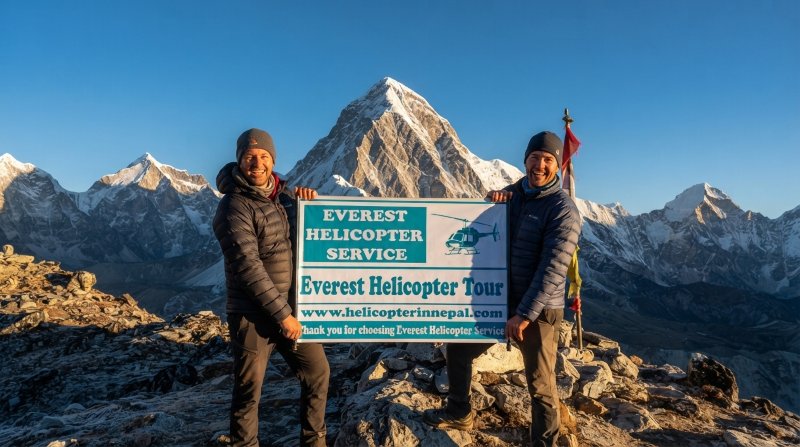
1. Book in advance for spring and autumn. April, May, October, and November are peak months. Availability fills quickly, especially for shared tour spots.
2. Choose morning departures. All Everest helicopter flights depart early morning. Do not plan other activities for the previous evening that might affect your 4:00 or 5:00 AM wake-up.
3. Pack warm layers. At 5,545 meters, even on a warm spring day, temperatures can be well below freezing with wind chill. Bring a down jacket, thermal base layers, warm gloves, and a hat.
4. Wear sunscreen. High-altitude UV radiation is intense. Exposed skin burns very quickly at 5,000+ meters, even in cold temperatures.
5. Stay hydrated the day before. Dehydration significantly worsens the symptoms of altitude sickness. Drink plenty of water in Kathmandu the day before your tour.
6. Avoid alcohol for 24 hours before departure. Alcohol impairs acclimatization and worsens the effects of altitude.
7. Carry your own snacks. The helicopter flight itself does not include in-flight meals. Carry high-energy snacks for the journey.
8. Protect your camera from cold. Keep batteries warm inside your jacket until you need them. Carry more memory cards than you think you need.
9. Do not bring heavy luggage. Hand luggage is permitted, but heavy bags are not. Keep your personal kit minimal and light.
10. Confirm your landing point. Ask Everest Helicopter Service specifically whether your tour includes a Kala Patthar landing, an Everest Base Camp landing, or potentially both.
11. Inform your operator of medical conditions. Any history of heart or respiratory conditions, high blood pressure, recent surgery, or other health concerns must be disclosed before departure.
12. Carry travel insurance documentation. Choose a policy that covers high-altitude helicopter evacuation. Carry your policy number and emergency contact details on your person.
13. Follow the pilot's instructions at all times. Your pilot is the final authority on everything related to the flight. Always follow their guidance, especially at the landing site.
14. Do not wander far from the helicopter at altitude. At 5,545 meters, terrain can be unstable and the aircraft needs to be ready for a prompt departure if conditions change.
15. Enjoy the flight both ways. Do not spend the entire outbound flight on your phone. The aerial views of the Khumbu Valley are themselves a spectacular part of the experience.
16. Consider the overnight option. If your schedule permits, add the overnight at Hotel Everest View. The sunrise from the hotel terrace is one of the most beautiful natural moments you can experience in Nepal.
17. Dress in layers you can remove. The helicopter cabin may feel warm but the outside temperature at altitude is extreme. Layer clothing that you can quickly adjust.
18. Ask about split shuttle procedures. If you are booking as a group, confirm how weight management is handled and whether your group will fly together or separately.
19. Book directly with a licensed operator. Everest Helicopter Service holds all required licenses from the Civil Aviation Authority of Nepal and operates to the highest safety and service standards.
20. Check weather flexibility. If your schedule is very tight, speak to Everest Helicopter Service about what happens in the event of a weather delay. Having one extra day of flexibility in Kathmandu significantly reduces stress.
Packing Checklist
| Item | Essential |
|---|---|
| Down Jacket | ✅ |
| Sunglasses | ✅ |
| Sunscreen | ✅ |
| Gloves | ✅ |
| Warm Hat | ✅ |
| Camera | ✅ |
| Passport | ✅ |
| Personal Medication | ✅ |
| Water Bottle | ✅ |
| Lip Balm | ✅ |
| Power Bank | Recommended |
Why Choose Everest Helicopter Service?
Everest Helicopter Service is one of Nepal's leading helicopter tour operators, with a deep commitment to passenger safety, operational excellence, and genuinely personalized service.
Experienced pilots
All pilots at Everest Helicopter Service are fully licensed by the Civil Aviation Authority of Nepal and hold extensive high-altitude flying experience. Flying in the Khumbu region requires a level of specialized skill that goes far beyond standard commercial aviation. Our pilots have accumulated thousands of hours in Himalayan conditions specifically.
Safety-first operations
Every flight operated by Everest Helicopter Service follows a comprehensive safety protocol that begins days before your departure. Real-time weather monitoring, pre-flight aircraft checks, passenger briefings, onboard oxygen, and rigorous communication with aviation authorities are standard operating procedure on every single flight — not optional extras.
Modern helicopters fleet
Our aircraft are modern, fully maintained, and certified for high-altitude operations. Regular scheduled maintenance inspections ensure that every helicopter in our fleet meets international aviation safety standards.
Flexible departures
We understand that travel schedules are sometimes unpredictable. Everest Helicopter Service offers flexible departure options and works with guests to accommodate reasonable schedule changes when weather or other factors create delays.
Transparent pricing
The price you are quoted is the price you pay. Everest Helicopter Service provides full, clear pricing breakdowns including all permits, fees, and inclusions so you know exactly what is covered before you book.
Local expertise
Everest Helicopter Service is based in Nepal and run by professionals with deep roots in the Himalayan travel and aviation industry. When you book with us, you are booking with people who live and breathe this landscape every day.
Book your Everest helicopter landing experience with Everest Helicopter Service. Whether you choose the panoramic summit views of Kala Patthar, the iconic expedition atmosphere of Everest Base Camp, or the full overnight experience with breakfast at Hotel Everest View, we are here to make your Himalayan adventure extraordinary.
Contact Everest Helicopter Service today to confirm your dates, discuss your group requirements, and reserve your seat on one of the most spectacular flights in the world.
Frequently Asked Questions
Does the helicopter land at Everest Base Camp?
Yes, helicopters can land at or near Everest Base Camp, but this is subject to weather, glacier conditions, CAAN regulations, and seasonal availability. Most Everest helicopter tours default to a landing at Kala Patthar, which offers better visibility, a more stable landing surface, and more reliable operational conditions. Confirm your landing point with your operator when booking.
Does the Everest helicopter land at Kala Patthar?
Yes. Kala Patthar at 5,545 meters is the primary and most reliable landing point for Everest helicopter tours. It delivers unobstructed views of Mount Everest's summit and is the preferred location for most commercial helicopter tour operators in Nepal.
Is Kala Patthar higher than Everest Base Camp?
Yes. Kala Patthar sits at 5,545 meters above sea level, which is approximately 181 meters higher than Everest Base Camp at 5,364 meters.
Which offers better Everest views — Kala Patthar or Everest Base Camp?
Kala Patthar offers significantly better views of Mount Everest's summit. From Kala Patthar, the full southern face and summit pyramid of Everest are visible without obstruction. From Everest Base Camp, the summit is hidden behind ridgelines and terrain features.
Is Kala Patthar worth visiting by helicopter?
Absolutely. Standing on Kala Patthar with Mount Everest directly before you is one of the most powerful natural experiences available to any traveler anywhere in the world. The helicopter landing at Kala Patthar is the highlight of almost every traveler who books the Everest helicopter tour.
How long can helicopters stay at Kala Patthar or Everest Base Camp?
Landing duration is typically 20 to 30 minutes at either location. This is sufficient time for photographs, to absorb the environment, and to experience being above 5,000 meters in the Himalayas. Longer stays increase altitude exposure and are not recommended without proper acclimatization.
Can children join the Everest helicopter tour?
Yes, children can join the helicopter tour. There is no strict minimum age, but children should be in good health and parents should be aware of the altitude involved. Children who appear unwell at altitude should be given oxygen immediately and the aircraft should descend. Everest Helicopter Service recommends discussing your child's age and health with us before booking.
Can elderly travelers join the Everest helicopter tour?
Yes. The helicopter removes all the physical demands of reaching extreme altitude on foot, making the tour accessible to elderly travelers. Supplemental oxygen is available throughout the flight. Elderly travelers with heart, lung, or respiratory conditions should consult their physician and share their medical history with Everest Helicopter Service before booking.
Is altitude sickness possible on the Everest helicopter tour?
Yes. Brief symptoms of altitude sickness — including breathlessness, light-headedness, and mild headache — are possible at altitudes above 5,000 meters, even during a short visit. These symptoms are usually mild and resolve quickly upon descent. Supplemental oxygen is carried on all flights. Severe altitude sickness is rare during a short helicopter visit but is a medical emergency requiring immediate descent.
What happens if the weather changes during the flight?
Pilot safety judgment is final. If weather deteriorates during the flight, the pilot will make the decision to return to Kathmandu, divert to a safer altitude, or hold at Hotel Everest View until conditions improve. Everest Helicopter Service monitors weather continuously and communicates clearly with guests throughout any delay or change.
Is breakfast included in the Everest helicopter tour?
Breakfast at Hotel Everest View is included in overnight tour packages. For single-day tours that do not include an overnight stay, check your specific package inclusions with Everest Helicopter Service.
Can I book a private helicopter for the Everest tour?
Yes. Private charter flights are available for couples, families, and small groups who prefer exclusive use of the aircraft. Contact Everest Helicopter Service for private charter pricing and availability.
Is travel insurance required?
Travel insurance with high-altitude helicopter evacuation coverage is strongly recommended for all Everest helicopter tour passengers. While incidents are rare, the cost of an emergency evacuation from extreme altitude without insurance can be very high. Ensure your policy specifically covers helicopter rescue above 5,000 meters in Nepal.
What should I wear on the Everest helicopter tour?
Wear warm, layered clothing including thermal base layers, a fleece or mid-layer, and a down jacket. Warm gloves, a hat, and sturdy footwear are essential. Apply sunscreen to exposed skin. Wear sunglasses with UV protection.
How much luggage am I allowed to bring?
Passengers are typically limited to small personal daypacks. Large suitcases or heavy bags are not permitted on helicopter tours due to strict weight limitations. Pack only what you need for the tour, keeping your kit as light as possible.
Why do helicopters land at Kala Patthar instead of Everest Base Camp?
Kala Patthar offers a stable rocky landing surface, better direct views of Everest's summit, more favorable morning wind conditions, and higher operational reliability across seasons compared to the glacier surface at Everest Base Camp. It is the preferred and most consistently safe landing point for commercial Everest helicopter tours.
What is the best helicopter landing point for Everest views?
Kala Patthar at 5,545 meters is the best helicopter landing point for Everest views, offering a full, unobstructed panorama of Mount Everest's south face and summit.
Kala Patthar and Everest Base Camp are both remarkable destinations in one of the most extraordinary landscapes on Earth. But for helicopter tour passengers whose primary goal is to see Mount Everest in its fullest, most spectacular form, Kala Patthar is the clear winner.
The summit of Everest is visible from Kala Patthar in a way it simply is not from Base Camp. The landing surface is more reliable. The conditions are more consistently favorable. And the panorama of peaks, glaciers, and sky that surrounds you on that rocky ridge is, by any measure, one of the great visual experiences available to any traveler anywhere in the world.
Everest Base Camp remains an iconic destination, particularly for trekkers who experience its meaning through the journey it takes to reach it. For a helicopter tour landing, the visual and experiential reward of Kala Patthar is simply greater.
The best choice ultimately depends on your priorities. If you want the summit of Everest before you in full — clear, close, and overwhelming — choose Kala Patthar. If you want the glacier-level expedition atmosphere of Base Camp and are comfortable with the operational variables involved, that option is available on certain tours at certain times of year.
Whatever you choose, Everest Helicopter Service is here to make your experience safe, memorable, and world-class from the moment you step onto the helicopter in Kathmandu to the moment you return. Our pilots, our aircraft, and our team are built around one purpose: giving you the Himalayan experience of a lifetime.
Book your Everest helicopter landing today. The mountain is waiting.
Book Your Everest Helicopter Tour with Everest Helicopter Service
Ready to witness the breathtaking panorama of Mount Everest from Kala Patthar or experience the legendary Everest Base Camp by helicopter? At Everest Helicopter Service, we offer safe, reliable, and unforgettable helicopter tours designed for solo travelers, couples, families, photographers, and private groups.
Whether you're looking for a shared Everest Base Camp helicopter tour or a private helicopter charter, our experienced team will help you choose the best option based on your schedule, budget, and travel preferences. All flights are operated by experienced pilots, subject to weather and aviation safety requirements, to ensure a smooth and memorable Himalayan adventure.
Contact Information
| Contact Method | Details |
|---|---|
| Company | Everest Helicopter Service |
| Phone / WhatsApp | +977 9841953467 |
| Emergency | +977 9818349050 |
| everesthelicopterservice@gmail.com | |
| Office Location | Thamel, Kathmandu, Nepal |
| Office Hours | 8:00 AM – 7:00 PM (Nepal Time) |
How to Book
- Contact us via WhatsApp, phone, or email with your preferred travel date.
- Tell us the number of travelers and whether you prefer a shared or private helicopter.
- Receive your personalized quotation and flight details.
- Confirm your booking by completing the required payment.
- Receive your booking confirmation, itinerary, and pre-flight instructions before departure.
Need help choosing between a Kala Patthar landing and an Everest Base Camp landing? Our travel experts are happy to explain the differences and recommend the best option based on weather conditions, photography goals, and your travel plans.
On 10 Jul 2026